
Connect with us

Non classé

AI in the Supply Chain: Building Intelligent, Adaptive, and Resilient Logistics Systems

Published

on

Ai In The Supply Chain: Building Intelligent, Adaptive, And Resilient Logistics Systems

ARC Advisory Group Webinar with Jim Frazer –

Artificial intelligence is transforming supply chains from static planning systems into adaptive networks that can perceive disruptions, reason across complex logistics environments, and respond in real time.

In this ARC Advisory Group webinar, Jim Frazer examines how AI is becoming a foundational operating layer for modern supply chain systems. Rather than replacing traditional platforms such as ERP, WMS, or TMS, AI augments them by enabling real-time awareness, dynamic optimization, and more informed decision-making across global logistics networks.

This session explores the architectural and operational shifts required to build intelligent supply chains capable of navigating increasing volatility in global markets.

Download the ARC White Paper

AI in the Supply Chain: Architecting the Future of Logistics with A2A, MCP, and Graph-Enhanced Reasoning

This ARC Advisory Group research report provides a structured executive guide to building the next generation of AI-enabled supply chain systems.

The white paper explains how emerging AI architectures are transforming logistics from linear, rule-based processes into intelligent systems capable of continuous adaptation.

Download the Executive White Paper

Executive Summary

Artificial intelligence is becoming the operating layer of modern supply chains. This research explains four structural shifts reshaping logistics systems and supply chain decision-making.

AI as an Operating Layer
Artificial intelligence augments traditional ERP, WMS, and TMS systems by introducing predictive reasoning, dynamic optimization, and continuous learning capabilities.

Agent-to-Agent Coordination
Autonomous systems can communicate and coordinate across supply chain functions, accelerating decision cycles and improving responses to disruptions.

Context-Aware Decision Systems
Persistent context frameworks allow AI systems to retain operational history, improving forecasting accuracy and enabling more informed planning decisions.

Network-Level Intelligence
Graph-based reasoning allows organizations to understand complex dependencies across suppliers, transportation networks, distribution centers, and products.

Watch the Webinar

This ARC Advisory Group webinar explains how artificial intelligence is reshaping logistics systems and enabling more adaptive supply chain operations.

What You’ll Learn

The New Operating Reality
How geopolitical disruption, energy volatility, and global complexity are reshaping supply chain strategy.

From Rule-Based Systems to Learning Systems
Why traditional automation struggles with disruption—and how AI adapts through continuous learning and predictive modeling.

AI as a Structural Layer in Logistics
How perception, reasoning, and adaptive optimization are redefining planning and execution.

Real-Time Optimization in Practice
Examples of AI-driven routing, sourcing strategies, and inventory balancing across logistics networks.

Operational Visibility and Exception Management
Why supply chain performance increasingly depends on detecting and resolving disruptions in real time.

Human–AI Collaboration
How intelligent systems and human expertise combine to produce better operational decisions and governance.

Key Takeaways

• Artificial intelligence represents a structural shift in supply chain operations.
• The most resilient supply chains will be the most aware.
• Human-AI collaboration produces stronger operational decisions than either alone.
• Modernizing the digital backbone of supply chain systems is now a competitive requirement.

Download the ARC White Paper

AI in the Supply Chain: Architecting the Future of Logistics

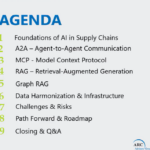
The ARC Advisory Group white paper provides a comprehensive overview of the emerging architecture of AI-enabled supply chains, including:

• Agent-to-Agent communication frameworks for autonomous coordination
• Model Context Protocol for AI memory and continuity
• Retrieval-Augmented Generation for grounded decision support
• Graph-based reasoning for network-level supply chain intelligence
• Data harmonization as the foundation for reliable AI insights

Download the full research report to explore how connected intelligence is reshaping the next generation of logistics systems.

Download the White Paper

About This Research

This webinar is based on ARC Advisory Group research examining how artificial intelligence is transforming supply chain operations across manufacturing, logistics, and global trade networks.

ARC analysts work directly with supply chain technology vendors and enterprise operators to evaluate emerging architectures and operational practices across:

• transportation management systems
• warehouse automation platforms
• supply chain planning technologies
• global trade and compliance systems

These findings reflect both real-world deployments and emerging architectural patterns shaping the future of supply chain intelligence.

Speaker

Jim Frazer
Vice President
ARC Advisory Group

Logistics Viewpoints
https://logisticsviewpoints.com

The post AI in the Supply Chain: Building Intelligent, Adaptive, and Resilient Logistics Systems appeared first on Logistics Viewpoints.

Continue Reading

Non classé

Supply Chain and Logistics News March 2nd-5th

Published

on

By

Supply Chain And Logistics News March 2nd 5th

This was a significant week for supply chain and logistics news. At the start of the week, companies worldwide are closely examining the potential impacts of a long-standing war with Iran and the resulting supply chain consequences. In D.C., technology hyperscalers met to sign an agreement that commits to addressing any increases in electricity costs from new data center projects, which has some energy analysts skeptical. FourKites announced its latest AI Agent and AI Orchestration platform, Loft & Sophie. Additionally, IFS acquired supply chain software company Softeon, enhancing its WMS and execution capabilities. Lastly, NAPA, the auto parts manufacturer, announced a major investment in warehouse robotics following a successful pilot program with Brightpicks.

Your Supply Chain and Logistics News for the Week:

Technology Hyperscalers Sign the “Ratepayer Protection Pledge” at the Whitehouse

On Wednesday, March 4th, several of the nation’s most powerful tech companies met in the White House to discuss mitigating rising electricity prices driven by new data center projects. The pledge these companies agreed to includes a promise to build or provide their own electricity supplies, which mirrors steps that companies like Microsoft, Anthropic, and Google have previously committed to as they seek to power their own data center projects. The pact leaves it to tech companies, utilities, and state officials to determine how to assign a range of costs to the broader power grid that show up in customers’ electricity bills, which is outside of the control of the federal government. The pledge attempts to reverse the rising costs that have driven up residential electricity rates nationwide by an average of 6% in December compared with one year earlier, partly due to surging AI-driven power demand. Experts in the energy markets have cautioned that the pledge doesn’t address some key ways in which the fast construction of data centers threatens to raise people’s power bills. Including increased competition for power plant fuels and components such as gas turbines, as well as Trump’s tariffs on commodities.

FourKites Launches “Loft”: AI Platform to Orchestrate Enterprise Systems with Real-World Intelligence

FourKites announced the launch of Loft, an AI orchestration platform designed to integrate internal enterprise data with external network intelligence. The move signals an expansion for FourKites, moving beyond traditional supply chain tracking into broader enterprise system orchestration, including ERP, CRM, and ITSM systems. The platform is built around “Sophie”, an AI developer agent. Sophie is designed to convert operational requirements submitted in natural language into production-ready workflows. This capability aims to reduce the deployment cycle from months to days and mitigate the ongoing maintenance burden typical of large-scale AI implementations.

Supply Chain Scenario Analysis: Short vs. Prolonged U.S.- Iran Conflict

On February 28, 2026, the US and Israel launched a precision military strike against Iran, triggering global market panic. Looking back at US-Iran tensions in early 2020 that nearly escalated into a full-scale war, though they lasted only about a week before de-escalating and did not evolve into sustained military conflict, many observers at the time believed the impact would be limited. Yet subsequent developments confirmed a fundamental supply chain principle: “short-term shock, long-term transmission.” A 7-day military conflict may appear fleeting, but disruptions to global manufacturing, shipping, and energy supply chains are typically transmitted with a lag and can persist for several months.

Compared with 2020, today’s global manufacturing ecosystem is more interconnected, more energy-dependent, and potentially more exposed to Middle East supply chain disruptions. Many industries are still in recovery phases, with elevated demand for energy and raw materials and tighter logistics requirements. Under either scenario, manufacturing enterprises should accelerate supply chain diversification, redesign logistics networks, increase strategic reserves of critical raw materials, optimize cost structures, invest in energy efficiency and digital manufacturing capabilities, and continuously monitor geopolitical and compliance risks to strengthen long-term supply chain resilience.

NAPA Expands Use of Warehouse Robotics

Auto parts trailer, NAPA plans to expand its use of Brightpick’s AI-powered mobile robots. NAPA has signed an agreement to add Brightpik technology to an additional site after running a pilot project since 2025. The goal is to operate more than 100 robots at this site, with the potential of installing them in other locations in the future. Brightpick will tailor its goods-to-person robots to perform seamlessly in NAPA’s warehouse environments, per the release. Also, Brightpick will integrate the automation system with existing technologies.

IFS Acquires Softeon: Shifting the Tides of WMS and Supply Chain Planning Software

On March 2, 2026, IFS announced the completion of its acquisition of Softeon, formally combining the two companies under the banner IFS Softeon. While acquisitions in supply chain software are not unusual, this transaction is notable for what it suggests about the evolving role of warehouse management within broader enterprise platforms. Rather than positioning warehouse management as a standalone operational system, IFS is clearly framing Softeon as a core execution component within a larger, AI-enabled enterprise architecture. The acquisition of Softeon by IFS is best viewed not as a simple expansion into warehouse management, but as a strategic move to bring execution intelligence deeper into the enterprise stack. As supply chains become more automated, time-sensitive, and disruption-prone, the ability to connect warehouse execution with enterprise decision-making is becoming a competitive requirement rather than a differentiator.

Song of the week:

The post Supply Chain and Logistics News March 2nd-5th appeared first on Logistics Viewpoints.

Continue Reading

Non classé

Hyperscalers Sign White House Pledge to Power AI Data Centers Without Raising Electricity Costs

Published

on

By

Hyperscalers Sign White House Pledge To Power Ai Data Centers Without Raising Electricity Costs

AI Infrastructure and Electricity Demand Converge

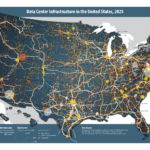
The White House announced that leading AI and cloud companies have signed a new Ratepayer Protection Pledge, committing to ensure that the electricity required to power the next generation of artificial intelligence data centers does not drive higher utility costs for American households.

Donald Trump brought together executives from Amazon, Google, Meta Platforms, Microsoft, OpenAI, Oracle, and xAI to formalize the agreement.

The pledge requires hyperscalers to build, bring, or buy the power required for their data centers and pay the full cost of associated grid infrastructure, ensuring those expenses are not passed on to residential ratepayers.

The initiative reflects a growing concern among policymakers and utilities that the rapid expansion of AI computing infrastructure could strain electricity supply in key regions if not coordinated with energy investment.

Core Commitments of the Ratepayer Protection Pledge

Under the agreement, participating companies committed to several specific provisions designed to protect consumers while enabling the continued expansion of AI infrastructure.

First, hyperscalers will finance new electricity generation to support their computing demand. Companies may build new generation assets or purchase electricity from newly developed capacity so that AI growth does not reduce supply available to households and businesses.

Second, the companies will pay for transmission and grid upgrades required to connect their facilities. This includes substations, transmission lines, and other delivery infrastructure necessary to support hyperscale data centers.

Third, companies will negotiate separate rate structures with utilities and state governments, paying for the electricity capacity dedicated to their facilities whether they ultimately use the power or not. The structure is intended to prevent data center demand from increasing residential electricity bills.

Workforce and Grid Reliability Measures

The pledge also includes commitments tied to workforce development and grid resilience.

Participating companies agreed to hire and train workers from local communities where data centers are built, creating jobs across construction, engineering, and operations.

In addition, hyperscalers will coordinate with grid operators to make backup generation capacity available during periods of electricity scarcity, helping prevent blackouts and improve grid stability.

Administration officials framed the agreement as part of a broader effort to ensure that the economic benefits of AI infrastructure development are shared by local communities.

Implications for Supply Chain Infrastructure

For supply chain leaders, the agreement highlights how artificial intelligence is increasingly dependent on physical infrastructure.

Data center construction drives demand across multiple industrial supply chains including semiconductors, networking equipment, cooling systems, power transformers, and electrical infrastructure. Manufacturing lead times for some of these components are already stretching as demand increases.

At the same time, enterprise supply chain platforms are becoming more reliant on large-scale computing capacity to support advanced analytics and AI-driven decision systems.

As outlined in recent research on next-generation supply chain architectures, modern logistics platforms are evolving toward interconnected systems of autonomous agents, contextual data frameworks, and retrieval-based reasoning models operating across enterprise networks. These capabilities depend on scalable computing infrastructure to function effectively.

AI Infrastructure Becomes a National Priority

The Ratepayer Protection Pledge signals that artificial intelligence infrastructure is no longer simply a technology issue. It is becoming a national infrastructure priority linking energy systems, digital platforms, and industrial supply chains.

For executives across the supply chain sector, the development reinforces a key reality: the pace of AI adoption will increasingly depend not only on software innovation, but also on the availability of energy, grid capacity, and the industrial supply chains that support hyperscale computing.

The post Hyperscalers Sign White House Pledge to Power AI Data Centers Without Raising Electricity Costs appeared first on Logistics Viewpoints.

Continue Reading

Non classé

Iran war pushing air rates up, and disrupting ocean – March 4, 2026 Update

Published

on

By

Iran war pushing air rates up, and disrupting ocean – March 4, 2026 Update

Discover Freightos Enterprise

Published: March 4, 2026

Blog

Weekly highlights

Ocean rates – Freightos Baltic Index

Asia-US West Coast prices (FBX01 Weekly) stayed level.

Asia-US East Coast prices (FBX03 Weekly) stayed level.

Asia-N. Europe prices (FBX11 Weekly) decreased 1%.

Asia-Mediterranean prices(FBX13 Weekly) decreased 2%.

Air rates – Freightos Air Index

China – N. America weekly prices increased 2%.

China – N. Europe weekly prices increased 7%.

N. Europe – N. America weekly prices increased 3%.

Analysis

The US-Israel strikes on Iran and subsequent Iranian retaliation targeting multiple countries in the area since the weekend are driving significant logistics disruptions in the region which could start to be felt more broadly if the conflict stretches on.

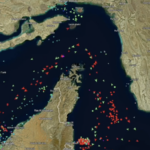
Six tanker vessels in or near the Strait of Hormuz came under attack early this week. The strikes de facto closed the waterway by Sunday, though the IRGC only made an official announcement on Monday. President Trump – who also said the US will cut off trade with Spain in response to being denied access to military bases there – stated on social media that the US would facilitate insurance and naval escorts to keep oil tankers moving through the strait, though experts are skeptical of the feasibility of and speed at which these could be provided.

In terms of container shipping, DP World suspended operations at the major container port of Jebel Ali in Dubai, the largest port in the Middle East, after an aerial interception caused a fire there Saturday night but reopened on Monday. Otherwise, ports remain operational, but with the strait closed and the security risks in the region, the major container carriers are diverting vessels away, cancelling sailings and suspending new bookings.

Hapag-Lloyd and MSC suspended bookings out of Persian Gulf ports and from all origins to these ports – including Oman and UAE ports on the Gulf of Oman side of the strait because of their proximity. CMA-CGM stopped accepting all bookings to and from Persian Gulf ports only. Maersk suspended all new reefer bookings to the entire region, and bookings out of India to the gulf because of the short lead time. But for now Maersk is still accepting general bookings from the Far East, possibly reflecting optimism that the Strait of Hormuz could reopen relatively soon.

These moves mean delays of uncertain duration for shippers to and from the gulf area. The canceled sailings mean gulf-bound containers are already starting to pile up and threaten container yard congestion in India. They could likewise lead to some backlogs at Far East origins that may start to be felt by other shippers out of those ports if the shutdown lengthens.

Carriers still sailing to the region are diverting containers already in-transit to alternatives in the area with most volumes likely to be offloaded at the major Far East transhipment hubs in Singapore, Malaysia and Sri Lanka. A similar shift to transshipment in the early months of the Red Sea crisis led to significant congestion at these ports in 2024, but with lower volumes and more port capacity this time, congestion should not be as severe.

So for now, the war’s impacts on the container market are mostly local, with Hapag-Lloyd reporting that elsewhere operations continue as normal. But the longer the conflict continues the more disruptive it will be and the more broadly it will be felt.

The Strait of Hormuz handles about 2% or 3% of global container volumes, and estimates of the amount of container capacity from the around 100 container vessels now stranded in the Persian Gulf range from less than or around 1% to as much as 10% of effective capacity. Analysts agree though, that the longer these vessels and equipment are out of circulation, the more likely that reduction will be felt in terms of available capacity and equipment out of the Far East. When traffic through the strait resumes, there will likely be some vessel bunching at these ports too, as ships arrive off schedule. Taken together with climbing fuel costs, these factors could start pushing rates up on non-gulf lanes.

So far rates are only going up for containers directly impacted by the closure. CMA CGM introduced a $3,000/FEU emergency surcharge for containers heading to the gulf, and other carriers are also applying fees for diverted bookings. Freightos Terminal container rates for Shanghai to Jebel Ali in Dubai spiked from $1,800 per 40′ container on Saturday to more than $4,000/FEU by Tuesday likely reflecting these surcharges. On the main east-west trades though, rates were stable last week as the Lunar New Year holiday period is still approaching its end, and prices have remained level so far this week too.

War impacts are also reaching the Red Sea. The Houthis – who’ve paused attacks on Red Sea vessels since October – have threatened to resume strikes, though none have been reported yet. In response, the few carriers who had resumed some Red Sea sailings have diverted these vessels back around the Cape of Good Hope until further notice, possibly pushing a full Red Sea return farther off once again.

The crisis may have bigger and more immediate impacts for air cargo. The IRGC has targeted airports in Abu Dhabi, Bahrain, Kuwait and Dubai, with airports and airspace still closed. These closures are directly impacting shippers of volumes to and from the region.

But gulf carriers Qatar Airways and Emirates Skycargo are two of the top three largest cargo carriers by capacity, and together with Etihad make up about 13% of global capacity. Their hubs serve as a major east-west connection point, making up, for example, about a quarter of all China – Europe capacity according to Aevean.

With these carriers’ flights cancelled, many of their aircraft grounded and their hubs inaccessible, global capacity has dipped over the last few days, though there are also signs that direct Asia – Europe capacity has increased in response. South and South East Asian air exports are also heavily dependent on transit through the Middle East for movements west and there are already reports of shippers on these lanes facing disruptions, delays and scrambling for alternatives.

Kuehne + Nagel says forwarders are starting to charter direct Far East – West flights to make up for the missing capacity and that it expect backlogs of Europe and US-bound cargo in Asia to begin stacking up by the end of the week, creating a backlog that could cause delays and push up prices.

Climbing rates on some lanes may already reflect the war disruptions and blow to available capacity. Freightos Air Index data show rates from South East Asia to Europe have climbed more than 6% to $3.82/kg since Friday, with South Asia rates up 3% to Europe and 5% to the US. Middle East – Europe prices are up 8% to $1.62/kg and China -US prices are up 15% to $6.90/kg, though rates had begun increasing before the start of the war, possibly due to the start of some post-LNY bump.

Discover Freightos Enterprise

Freightos Terminal: Real-time pricing dashboards to benchmark rates and track market trends.

Procure: Streamlined procurement and cost savings with digital rate management and automated workflows.

Rate, Book, & Manage: Real-time rate comparison, instant booking, and easy tracking at every shipment stage.

Prateek

Put the Data in Data-Backed Decision Making

Freightos Terminal helps tens of thousands of freight pros stay informed across all their ports and lanes

The post Iran war pushing air rates up, and disrupting ocean – March 4, 2026 Update appeared first on Freightos.

Continue Reading

Trending