
Connect with us

Non classé

China-US trade tensions rising, and new tariff threats loom – October 15, 2025 Update

Published

on

China-US trade tensions rising, and new tariff threats loom – October 15, 2025 Update

Discover Freightos Enterprise

October 15, 2025

Blog

Weekly highlights

Ocean rates – Freightos Baltic Index

Asia-US West Coast prices (FBX01 Weekly) fell 8% to $1,431/FEU.

Asia-US East Coast prices (FBX03 Weekly) fell 8% to $3,015/FEU.

Asia-N. Europe prices (FBX11 Weekly) fell 9% to $1,747/FEU.

Asia-Mediterranean prices (FBX13 Weekly) fell 4% to $2,131/FEU.

Air rates – Freightos Air index

China – N. America weekly prices increased 19% to $5.33/kg.

China – N. Europe weekly prices fell 3% to $3.92/kg.

N. Europe – N. America weekly fell 1% to $1.70/kg.

Analysis

Reported progress in US-China negotiations last month had some hopeful that the USTR would reduce or cancel its planned port call fees before the October 14th roll out date. Instead, the past week has featured a flurry of trade tension escalations between the world’s two largest economies.

In addition to tit for tat fees on US-linked vessels making China port calls starting October 14th, China announced new restrictions on rare earth metal exports with some taking effect immediately and others starting December 1st.

President Trump responded by threatening to cancel his late-month summit with Chinese leader Xi Jinping in S. Korea and to introduce 100% tariffs on all Chinese exports to the US starting November 1st – though the 145% tariff pause that the White House extended back in August will in any case expire on November 10th. The US administration also threatened, among other sanctions, to introduce port call fees or bar entry to vessels flagged in countries that vote for the International Maritime Organization’s net zero framework at the IMO’s meeting this week.

In terms of immediate impact, as some Chinese carriers have stated that the USTR fees will not impact their schedules or lead to surcharges for customers, and most other carriers have reduced the number of liable vessels making US calls, the fees may be unlikely to impact eastbound transpacific freight rates, operations or capacity much for now. And as Clarkson’s Research estimates that China’s port fees would impact only about 5% of port calls, and most impacted carriers will likely adjust vessel deployments to minimize exposure, these fees are unlikely to cause much of an impact.

In any event, the biggest driver of freight rates at the moment is growing container vessel capacity.

The first stage of the Israel-Hamas ceasefire has increased anticipation of a container traffic return to the Red Sea which, after some period of schedule disruptions and congestion, would release a significant amount of capacity back into the market. CULines and other carriers are already increasing services through the Suez Canal. Most carriers however, will not resume transiting the Red Sea until after a significant period of demonstrated stability and security.

But in the meantime, ocean rates have already fallen to their lowest levels since just before the start of the Red Sea crisis in late 2023. Transpacific rates dipped another 8% last week to about $1,400/FEU to the West Coast and $3,000/FEU to the East Coast. Current US import volumes estimated to be at their lowest since mid-2023 due to trade war frontloading earlier in the year – and projected to continue declining through December – are contributing, along with supply growth, to the strong downward pressure on transpacific container prices.

But Asia – Europe demand is likely stronger than last year. And despite volume strength and persistent congestion recently worsened by labor disruptions at some key ports, container rates slipped 9% to $1,747/FEU last week and are also back to 2023 levels, pointing to capacity growth as a key driver of current rate behavior.

Carriers will introduce GRIs of about $1,000/FEU for Asia-Europe services in November, with some announcing increases for Asia – N. America as well, in an attempt to push rates up ahead of Asia – Europe contracting season. Significant capacity reductions in October however have so far not succeeded in slowing the rate slide.

For air cargo, President Trump’s November 1st China tariff threat may be driving some recent increase in rates, though the government shutdown is also reportedly causing some congestion in the US and this time last year peak season demand had already started to pick up. Freightos Air Index China – US prices increased 19% last week back to mid-September levels of about $5.30/kg, though rates were approaching the $7.00/kg a year ago.

China – Europe prices fell 3% to $3.92/kg, but remain 5% higher than a month ago and about level with last October. The labor disruptions in Belgium impacting ocean freight are also causing air delays, especially to passenger flights, though so far cargo rates remain unaffected.
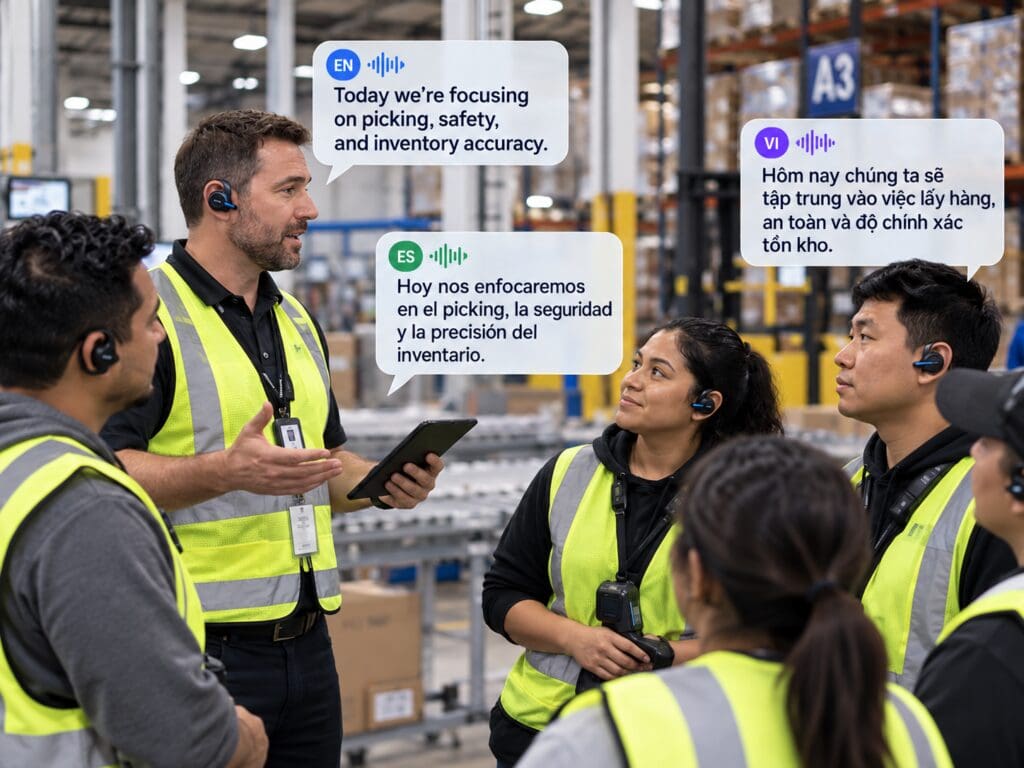

Discover Freightos Enterprise

Freightos Terminal: Real-time pricing dashboards to benchmark rates and track market trends.

Procure: Streamlined procurement and cost savings with digital rate management and automated workflows.

Rate, Book, & Manage: Real-time rate comparison, instant booking, and easy tracking at every shipment stage.

Judah Levine

Head of Research, Freightos Group

Judah is an experienced market research manager, using data-driven analytics to deliver market-based insights. Judah produces the Freightos Group’s FBX Weekly Freight Update and other research on what’s happening in the industry from shipper behaviors to the latest in logistics technology and digitization.

Put the Data in Data-Backed Decision Making

Freightos Terminal helps tens of thousands of freight pros stay informed across all their ports and lanes

The post China-US trade tensions rising, and new tariff threats loom – October 15, 2025 Update appeared first on Freightos.

Continue Reading

Non classé

Transatlantic ocean rates spike as surcharges take effect – April 14, 2026 Update

Published

on

By

Transatlantic ocean rates spike as surcharges take effect – April 14, 2026 Update

Published: April 15, 2026

Blog

Weekly highlights

Ocean rates – Freightos Baltic Index

Asia-US West Coast prices (FBX01 Weekly) increased 3%.

Asia-US East Coast prices(FBX03 Weekly) increased 10%.

Asia-N. Europe prices(FBX11 Weekly) decreased 4%.

Asia-Mediterranean prices(FBX13 Weekly) stayed level.

Air rates – Freightos Air Index

China – N. America weekly prices stayed level.

China – N. Europe weekly prices increased 7%.

N. Europe – N. America weekly prices decreased 3%.

Analysis

Ceasefire talks that potentially could have yielded at least a partial reopening of the Strait of Hormuz quickly collapsed late last week and moved in the opposite direction, with a US naval blockade of Iran-linked traffic now in place. The few container vessels that have moved through – and any other that might manage to exit the Persian Gulf during the fragile pause – are probably unlikely to return to Gulf ports until carriers are confident the waterway is stable.

The Iranian closure has reduced global oil supply by 10% – with the added US blockade set to reduce energy flows further – and some countries are already taking measures to conserve stocks.

For the container market too, the biggest impact of the war has been on fuel costs and accessibility. Dwindling supply of bunker fuel in some Asian hubs is leading to reports of some ships switching to alternative ports, ironically using more fuel in the process.

Rising fuel costs have impacted container rates across the market, even for lanes where fuel availability is not yet a factor.

Emergency Fuel Surcharges and PSSs of between $500 – $1,000/FEU announced back in March for transatlantic shipments recently went into effect. Freightos Baltic Index transatlantic rates spiked 50% last week, climbing from $1,400/FEU to more than $2,100/FEU. Some carriers have scheduled more Europe – N. America rate increases for later this month or early May ranging from $1,000/FEU – $2,000/FEU.

Transpacific rates to the West Coast climbed a more modest 3% last week to about $2,500/FEU and East Coast prices increased 10% to $3,678/FEU, both about $700/FEU higher than before the war. Some carriers are aiming for additional price hikes ranging from $500 – $2,000/FEU for these lanes in early May, though carriers may face a challenge sustaining those prices if rate behavior since late February, including for Asia – Europe prices, is a guide.

Asia-Europe rates have increased relatively modestly since the start of the war – albeit during the typical low demand, low rate period across these east-west lanes – climbing $200 – $400/FEU. Prices to N. Europe dipped 4% to $2,800/FEU last week and Mediterranean rates were level at $3,800/FEU – but both are around $1,000/FEU or more below GRIs that were set for March and again for early April.

The National Retail Federation projects level US ocean import volumes through June, before a 5% increase on peak season demand starting in July. Estimated year to date volumes through August however, would be 3% lower than the same period last year.

That the latest NRF volume projections for the coming months have not deviated significantly from those made in early February – just before the Supreme Court invalidated IEEPA tariffs and the White House introduced a global 10% tariff based on Section 122 as a temporary measure until July – suggests that most shippers are not frontloading ahead of the July deadline when tariffs may climb again.

In the meantime, multiple parties are challenging the Trump administration’s current use of Section 122 – a law designed to address international balance of payment issue back when the US was still on the gold standard – in the same court that first struck down IEEPA just as the refund process for IEEPA tariffs is about to get underway.

In air cargo the war continues to impact fuel costs and availability, in addition to driving volume shifts and a capacity crunch.

The Middle East supplies about a fifth of the world’s jet fuel and prices have more than doubled since the Strait of Hormuz closure. Countries especially dependent on Gulf jet fuel or on refineries in China – which has stopped exporting jet fuel – are already taking steps to conserve.

Vietnam and Myanmar are running low, with Vietnam Airlines reportedly canceling 20% of its flights as a result and foreign airlines refueling elsewhere before landing. Cathay Pacific will cancel 2% of its flights starting in mid-May to conserve fuel and reduce costs. Europe could face similar shortages by as soon as May, and though N. America is less exposed to supply issues, carriers like Delta and United are also canceling a number of unprofitable flights due to higher costs.

The fragile ceasefire is not enough to entice non-Gulf carriers to resume Middle East flights, and even as Gulf carriers continue their gradual recovery, the total number of flights in and out of the region are an estimated 60% lower than before the war. A good share of Gulf carrier cargo capacity is via passenger flights, so a full recovery could be difficult as long as visitors stay away.

This capacity strain, climbing fuel prices, as well as a shift of volumes to alternative Asia – Europe routes continue to put upward pressure on rates across most lanes though the rate of ascent has slowed on some routes and prices on other lanes are past their peak for now as capacity follows volumes.

Freightos Air Index S. Asia – Europe rates of $5.15/kg are double their pre-war level and SEA – Europe prices are 60% higher at $5.30/kg with both continuing to climb last week. China – N. America rates meanwhile were level at $6.30/kg and only 7% higher than late February after climbing to a peak of more than $7.50/kg in late March.

Discover Freightos Enterprise

Freightos Terminal: Real-time pricing dashboards to benchmark rates and track market trends.

Procure: Streamlined procurement and cost savings with digital rate management and automated workflows.

Rate, Book, & Manage: Real-time rate comparison, instant booking, and easy tracking at every shipment stage.

Put the Data in Data-Backed Decision Making

Freightos Terminal helps tens of thousands of freight pros stay informed across all their ports and lanes

The post Transatlantic ocean rates spike as surcharges take effect – April 14, 2026 Update appeared first on Freightos.

Continue Reading

Non classé

The OSI Model and AI in the Supply Chain: Why Layered Architecture Still Matters

Published

on

By

AI in the supply chain is often approached as an application problem. In practice, it is more often an architectural one. The OSI model offers a useful lens for understanding why.

The Architecture Problem Behind AI in Supply Chains

Most discussions about AI in the supply chain begin at the top of the stack. They focus on copilots, models, dashboards, and use cases such as forecasting, routing, and risk detection. Those applications matter, but they are not the starting point.

The more important issue is the architecture underneath them.

This is where the OSI model becomes a useful reference point. Not because supply chains operate like communications networks in any literal sense, but because the OSI model solved a similar structural problem. It separated complexity into layers and clarified how those layers interact. That same discipline is becoming increasingly relevant as AI moves deeper into logistics and supply chain operations.

AI in the Supply Chain Is Best Understood as a Layered System

The most practical way to think about AI in the supply chain is as a layered system.

At the foundation is the data layer. This includes ERP, TMS, WMS, IoT signals, supplier feeds, and external data sources. If this layer is fragmented or inconsistent, the layers above it will underperform. That aligns directly with the data harmonization requirement described in ARC research. AI depends on clean, linked, and current data, and advanced systems are only as effective as the data they operate on .

Above that is the communication layer. In traditional systems, applications exchange information through rigid integrations, manual handoffs, and batch processes. In more advanced environments, data and decisions move through APIs, event streams, and increasingly through agent-to-agent coordination. ARC’s framework describes A2A as a way for autonomous software agents to interact directly, share data, assess options, and execute decisions across the supply chain . That matters because modern supply chains do not just need better analytics. They need faster coordination across functions.

Context Is the Missing Layer in Many AI Deployments

The next layer is context. This is where many AI initiatives begin to weaken. Systems may generate plausible recommendations, but without memory of prior events, supplier history, operational constraints, or previous failures, they remain limited. The white paper describes the Model Context Protocol as a way to embed memory, identity, and continuity into AI systems so they can retain operating context over time and carry that context across workflows . In supply chain settings, that kind of continuity is important because decisions are rarely isolated. They are part of a sequence.

Reasoning Must Reflect the Networked Nature of Supply Chains

Then comes the reasoning layer. This is where retrieval-augmented generation and graph-based reasoning become useful. RAG allows systems to retrieve current, domain-specific information before generating an answer. Graph RAG extends that by reasoning across interconnected entities and dependencies. ARC’s analysis makes the point clearly: supply chains are networks, not lists, and graph structures help AI navigate those interdependencies more effectively .

This is one of the more important distinctions in enterprise AI. A system that can retrieve a policy document is useful. A system that can understand how a supplier, a port, an order, and a downstream constraint relate to one another is more operationally relevant.

Why Many AI Initiatives Stall

At the top is the application layer, the part users actually see. This includes control towers, planning workbenches, copilots, and workflow assistants. Most companies start here. That is understandable, because this is the visible part of the stack. It is also why many AI initiatives produce narrow results. The application may improve, but the lower layers remain weak.

That is the main lesson the OSI analogy helps clarify. AI in the supply chain should not be treated primarily as a front-end feature. It is better understood as a layered architecture that depends on data quality, system interoperability, context retention, and network-aware reasoning.

This also helps explain why some AI deployments perform well in demonstrations but struggle in operations. The model itself may be capable, but the environment around it may not be ready. Data may not be harmonized. Systems may not communicate cleanly. Context may not persist. Knowledge retrieval may not be grounded in current enterprise information. In those cases, the problem is not that AI has limited potential. The problem is that the stack is incomplete.

The ARC Framework Points to a More Durable Model

The ARC framework points toward a more grounded view. A2A supports coordination between systems. MCP supports continuity across time and decisions. RAG supports access to relevant knowledge. Graph RAG supports reasoning across a networked operating environment. Together, these are not just features. They are components of an emerging architecture for supply chain intelligence.

What This Means for Supply Chain Leaders

For supply chain leaders, the implication is practical. AI strategy should begin with the question, “What layers need to be in place for these systems to work reliably at scale?” That shifts the focus away from isolated pilots and toward a more durable operating model.

In practical terms, that means improving data harmonization before expanding model deployment. It means designing for system-to-system coordination rather than relying only on dashboards and alerts. It means treating context as infrastructure rather than as a convenience feature. And it means building toward reasoning systems that reflect the networked nature of the supply chain itself.

Bottom Line

The OSI model is not a blueprint for AI in logistics. But it remains a useful reminder that complex systems tend to perform better when their layers are clearly defined and properly integrated.

That is becoming true of AI in the supply chain as well.

The companies that recognize this early are more likely to build systems that support better coordination, more consistent decision-making, and more useful intelligence across the network. The companies that do not may continue to add AI applications at the surface while leaving the underlying architecture unresolved.

The post The OSI Model and AI in the Supply Chain: Why Layered Architecture Still Matters appeared first on Logistics Viewpoints.

Continue Reading

Non classé

Anthropic’s Mythos Raises the Stakes for Software Security

Published

on

By

Anthropic’s decision to restrict access to Mythos is more than a product decision. It suggests that frontier AI is moving into a more serious class of cybersecurity capability, with implications for software vendors, critical infrastructure, and the digital systems that support modern supply chains.

Anthropic’s latest announcement deserves attention well beyond the AI market.

The company says its new Claude Mythos Preview model has identified thousands of previously unknown software vulnerabilities across major operating systems, browsers, and other widely used software environments. But the more important point is not the claim itself. It is the release strategy. Anthropic did not make the model broadly available. It placed Mythos inside a controlled early-access program and limited access to a select group of major technology and security organizations.

That tells you something.

This is not being positioned as another general-purpose model that happens to be good at security work. Anthropic is treating Mythos as a system with enough cyber capability, and enough dual-use risk, to justify a restricted rollout. That is a notable change in posture.

For supply chain and logistics leaders, the relevance is not hard to see. Modern supply chains now depend on a thick software layer: ERP platforms, transportation systems, warehouse systems, visibility tools, APIs, cloud infrastructure, industrial software, and partner integrations. If frontier AI materially improves the speed and scale at which vulnerabilities can be found, then this is not just a cybersecurity story. It is an operations story.

A compromised transportation platform is not merely an IT issue. A weakness in a warehouse execution environment is not just a software problem. These failures can disrupt planning, fulfillment, supplier coordination, inventory visibility, and customer service. In a software-mediated supply chain, cyber weakness increasingly becomes operational weakness.

That is the real significance here.

Over the last year, much of the AI discussion has centered on productivity. Better copilots. Faster coding. More automation. Mythos is a reminder that the same capability gains can cut the other way too. A model that is better at reasoning through code and complex systems may also be better at finding weaknesses, chaining exploits, and shortening the gap between vulnerability discovery and exploitation.

That does not mean a disaster scenario is around the corner. But it does mean the discussion is changing.

There is also a second issue in Anthropic’s release strategy. Early access creates asymmetry. The organizations that get access to these tools first will be in a better position to harden their environments than those that do not. Large platform vendors and elite security firms are more likely to absorb this shift quickly. Smaller software providers and companies with less security depth may not.

That matters commercially as well as technically.

In a more AI-intensive security environment, resilience becomes a more visible part of product value. Customers will still care about features, workflow, and ROI. But they will also care, more directly, about whether a vendor can secure its software stack in an environment where advanced models may be able to surface weaknesses faster than traditional testing methods ever could. For some vendors, that will strengthen their position. For others, it may expose how thin their defenses really are.

There is also a governance signal here. A leading AI company has decided that broad release is not the responsible first step for this class of capability. Whether that becomes standard practice or not, it marks a threshold. It suggests that at least some frontier model capabilities now carry enough cybersecurity weight to influence how they are released and who gets access first.

Enterprise technology leaders should pay attention to that.

They should also take the broader lesson. Security cannot sit on the edge of the AI agenda. It has to move closer to the center of the operating model. That means tighter software supply chain governance, faster patching cycles, better dependency visibility, stronger segmentation of critical systems, and more disciplined red-teaming. It also means recognizing that cyber resilience is now part of business resilience.

There is a related point here. If models like Mythos increase uncertainty around software security, vendors will face a higher burden to prove resilience. If vulnerability discovery is getting faster and cheaper, then older assumptions about defensibility, testing depth, and incumbent safety become less comfortable. That pressure will not fall evenly. Firms with strong engineering depth and security discipline are more likely to absorb it. Others may find that the market becomes less forgiving.

For supply chain leaders, the takeaway is straightforward. As AI becomes more deeply embedded in planning, logistics, and execution systems, the integrity of the software environment becomes more central to performance. If frontier models accelerate vulnerability discovery, the burden on both vendors and enterprises to secure those environments rises with it.

Mythos matters not because it proves the worst case. It matters because it shows where the curve is going.

A major AI developer has now made clear that frontier AI is moving into territory where the cybersecurity implications are serious enough to shape release strategy and access controls. That is a meaningful development. Supply chain and technology leaders should treat it that way.

The post Anthropic’s Mythos Raises the Stakes for Software Security appeared first on Logistics Viewpoints.

Continue Reading

Trending