Connect with us

Non classé

Apple’s $500 Billion Investment in Artificial Intelligence

Published

on

Apple’s $500 Billion Investment In Artificial Intelligence

Apple in a press release published recently announced a monumental investment plan, committing to spend over USD 500 billion in the United States over the next four years. This ambitious initiative is set to transform various aspects of the supply chain, from manufacturing and job creation to research and development, infrastructure upgrades, and sustainability efforts.

In short, Apple plans to commit $500 billion in the US over the next four years, hire 20,000 new employees, and expand to their additional 24 factories producing silicon for Apple products.

Teams and facilities expected to expand are in Michigan, Texas, California, Arizona, Nevada, Iowa, Oregon, North Carolina, and Washington.

As part of this package of U.S. investments, Apple and its partners will open a new advanced manufacturing facility in Houston to produce servers that support Apple Intelligence, the personal intelligence system that helps users write, express themselves, and get things done.

Manufacturing and Job Creation

Apple’s plan to create thousands of new jobs and expand its manufacturing capabilities within the U.S. is a strategic move to enhance domestic production. This shift is expected to:

Reduce Dependency on International Supply Chains: By increasing local manufacturing, Apple can mitigate risks associated with global supply chain disruptions.

Research and Development

A significant portion of the investment will be allocated to research and development (R&D). This focus on innovation is crucial for maintaining Apple’s competitive edge. Key areas of R&D investment include:

Advanced Technologies: Development of cutting-edge technologies such as artificial intelligence, augmented reality, and next-generation hardware.

Infrastructure Upgrades

Apple’s plan to upgrade and expand its infrastructure includes significant investments in data centers and other facilities. These upgrades will:

Enhance Operational Efficiency: Improved infrastructure will support Apple’s growing operations, ensuring seamless and efficient supply chain management.
Support Data-Driven Decision Making: Advanced data centers will enable better data analytics and insights, driving more informed and strategic decisions.

Sustainability Initiatives

Apple’s commitment to sustainability is a core component of its investment plan. The company aims to:

Invest in Renewable Energy: Expanding the use of renewable energy sources to power its operations, reducing its carbon footprint.
Promote Green Technologies: Development and implementation of environmentally friendly technologies and practices within the supply chain.

Long-Term Impact on the Supply Chain

Apple’s $500 billion investment is poised to have a lasting impact on the supply chain landscape. Key long-term effects include:

Increased Resilience: By diversifying and strengthening its supply chain, Apple can better withstand global disruptions and maintain continuity.
Technological Leadership: Continued investment in R&D will ensure Apple remains a leader in technological innovation, setting industry standards.
Sustainable Practices: Apple’s focus on sustainability will drive the adoption of green practices across the supply chain, promoting environmental responsibility.

Apple Press Release: Apple will spend more than $500 billion in the U.S. over the next four years

The post Apple’s $500 Billion Investment in Artificial Intelligence appeared first on Logistics Viewpoints.

Continue Reading

Non classé

Amazon Tests Structured Delivery Windows as It Repositions Speed

Published

on

By

Amazon Tests Structured Delivery Windows As It Repositions Speed

Amazon is testing a delivery model that divides the day into ten delivery windows across a 24-hour period. This follows recent efforts around sub-hour delivery and a proposed one-hour “rush” pickup model using stores such as Whole Foods Market.

The direction is straightforward: delivery speed is being segmented and potentially priced, rather than treated as a single standard.

From Uniform Speed to Tiered Service

The delivery window model introduces structured choice:

Customers select defined delivery windows

Faster or narrower windows may carry higher cost

Broader windows allow for lower-cost fulfillment

This allows Amazon to shape demand instead of only responding to it.

Operational Impact

The focus is control over network flow rather than absolute speed. With defined windows, Amazon can:

Improve route density

Reduce peak congestion

Align delivery timing with available capacity

The proposed “rush” pickup model extends this into physical locations. By combining online inventory with store stock, stores function as local fulfillment nodes.

Competitive Context

Walmart continues to expand store-based fulfillment and drone delivery. The competitive focus remains:

Proximity to demand

Flexibility in fulfillment options

Cost to serve at different service levels

Amazon’s approach emphasizes range of options rather than a single fastest promise.

Economic Model

This structure creates a clearer link between service level and cost. As supply chains become more dynamic, companies are aligning service commitments with operational constraints and capacity . Delivery windows apply that logic to the last mile.

Implications

If this model scales:

Speed becomes a selectable service level

Customer choice influences network efficiency

Pricing can be used to balance demand and capacity

The change is practical. The objective is not simply faster delivery, but more controlled execution of it.

The post Amazon Tests Structured Delivery Windows as It Repositions Speed appeared first on Logistics Viewpoints.

Continue Reading

Non classé

NVIDIA and the Role of AI Infrastructure in Supply Chains

Published

on

By

Nvidia And The Role Of Ai Infrastructure In Supply Chains

NVIDIA is not a supply chain software provider. It is part of the infrastructure layer now supporting how supply chain decisions are made.

As AI moves from isolated use cases into core operations, compute and runtime environments become part of system design. NVIDIA’s role sits at that layer.

Infrastructure, not applications

NVIDIA provides the underlying components used to build and run AI systems:

GPU hardware for model training and inference

CUDA and supporting libraries

Enterprise AI deployment software

Simulation platforms such as Omniverse

These are used by software vendors and enterprises. They are not supply chain applications themselves.

From isolated models to concurrent workloads

Earlier AI deployments in supply chains were limited to specific functions. Forecasting, routing, and warehouse automation were typically deployed independently.

With access to scalable compute, multiple models can now run in parallel and update outputs more frequently. This supports:

Continuous forecast updates

Real-time routing adjustments

Computer vision in warehouse operations

Network-level scenario modeling

The change is not the use case. It is the ability to operate them together and at higher frequency.

Planning is no longer periodic

Traditional systems operate in cycles. Data is collected, plans are generated, and execution follows. AI systems supported by GPU infrastructure operate on shorter loops.

Forecasts are updated as new data arrives

Transportation decisions adjust during execution

Inventory positions shift as conditions change

Exceptions are identified earlier

This reduces the time between signal and response.

Simulation as a planning tool

Simulation has been used in supply chains for years, but often with limited scope. GPU-based environments allow more detailed models:

Warehouse layout and flow

Distribution network scenarios

Equipment and automation performance

Platforms such as Omniverse support these use cases. The objective is to evaluate decisions before deployment.

Multi-system coordination

As AI expands across functions, coordination becomes a constraint.

Running multiple models simultaneously requires:

Sufficient compute capacity

Low-latency processing

Integration across systems

NVIDIA’s platforms are commonly used in environments where these conditions are required.

Why this matters

Supply chains are operating with higher variability across demand, supply, and cost.

Systems designed for stable conditions are less effective in this environment.

AI-based approaches increase the frequency and scope of decision-making. That depends on infrastructure capable of supporting continuous model execution.

Implications

The primary question is not whether to adopt AI, but how it is supported. This includes:

Compute availability for training and inference

Data integration across systems

Ability to run models continuously

Use of simulation in planning

AI deployment in supply chains is increasingly tied to infrastructure decisions.

The shift underway is practical. Companies are working through how to run models more frequently, connect systems more effectively, and make decisions with less delay. The enabling technologies are becoming clearer, and the path forward is less about experimentation and more about execution.

The post NVIDIA and the Role of AI Infrastructure in Supply Chains appeared first on Logistics Viewpoints.

Continue Reading

Non classé

Designing Supply Chain Networks for Energy Volatility

Published

on

By

Designing Supply Chain Networks For Energy Volatility

Energy is no longer a background cost in supply chain operations. It is becoming a primary design constraint.

For years, network design focused on labor, transportation, and inventory positioning. Energy was assumed to be stable and largely interchangeable across regions. That assumption is breaking down.

Volatility in fuel and electricity prices, combined with regulatory pressure and increasing electrification, is reshaping cost structures and operational risk. As a result, supply chain leaders are being forced to rethink how networks are designed and managed.

Energy Is Now a Structural Variable

Three forces are driving this shift:

Price volatility across fuel and grid-based energy

Regulatory pressure tied to emissions and reporting

Increased dependency from automation and electrification

In many networks, energy is now one of the most dynamic and least controlled inputs.

A network optimized for transportation cost alone may now be exposed to regional energy spikes. A warehouse automation investment may reduce labor but increase sensitivity to energy pricing. These trade-offs were not historically modeled.

From Static Models to Adaptive Networks

Traditional network design assumes relatively stable inputs and periodic optimization.

That model no longer holds.

Modern supply chains require:

Dynamic cost modeling that incorporates real-time energy inputs

Scenario-based design that accounts for regional volatility

Adaptive routing and sourcing decisions

This reflects a broader shift toward adaptive, data-driven operations described in ARC research . Energy is now one of the variables forcing that transition.

Embedding Energy Into Network Design

Leading organizations are beginning to incorporate energy directly into network decisions:

Facility Placement
Evaluating locations based on grid stability, long-term pricing, and regulatory exposure

Consumption Optimization
Managing energy usage across warehousing, transportation, and fulfillment operations

Integrated Planning
Linking energy considerations into transportation, inventory, and sourcing decisions

This moves energy from a cost line item to a system-level design factor.

Building Resilience Against Volatility

Energy introduces a new layer of operational risk:

Regional grid instability

Fuel price shocks

Regulatory shifts affecting flows and sourcing

Resilience now requires diversified network structures, flexible transportation strategies, and scenario planning that includes energy as a core variable.

The Strategic Implication

Supply chains are becoming more context-aware, adaptive, and interconnected. Energy is not a side consideration. It is a driver of network design, cost performance, and long-term competitiveness.

Organizations that incorporate energy into their network models will operate with greater stability and control. Those that do not will face increasing exposure to volatility they cannot predict or manage.

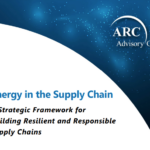
Download the Energy Report

Designing networks for energy volatility requires new assumptions, new models, and a more integrated approach to planning and execution.

Download the full report to learn how to optimize consumption, build resilience, and design energy-aware supply chains for long-term advantage.

Get the Report Now!

The post Designing Supply Chain Networks for Energy Volatility appeared first on Logistics Viewpoints.

Continue Reading

Trending