Connect with us

Non classé

NVIDIA and the Role of AI Infrastructure in Supply Chains

Published

on

Nvidia And The Role Of Ai Infrastructure In Supply Chains

NVIDIA is not a supply chain software provider. It is part of the infrastructure layer now supporting how supply chain decisions are made.

As AI moves from isolated use cases into core operations, compute and runtime environments become part of system design. NVIDIA’s role sits at that layer.

Infrastructure, not applications

NVIDIA provides the underlying components used to build and run AI systems:

GPU hardware for model training and inference

CUDA and supporting libraries

Enterprise AI deployment software

Simulation platforms such as Omniverse

These are used by software vendors and enterprises. They are not supply chain applications themselves.

From isolated models to concurrent workloads

Earlier AI deployments in supply chains were limited to specific functions. Forecasting, routing, and warehouse automation were typically deployed independently.

With access to scalable compute, multiple models can now run in parallel and update outputs more frequently. This supports:

Continuous forecast updates

Real-time routing adjustments

Computer vision in warehouse operations

Network-level scenario modeling

The change is not the use case. It is the ability to operate them together and at higher frequency.

Planning is no longer periodic

Traditional systems operate in cycles. Data is collected, plans are generated, and execution follows. AI systems supported by GPU infrastructure operate on shorter loops.

Forecasts are updated as new data arrives

Transportation decisions adjust during execution

Inventory positions shift as conditions change

Exceptions are identified earlier

This reduces the time between signal and response.

Simulation as a planning tool

Simulation has been used in supply chains for years, but often with limited scope. GPU-based environments allow more detailed models:

Warehouse layout and flow

Distribution network scenarios

Equipment and automation performance

Platforms such as Omniverse support these use cases. The objective is to evaluate decisions before deployment.

Multi-system coordination

As AI expands across functions, coordination becomes a constraint.

Running multiple models simultaneously requires:

Sufficient compute capacity

Low-latency processing

Integration across systems

NVIDIA’s platforms are commonly used in environments where these conditions are required.

Why this matters

Supply chains are operating with higher variability across demand, supply, and cost.

Systems designed for stable conditions are less effective in this environment.

AI-based approaches increase the frequency and scope of decision-making. That depends on infrastructure capable of supporting continuous model execution.

Implications

The primary question is not whether to adopt AI, but how it is supported. This includes:

Compute availability for training and inference

Data integration across systems

Ability to run models continuously

Use of simulation in planning

AI deployment in supply chains is increasingly tied to infrastructure decisions.

The shift underway is practical. Companies are working through how to run models more frequently, connect systems more effectively, and make decisions with less delay. The enabling technologies are becoming clearer, and the path forward is less about experimentation and more about execution.

The post NVIDIA and the Role of AI Infrastructure in Supply Chains appeared first on Logistics Viewpoints.

Continue Reading

Non classé

Designing Supply Chain Networks for Energy Volatility

Published

on

By

Designing Supply Chain Networks For Energy Volatility

Energy is no longer a background cost in supply chain operations. It is becoming a primary design constraint.

For years, network design focused on labor, transportation, and inventory positioning. Energy was assumed to be stable and largely interchangeable across regions. That assumption is breaking down.

Volatility in fuel and electricity prices, combined with regulatory pressure and increasing electrification, is reshaping cost structures and operational risk. As a result, supply chain leaders are being forced to rethink how networks are designed and managed.

Energy Is Now a Structural Variable

Three forces are driving this shift:

Price volatility across fuel and grid-based energy

Regulatory pressure tied to emissions and reporting

Increased dependency from automation and electrification

In many networks, energy is now one of the most dynamic and least controlled inputs.

A network optimized for transportation cost alone may now be exposed to regional energy spikes. A warehouse automation investment may reduce labor but increase sensitivity to energy pricing. These trade-offs were not historically modeled.

From Static Models to Adaptive Networks

Traditional network design assumes relatively stable inputs and periodic optimization.

That model no longer holds.

Modern supply chains require:

Dynamic cost modeling that incorporates real-time energy inputs

Scenario-based design that accounts for regional volatility

Adaptive routing and sourcing decisions

This reflects a broader shift toward adaptive, data-driven operations described in ARC research . Energy is now one of the variables forcing that transition.

Embedding Energy Into Network Design

Leading organizations are beginning to incorporate energy directly into network decisions:

Facility Placement
Evaluating locations based on grid stability, long-term pricing, and regulatory exposure

Consumption Optimization
Managing energy usage across warehousing, transportation, and fulfillment operations

Integrated Planning
Linking energy considerations into transportation, inventory, and sourcing decisions

This moves energy from a cost line item to a system-level design factor.

Building Resilience Against Volatility

Energy introduces a new layer of operational risk:

Regional grid instability

Fuel price shocks

Regulatory shifts affecting flows and sourcing

Resilience now requires diversified network structures, flexible transportation strategies, and scenario planning that includes energy as a core variable.

The Strategic Implication

Supply chains are becoming more context-aware, adaptive, and interconnected. Energy is not a side consideration. It is a driver of network design, cost performance, and long-term competitiveness.

Organizations that incorporate energy into their network models will operate with greater stability and control. Those that do not will face increasing exposure to volatility they cannot predict or manage.

Download the Energy Report

Designing networks for energy volatility requires new assumptions, new models, and a more integrated approach to planning and execution.

Download the full report to learn how to optimize consumption, build resilience, and design energy-aware supply chains for long-term advantage.

Get the Report Now!

The post Designing Supply Chain Networks for Energy Volatility appeared first on Logistics Viewpoints.

Continue Reading

Non classé

Supply Chain Planning Investment Is Concentrating Around Fewer, Higher-Impact Capabilities

Published

on

By

Supply Chain Planning Investment Is Concentrating Around Fewer, Higher Impact Capabilities

The supply chain technology market continues to expand, but not evenly. Investment is concentrating around specific planning capabilities, architectures, and regions where volatility, automation, and analytics are reshaping performance expectations. The result is a widening gap between organizations that are modernizing planning as a system, and those still operating with fragmented tools and static processes.

Global Trade Management platforms are no longer just compliance tools. They are becoming a control layer for cross border operations.

As trade complexity rises, organizations are moving toward integrated GTM platforms that unify compliance, execution, documentation, and risk management.

Understanding where growth is accelerating, and where it is plateauing, is now a strategic requirement.

Planning is no longer a standalone function. It is becoming a coordination layer across the supply chain, linking demand, inventory, sourcing, and execution into a continuous decision cycle. As outlined in , this reflects a broader shift toward connected intelligence, where systems operate with shared data, context, and adaptive logic rather than isolated workflows.

Within this shift, several areas are emerging as focal points for investment:

Demand sensing, forecasting, and scenario modeling are evolving toward real-time, multi-signal inputs

Inventory strategies are moving toward multi-echelon optimization across networks rather than node-level planning

Integration between planning and execution systems is tightening, reducing latency between decision and action

Regional adoption patterns are diverging, with faster uptake in markets facing higher volatility and complexity

Enterprise challenges are shifting from tool selection to architecture, data readiness, and cross-functional alignment

These trends are not incremental. They represent a structural change in how planning operates and how value is created.

The Supply Chain Planning (SCP) Global Executive Summary provides a structured view of this landscape. It outlines the analytical framework, defines the scope of the market, and highlights where planning technologies are delivering measurable impact.

For supply chain leaders aligning investment strategy with resilience and performance priorities, the question is no longer which planning tool to deploy. It is how planning capabilities fit into a broader system architecture.

The executive summary provides a clear starting point.

Download the Supply Chain Planning (SCP) Global Executive Summary:
👉 https://logisticsviewpoints.com/download-supply-chain-planning-scp-global-outlook/

The post Supply Chain Planning Investment Is Concentrating Around Fewer, Higher-Impact Capabilities appeared first on Logistics Viewpoints.
Continue Reading

Non classé

Crusoe and Redwood Materials Expand Strategic Partnership

Published

on

By

Crusoe And Redwood Materials Expand Strategic Partnership

On March 24, 2026, Crusoe, an AI infrastructure company, and Redwood Materials, a leader in battery recycling and energy storage, announced a major expansion of their existing partnership.

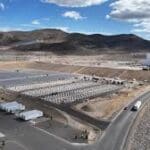
The move scales their joint operations in Sparks, Nevada, to seven times the original AI infrastructure density, providing a blueprint for how second-life batteries can power high-performance computing.

From Pilot to Scale: 7x Growth

The expansion follows a successful pilot program launched in June 2025. Initially, the project utilized four Crusoe Spark™ modular data centers. Following seven months of high performance, the companies are increasing the deployment to 24 modular data centers.

This growth is made possible by the hardware’s “modular” nature. Unlike traditional data centers that require years of stationary construction, modular units can be manufactured off-site and deployed in months.

Powering AI with Second-Life Batteries

A central component of this partnership is the use of “second-life” electric vehicle (EV) batteries. When EV batteries are no longer optimal for automotive use, they often retain significant capacity for stationary energy storage.

Redwood Materials integrates these repurposed batteries into a 12-megawatt (MW) / 63-megawatt-hour (MWh) microgrid. This system, combined with on-site solar power, provides the energy required to run Crusoe’s AI-optimized GPUs. The orchestration of these batteries is handled by Redwood’s “Pack Manager” technology, which ensures steady power delivery for the intense workloads required by AI model training and inference.

Reliability and Performance Metrics

A primary concern with renewable-powered microgrids is “uptime”, the percentage of time the system is operational. The press release highlights several key performance indicators from the initial seven-month period:

99.2% Operational Availability: The microgrid exceeded reliability expectations while running on renewable sources and battery storage.

99.9% Total Uptime: By leveraging the traditional power grid as a backup source, Crusoe Cloud maintained a nearly constant state of operation.

Supply Chain and Sustainability

The partnership addresses two of the most significant bottlenecks in the current AI boom: energy consumption and deployment speed.

Sustainability: By using recycled materials and on-site renewable energy, the “AI factory” model reduces the carbon footprint associated with massive data processing.

Predictability: The ability to scale in months rather than years allows AI providers to meet the rapidly fluctuating demand for compute power.

As the demand for intelligence grows, the convergence of innovative energy storage and modular infrastructure—as demonstrated by Crusoe and Redwood Materials—offers a potential path forward for sustainable and rapid industrial scaling.

The post Crusoe and Redwood Materials Expand Strategic Partnership appeared first on Logistics Viewpoints.

Continue Reading

Trending