
Connect with us

Non classé

Hyperscalers Sign White House Pledge to Power AI Data Centers Without Raising Electricity Costs

Published

on

Hyperscalers Sign White House Pledge To Power Ai Data Centers Without Raising Electricity Costs

AI Infrastructure and Electricity Demand Converge

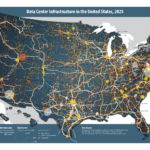
The White House announced that leading AI and cloud companies have signed a new Ratepayer Protection Pledge, committing to ensure that the electricity required to power the next generation of artificial intelligence data centers does not drive higher utility costs for American households.

Donald Trump brought together executives from Amazon, Google, Meta Platforms, Microsoft, OpenAI, Oracle, and xAI to formalize the agreement.

The pledge requires hyperscalers to build, bring, or buy the power required for their data centers and pay the full cost of associated grid infrastructure, ensuring those expenses are not passed on to residential ratepayers.

The initiative reflects a growing concern among policymakers and utilities that the rapid expansion of AI computing infrastructure could strain electricity supply in key regions if not coordinated with energy investment.

Core Commitments of the Ratepayer Protection Pledge

Under the agreement, participating companies committed to several specific provisions designed to protect consumers while enabling the continued expansion of AI infrastructure.

First, hyperscalers will finance new electricity generation to support their computing demand. Companies may build new generation assets or purchase electricity from newly developed capacity so that AI growth does not reduce supply available to households and businesses.

Second, the companies will pay for transmission and grid upgrades required to connect their facilities. This includes substations, transmission lines, and other delivery infrastructure necessary to support hyperscale data centers.

Third, companies will negotiate separate rate structures with utilities and state governments, paying for the electricity capacity dedicated to their facilities whether they ultimately use the power or not. The structure is intended to prevent data center demand from increasing residential electricity bills.

Workforce and Grid Reliability Measures

The pledge also includes commitments tied to workforce development and grid resilience.

Participating companies agreed to hire and train workers from local communities where data centers are built, creating jobs across construction, engineering, and operations.

In addition, hyperscalers will coordinate with grid operators to make backup generation capacity available during periods of electricity scarcity, helping prevent blackouts and improve grid stability.

Administration officials framed the agreement as part of a broader effort to ensure that the economic benefits of AI infrastructure development are shared by local communities.

Implications for Supply Chain Infrastructure

For supply chain leaders, the agreement highlights how artificial intelligence is increasingly dependent on physical infrastructure.

Data center construction drives demand across multiple industrial supply chains including semiconductors, networking equipment, cooling systems, power transformers, and electrical infrastructure. Manufacturing lead times for some of these components are already stretching as demand increases.

At the same time, enterprise supply chain platforms are becoming more reliant on large-scale computing capacity to support advanced analytics and AI-driven decision systems.

As outlined in recent research on next-generation supply chain architectures, modern logistics platforms are evolving toward interconnected systems of autonomous agents, contextual data frameworks, and retrieval-based reasoning models operating across enterprise networks. These capabilities depend on scalable computing infrastructure to function effectively.

AI Infrastructure Becomes a National Priority

The Ratepayer Protection Pledge signals that artificial intelligence infrastructure is no longer simply a technology issue. It is becoming a national infrastructure priority linking energy systems, digital platforms, and industrial supply chains.

For executives across the supply chain sector, the development reinforces a key reality: the pace of AI adoption will increasingly depend not only on software innovation, but also on the availability of energy, grid capacity, and the industrial supply chains that support hyperscale computing.

The post Hyperscalers Sign White House Pledge to Power AI Data Centers Without Raising Electricity Costs appeared first on Logistics Viewpoints.

Continue Reading

Non classé

Iran war pushing air rates up, and disrupting ocean – March 4, 2026 Update

Published

on

By

Iran war pushing air rates up, and disrupting ocean – March 4, 2026 Update

Discover Freightos Enterprise

Published: March 4, 2026

Blog

Weekly highlights

Ocean rates – Freightos Baltic Index

Asia-US West Coast prices (FBX01 Weekly) stayed level.

Asia-US East Coast prices (FBX03 Weekly) stayed level.

Asia-N. Europe prices (FBX11 Weekly) decreased 1%.

Asia-Mediterranean prices(FBX13 Weekly) decreased 2%.

Air rates – Freightos Air Index

China – N. America weekly prices increased 2%.

China – N. Europe weekly prices increased 7%.

N. Europe – N. America weekly prices increased 3%.

Analysis

The US-Israel strikes on Iran and subsequent Iranian retaliation targeting multiple countries in the area since the weekend are driving significant logistics disruptions in the region which could start to be felt more broadly if the conflict stretches on.

Six tanker vessels in or near the Strait of Hormuz came under attack early this week. The strikes de facto closed the waterway by Sunday, though the IRGC only made an official announcement on Monday. President Trump – who also said the US will cut off trade with Spain in response to being denied access to military bases there – stated on social media that the US would facilitate insurance and naval escorts to keep oil tankers moving through the strait, though experts are skeptical of the feasibility of and speed at which these could be provided.

In terms of container shipping, DP World suspended operations at the major container port of Jebel Ali in Dubai, the largest port in the Middle East, after an aerial interception caused a fire there Saturday night but reopened on Monday. Otherwise, ports remain operational, but with the strait closed and the security risks in the region, the major container carriers are diverting vessels away, cancelling sailings and suspending new bookings.

Hapag-Lloyd and MSC suspended bookings out of Persian Gulf ports and from all origins to these ports – including Oman and UAE ports on the Gulf of Oman side of the strait because of their proximity. CMA-CGM stopped accepting all bookings to and from Persian Gulf ports only. Maersk suspended all new reefer bookings to the entire region, and bookings out of India to the gulf because of the short lead time. But for now Maersk is still accepting general bookings from the Far East, possibly reflecting optimism that the Strait of Hormuz could reopen relatively soon.

These moves mean delays of uncertain duration for shippers to and from the gulf area. The canceled sailings mean gulf-bound containers are already starting to pile up and threaten container yard congestion in India. They could likewise lead to some backlogs at Far East origins that may start to be felt by other shippers out of those ports if the shutdown lengthens.

Carriers still sailing to the region are diverting containers already in-transit to alternatives in the area with most volumes likely to be offloaded at the major Far East transhipment hubs in Singapore, Malaysia and Sri Lanka. A similar shift to transshipment in the early months of the Red Sea crisis led to significant congestion at these ports in 2024, but with lower volumes and more port capacity this time, congestion should not be as severe.

So for now, the war’s impacts on the container market are mostly local, with Hapag-Lloyd reporting that elsewhere operations continue as normal. But the longer the conflict continues the more disruptive it will be and the more broadly it will be felt.

The Strait of Hormuz handles about 2% or 3% of global container volumes, and estimates of the amount of container capacity from the around 100 container vessels now stranded in the Persian Gulf range from less than or around 1% to as much as 10% of effective capacity. Analysts agree though, that the longer these vessels and equipment are out of circulation, the more likely that reduction will be felt in terms of available capacity and equipment out of the Far East. When traffic through the strait resumes, there will likely be some vessel bunching at these ports too, as ships arrive off schedule. Taken together with climbing fuel costs, these factors could start pushing rates up on non-gulf lanes.

So far rates are only going up for containers directly impacted by the closure. CMA CGM introduced a $3,000/FEU emergency surcharge for containers heading to the gulf, and other carriers are also applying fees for diverted bookings. Freightos Terminal container rates for Shanghai to Jebel Ali in Dubai spiked from $1,800 per 40′ container on Saturday to more than $4,000/FEU by Tuesday likely reflecting these surcharges. On the main east-west trades though, rates were stable last week as the Lunar New Year holiday period is still approaching its end, and prices have remained level so far this week too.

War impacts are also reaching the Red Sea. The Houthis – who’ve paused attacks on Red Sea vessels since October – have threatened to resume strikes, though none have been reported yet. In response, the few carriers who had resumed some Red Sea sailings have diverted these vessels back around the Cape of Good Hope until further notice, possibly pushing a full Red Sea return farther off once again.

The crisis may have bigger and more immediate impacts for air cargo. The IRGC has targeted airports in Abu Dhabi, Bahrain, Kuwait and Dubai, with airports and airspace still closed. These closures are directly impacting shippers of volumes to and from the region.

But gulf carriers Qatar Airways and Emirates Skycargo are two of the top three largest cargo carriers by capacity, and together with Etihad make up about 13% of global capacity. Their hubs serve as a major east-west connection point, making up, for example, about a quarter of all China – Europe capacity according to Aevean.

With these carriers’ flights cancelled, many of their aircraft grounded and their hubs inaccessible, global capacity has dipped over the last few days, though there are also signs that direct Asia – Europe capacity has increased in response. South and South East Asian air exports are also heavily dependent on transit through the Middle East for movements west and there are already reports of shippers on these lanes facing disruptions, delays and scrambling for alternatives.

Kuehne + Nagel says forwarders are starting to charter direct Far East – West flights to make up for the missing capacity and that it expect backlogs of Europe and US-bound cargo in Asia to begin stacking up by the end of the week, creating a backlog that could cause delays and push up prices.

Climbing rates on some lanes may already reflect the war disruptions and blow to available capacity. Freightos Air Index data show rates from South East Asia to Europe have climbed more than 6% to $3.82/kg since Friday, with South Asia rates up 3% to Europe and 5% to the US. Middle East – Europe prices are up 8% to $1.62/kg and China -US prices are up 15% to $6.90/kg, though rates had begun increasing before the start of the war, possibly due to the start of some post-LNY bump.

Discover Freightos Enterprise

Freightos Terminal: Real-time pricing dashboards to benchmark rates and track market trends.

Procure: Streamlined procurement and cost savings with digital rate management and automated workflows.

Rate, Book, & Manage: Real-time rate comparison, instant booking, and easy tracking at every shipment stage.

Prateek

Put the Data in Data-Backed Decision Making

Freightos Terminal helps tens of thousands of freight pros stay informed across all their ports and lanes

The post Iran war pushing air rates up, and disrupting ocean – March 4, 2026 Update appeared first on Freightos.

Continue Reading

Non classé

Supply Chain Scenario Analysis: Global Manufacturing Impacts of a Short vs. Prolonged U.S. – Iran Conflict

Published

on

By

Supply Chain Scenario Analysis: Global Manufacturing Impacts Of A Short Vs. Prolonged U.s. – Iran Conflict

On February 28, 2026, the US and Israel launched a precision military strike against Iran, triggering global market panic. Looking back at US-Iran tensions in early 2020 that nearly escalated into a full-scale war—though they lasted only about a week before de-escalating and did not evolve into sustained military conflict—many observers at the time believed the impact would be limited. Yet subsequent developments confirmed a fundamental supply chain principle: short-term shock, long-term transmission.” A 7-day military conflict may appear fleeting, but disruptions to global manufacturing, shipping, and energy supply chains are typically transmitted with a lag and can persist for several months.

Notably, President Trump publicly stated that this military operation may not end quickly and could last more than 4 weeks. If prolonged, its impact on global manufacturing would be significantly greater than that of a short 7-day conflict. It is therefore necessary to develop forward-looking assessments based on both historical precedent and current market conditions. This article analyzes two hypothetical scenarios: a conflict lasting 7 days and a conflict extending beyond 4 weeks.

Energy Impact: Oil Price Volatility and the Lagged Transmission of Cost Pressure

The most direct impact of the 2020 US-Iran standoff was concentrated in energy markets, shipping, and key raw materials. After the standoff began, Brent crude oil prices rose rapidly from $60 per barrel to $75 per barrel, an increase of 25 percent. Although tensions eased within a week, oil prices did not immediately decline. Instead, they remained elevated and volatile for nearly two months, returning to more stable levels only after market expectations and supply chain sentiment normalized.

If the current conflict ends within 7 days, military deployments in the Strait of Hormuz would not be withdrawn immediately, and market anxiety regarding oil supply disruption would likely persist. According to projections from multiple external market institutions, crude oil prices could surge to $100–$110 per barrel and remain elevated for one to two months. This would directly increase energy and chemical raw material costs for global manufacturing. As seen in 2020, rising oil prices rapidly translated into higher costs for industries such as chemicals, plastics, and chemical fibers, compressing corporate profit margins.

If the conflict lasts more than 4 weeks, the energy impact would escalate to a systemic level. Current market analysis suggests that navigation risk in the Strait of Hormuz would increase sharply, placing approximately 30 percent of global seaborne crude oil and 20 percent of liquefied natural gas shipments at risk of significant disruption. Brent crude prices could rise to $120–$150 per barrel, potentially approaching the $138 per barrel peak observed in early 2022. Unlike short-term volatility, such elevated prices could persist for more than six months. Combined with speculative buying, global manufacturing energy costs could effectively double. High-energy-consuming industries such as steel, chemicals, and cement could face widespread production suspensions, and even large enterprises might be forced to curtail capacity due to sustained cost pressures. At the same time, prolonged high oil prices would accelerate investment in alternative energy solutions. Demand for photovoltaic and wind power, along with traditional alternatives such as coal and coal chemicals, would likely increase significantly, creating structural shifts across related industrial value chains.

Shipping Disruption: Route Adjustment is Easier than Cost Normalization

The lagged impact on global shipping was particularly evident during the 2020 standoff and provides a direct reference point for current risk modeling. Although the Strait of Hormuz was not formally blocked in 2020, shipowners adjusted routes and reduced sailing speeds as precautionary measures. War risk insurance premiums for Middle East routes surged threefold within a short period and remained elevated for three to six months, declining only after regional stability returned. Simultaneously, temporary route adjustments reduced global container turnover efficiency, delayed empty container returns, contributed to port congestion, and drove freight rates higher.

If the current conflict ends within 7 days, previously implemented detour strategies—such as routing vessels around the Cape of Good Hope—would not be immediately reversed. A single detour can add 10–14 days per leg, extending the global fleet turnover cycle. As a result, tight shipping capacity, elevated freight rates, and shortages of empty containers could persist for two to four weeks or longer, replicating patterns observed in 2020. Manufacturing sectors dependent on Middle East trade routes would face both cost inflation and delivery delays.

If the conflict extends beyond 4 weeks, shipping disruption would likely exceed 2020 levels. Carriers may suspend Middle East routes entirely rather than rely solely on detours. Global container turnover efficiency would decline sharply, and empty container imbalances would intensify. Major global ports could experience widespread congestion, with berthing delays extending up to one month. War risk premiums could surge further, and some insurers might refuse to underwrite Middle East-related routes altogether, making cargo transport operationally impossible regardless of cost. Potential airspace closures would further complicate international logistics. The Persian Gulf and the Red Sea—critical trade corridors linking Europe and Asia—could face severe disruption. Global manufacturing delivery cycles could extend by two to three months, export orders could be canceled or disputed, and cross-border logistics providers could face significant financial distress.

Raw Material Shortages: From Temporary Gaps to Structural Supply Cutoffs

The 2020 standoff also revealed vulnerabilities in key raw material supply chains, underscoring the longer-term risks behind even a brief conflict. Public data indicates that Iran is a significant global supplier of certain industrial raw materials, including neon gas used in chip lithography and methanol, where it accounts for a meaningful share of global production capacity. During the 2020 standoff, temporary production and export constraints increased methanol import costs and disrupted downstream industries such as photovoltaic manufacturing, chemical fibers, and semiconductors. These effects persisted for one to two months until supply normalized and inventory levels were restored. Many small and mid-sized chemical manufacturers globally faced production suspensions and order delays due to raw material shortages and higher costs.

If the conflict lasts more than 4 weeks, raw material disruption could escalate from temporary shortages to structural cutoffs. Sustained military strikes could halt industrial production, interrupting exports of key materials such as neon gas and methanol. The global semiconductor industry could experience capacity constraints, affecting automobiles, electronics, and AI hardware manufacturing. Such disruptions could persist for three to six months or longer. Additionally, shortages of chemical feedstocks such as sulfur and liquefied petroleum gas could widen, further increasing input costs and compressing manufacturing margins worldwide.

Current Outlook and Strategic Response: Building Supply Chain Resilience Under Geopolitical Stress

If the conflict ends within 7 days, its impact would likely follow the 2020 transmission pattern: a controllable short-term shock followed by sustained medium-term disruption. Energy prices could remain elevated for one to two months, shipping premiums could persist for three to six months, and raw material disruptions could affect production scheduling for one to three months. While a systemic supply chain collapse would be unlikely, manufacturing sectors—especially automobiles, electronics, and chemicals—would experience cost inflation, component shortages, and delivery delays. The primary challenge would not be the immediate conflict but the lagged impact in the one-to-three-month recovery window, requiring careful management of energy costs, logistics exposure, inventory buffers, and production planning.

If a conflict lasting more than 4 weeks materializes, global manufacturing could face four simultaneous pressures: soaring costs, logistics paralysis, raw material cutoffs, and weakened demand. Energy costs could double, logistics costs could rise three to five times, and key inputs could become unavailable. Core manufacturing sectors could suspend production, global trade volumes could decline, and consumer demand could weaken, reinforcing a negative cycle. Even after hostilities cease, supply chain recovery could take one to two years, resulting in a prolonged adjustment period characterized by high costs, constrained output, and uneven recovery.

Compared with 2020, today’s global manufacturing ecosystem is more interconnected, more energy-dependent, and potentially more exposed to Middle East supply chain disruptions. Many industries are still in recovery phases, with elevated demand for energy and raw materials and tighter logistics requirements. Under either scenario, manufacturing enterprises should accelerate supply chain diversification, redesign logistics networks, increase strategic reserves of critical raw materials, optimize cost structures, invest in energy efficiency and digital manufacturing capabilities, and continuously monitor geopolitical and compliance risks to strengthen long-term supply chain resilience.

The post Supply Chain Scenario Analysis: Global Manufacturing Impacts of a Short vs. Prolonged U.S. – Iran Conflict appeared first on Logistics Viewpoints.

Continue Reading

Non classé

FourKites Launches Loft: AI Platform to Orchestrate Enterprise Systems with Real-World Intelligence

Published

on

By

Fourkites Launches Loft: Ai Platform To Orchestrate Enterprise Systems With Real World Intelligence

In February 2026, FourKites announced the launch of Loft, an AI orchestration platform designed to integrate internal enterprise data with external network intelligence. The move signals an expansion for FourKites, moving beyond traditional supply chain tracking into broader enterprise system orchestration, including ERP, CRM, and ITSM systems.

Core Architecture and Sophie

The platform is built around Sophie, an AI developer agent. Unlike traditional automation tools that require extensive manual coding, Sophie is designed to convert operational requirements submitted in natural language into production-ready workflows. This capability aims to reduce the deployment cycle from months to days and mitigate the ongoing maintenance burden typical of large-scale AI implementations.

Loft introduces Agent Operating Procedures (AOPs), which function as a system of record for AI decision-making. By capturing the reasoning and context behind automated actions such as resolving purchase order mismatches or managing warehouse capacity, the platform attempts to preserve organizational knowledge that is frequently lost in unstructured communication channels like email or Slack.

The Role of External Intelligence

A primary differentiator of the Loft platform is its integration with the FourKites Intelligent Network. The system draws on real-time data from over 500,000 trading partners and millions of daily events. This addresses a common limitation in traditional enterprises where models are typically restricted to a company’s internal data set.

By incorporating external factors such as real-time supplier performance or global manufacturing disruptions, the platform aims to provide agents with the context necessary for more accurate autonomous decision-making. Leveraging Fourkites network data to inform internal decision-making delivered by the agent Sophie.

Strategic Market Positioning

Loft serves as the foundation for the company’s existing Digital Workforce, which includes specialized agents for logistics (Tracy), supplier collaboration (Sam), and scheduling (Alan).

By enabling custom agent development across multiple business functions, FourKites is moving toward a model of “autonomous orchestration.” For organizations currently managing fragmented systems with manual spreadsheets and email chains, Loft represents a shift toward a consolidated, AI-driven operational layer that bridges the gap between internal systems and external market realities.

The post FourKites Launches Loft: AI Platform to Orchestrate Enterprise Systems with Real-World Intelligence appeared first on Logistics Viewpoints.

Continue Reading

Trending