
Non classé
Supply Chain Takeaways from the Final Day of the ARC Industry Leadership Forum

Published
2 mois agoon
By
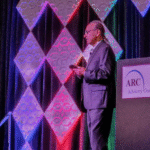
As the Forum drew to a close, the most noticeable shift was not in ambition, but in tone.
There was broad recognition that autonomous operations are an incremental outcome rather than a discrete milestone. Most organizations are still working through foundational constraints, including execution variability, uneven data quality, and loosely connected systems.
In closing conversations, leaders emphasized sequencing over speed. Questions focused on what needs to be stabilized first, where automation adds value today, and where human oversight should remain intentional rather than incidental.
One comment heard late in the week captured the sentiment well: “We don’t need fewer people involved. We need fewer surprises.”
That perspective reflects a move away from assumption-driven roadmaps toward operational realism. Leaders were less interested in bold claims and more focused on reducing sources of instability within their own environments.
Leaving the event, there was less confidence in quick transitions and more clarity about where sustained attention is required next.
The post Supply Chain Takeaways from the Final Day of the ARC Industry Leadership Forum appeared first on Logistics Viewpoints.
You may like
Non classé
The Supply Chain Cost Stack: Where Margin Is Actually Engineered
Published
4 heures agoon
6 avril 2026By

Costs are rising again. That part is familiar. What is less clear, and more important, is where margin is actually won or lost inside a supply chain. It is not at the line item level. It is in how decisions play out across the system.
Where Cost Programs Start and Stall
When costs rise, most organizations go to the same places first. Transportation. Procurement. Warehousing. That is where the pressure is visible, and where teams are expected to respond.
Transportation renegotiates rates. Procurement pushes suppliers. Operations looks for incremental gains. Each function does its job and usually finds something. But the overall cost position does not move nearly as much as expected.
This is a pattern. It shows up across industries and across cycles.
The issue is not effort. It is structure. Supply chain margin is not determined inside any one function. It is shaped by how decisions interact across functions, often in ways that are not fully visible when those decisions are made.
The Stack, Not the Category
Supply chains operate as a stack of linked decisions. Not a collection of independent cost centers.
Network design sets the footprint. Sourcing defines cost and exposure. Inventory policy determines how much buffer exists in the system. Transportation turns plans into movement. Fulfillment is where cost and service finally meet the customer.
These are tightly connected. Change one, and something else moves.
A lower unit cost from a more distant supplier often increases transportation exposure. A network designed for speed tends to carry more inventory. A transportation savings initiative can introduce service variability that shows up later, usually as exception cost.
Most inefficiency does not sit neatly inside a function. It lives in the seams.
What Actually Moves Margin
In practice, margin moves in a few predictable ways.
Trade-offs are one. Cost and service are often optimized in different parts of the organization without a shared view. That leads to overperformance in some areas and unnecessary cost in others. It is rarely intentional.
Variability is another. Delays, disruptions, demand swings. These introduce cost that does not show up in standard models but accumulates quickly through expedites, rework, and recovery efforts. In many networks, this is where margin quietly erodes.
Then there is timing. Decisions are often made too early. Planning cycles lock in assumptions that no longer hold by the time execution begins. From there, the system spends the rest of the cycle adjusting. Usually at a higher cost.
This is less about modeling accuracy and more about when decisions are made.
What Is Changing
What is changing, gradually but clearly, is where decisions are being made.
In some operations, decision making is moving closer to execution. Routing is adjusted during the day. Carrier selection is not fixed for long. Inventory moves in response to conditions, not just plans. Exceptions are handled as they happen.
Not everywhere. But enough to notice.
The difference shows up in small ways at first. Less rework. Fewer expedites. Fewer surprises late in the cycle. Over time, it adds up. The gap between plan and outcome narrows, and that is where margin starts to appear.
The Role of Technology
Technology plays a role here, but it is not the story on its own.
Better decisions require coordination and speed. That is difficult with static systems and fragmented data. What is improving is the ability to process current conditions and adjust without waiting for a full planning reset.
In some environments, that is supported by AI and advanced analytics. In others, it is driven by process discipline and better visibility. Either way, the common thread is shorter distance between signal and response.
What to Watch
A few things tend to separate stronger operators from the rest.
One is coordination. Whether sourcing, transportation, and inventory decisions are made with a shared understanding of cost and service.
Another is response speed. How quickly the organization adjusts when something changes.
And then there is visibility. Whether trade-offs are understood when decisions are made, or only discovered later through cost and service misses.
These are not abstract measures. They show up in day-to-day performance.
Closing Perspective
Cost pressure is not new. Most organizations know where their major cost categories sit.
What is changing is how those costs are managed. Margin is not coming from isolated savings initiatives as much as it once did. It is coming from better coordination, better timing, and fewer corrections during execution.
That is harder to see than a rate reduction. It is also where most of the improvement is coming from now.
The post The Supply Chain Cost Stack: Where Margin Is Actually Engineered appeared first on Logistics Viewpoints.
Non classé
Nike and the Converse Question: Operate or Orchestrate the Asset
Published
3 jours agoon
3 avril 2026By

A declining brand inside a strong portfolio highlights a familiar supply chain decision: optimize the node, or change the operating model
A Portfolio Decision, Not a Brand Problem
Nike does not have a brand problem with Converse. It has a decision to make.
Converse has been losing ground for some time. Sales are down, investment has been pulled back, and the brand remains tied to a narrow product base that no longer carries the same weight in the market. At the same time, Authentic Brands Group has shown interest in acquiring it.
That combination is usually a signal. Not of failure, but of misalignment.
When an Asset Starts to Drift
Inside a large portfolio, most assets do not fail all at once. They drift. Performance weakens, attention shifts elsewhere, and the asset becomes harder to justify in its current form. The instinct is to stabilize it. Reduce cost. Adjust leadership. Try to recover momentum.
Nike is following that path.
But there is a second option. One that shows up often in supply chain decisions, though it is rarely framed that way.
The Supply Chain Analogy
When a node in a network underperforms, you can try to improve it where it sits. Or you can change its role in the system.
Converse looks less like a turnaround candidate and more like a node that no longer fits cleanly within Nike’s operating model. It is concentrated around a single product, lacks a strong innovation pipeline, and is not fully aligned with how demand is evolving. These are not surface issues. They are structural.
Supply chains see this pattern in different forms. A distribution center that once made sense but now sits outside the optimal network. A supplier that was once reliable but cannot keep pace. A lane that no longer supports the required service levels. In each case, the question is the same. Improve it, or reposition it.
Two Paths: Operate or Reposition
Nike is choosing to operate the asset. That means continued internal ownership, continued integration, and a requirement to restore growth within the existing structure.
Authentic Brands would take a different approach. The brand would be separated from execution. Manufacturing, distribution, and retail would be handled through partners. The asset would not be fixed. It would be redeployed.
That model is not unique to fashion. It is increasingly visible across supply chains. Some organizations continue to own and operate end to end. Others are moving toward orchestration, managing networks of partners rather than controlling every node directly.
Cost Control Is Not Structural Change
The distinction matters because it changes where value is created.
In an integrated model, value depends on how well each part performs and how tightly those parts are aligned. In an orchestration model, value comes from coordinating a network that can adapt more quickly than any single operator.
Nike’s current actions focus on cost. That is a reasonable first response. But cost control does not change the role of the asset. It keeps the system stable without addressing whether the system itself still makes sense.
Supply chain leaders see this often. Optimization is applied to a network that should be redesigned. The result is incremental improvement where structural change is required.
Where Control Is Moving
The more important signal sits above the brand itself.
Across industries, control is shifting. Away from physical ownership and toward coordination. Away from managing individual assets and toward managing how those assets work together. In supply chains, this shows up in platform models, in partner ecosystems, and increasingly in systems that optimize across networks rather than within them.
Bottom Line
The Converse question sits directly in that shift.
Nike can continue to operate the asset and work to restore its place within the portfolio. Or it can acknowledge that the asset may perform better in a different model, one built around orchestration rather than ownership.
That decision is not unique to Nike.
It is the same decision showing up across supply chains.
Operate the network, or orchestrate it.
The post Nike and the Converse Question: Operate or Orchestrate the Asset appeared first on Logistics Viewpoints.
Non classé
Supply Chain and Logistics News (March 30th- April 2nd 2026)
Published
3 jours agoon
3 avril 2026By

This week’s top stories in supply chain and logistics reflect the rate at which market dynamics shift. Two major railord companies are merging, focusing on enhancing supply chain reliability through reduced handoffs. The World Food Programme reports that the Strait of Hormuz blockage is causing a supply chain disruption that eclipses the impact of the Covid-19 pandemic. Logistics managers’ salaries are reported to be increasing in this year’s salary survey, and Sysco bids to purchase Restaurant Depot.
Your Top Supply Chain & Logistics Stories for the Week:
Union Pacific- Norfolk Southern Merger Leaves the Station
The proposed merger between Union Pacific and Norfolk Southern aims to create a transcontinental rail network by integrating the two systems with minimal geographic overlap. According to Union Pacific, the strategy focuses on enhancing supply chain reliability through reduced handoffs, a larger shared pool of locomotives and crews, and a unified customer service system. To avoid the operational disruptions associated with past industry consolidations, the companies are utilizing real-time diagnostics and digital development environments to simulate network changes before implementation. This end-to-end integration is designed to streamline existing interchange points and provide a more resilient infrastructure capable of recovering quickly from external shocks such as labor volatility or extreme weather.
The World Food Programme (WFP) reports that conflict in the Middle East, specifically regarding the Strait of Hormuz, has caused the most significant global supply chain disruption since the COVID-19 pandemic and the onset of the war in Ukraine. Approximately 70,000 metric tons of food aid are currently delayed or immobile due to port congestion and vessel idling. To mitigate these risks, shipments are being rerouted around Africa, a move that adds 25 to 30 days to transit times and increases shipping rates by 15% to 25%. While the WFP has managed to avoid $1.5 million in additional costs through negotiated waivers, the agency warns that rising prices and logistics hurdles could contribute to an additional 45 million people facing acute hunger by June 2026.
2026 Salary Survey for Logistics Management Reaches New Heights
The 2026 Salary Survey from Logistics Management reports that average annual salaries reached $126,400 as the profession transitions from a back-office operational role to a strategic business driver. This compensation growth is primarily fueled by a significant expansion in responsibilities; 76% of professionals now oversee complex functions, including technology investment, global risk management, and C-suite-level strategy. As companies increasingly view supply chain expertise as a “strategic interface” essential for revenue generation rather than a mere cost center, the market value for these leaders has climbed, with 57% of respondents receiving an average raise of 7% this year.
Sysco’s Bid for Restaurant Depot: Distribution Control Is Shifting
The proposed $29.1 billion acquisition of Jetro Restaurant Depot by Sysco represents a strategic pivot from traditional broadline delivery to a multi-channel “access network” model. By internalizing the industry’s primary cash-and-carry pricing benchmark, Sysco effectively absorbs a critical market check, consolidating pricing power and gaining granular visibility into the real-time purchasing behaviors of over 700,000 independent operators. This structural shift allows for sophisticated margin optimization by routing volume through the most cost-effective channel—leveraging Restaurant Depot’s warehouse model to eliminate last-mile logistics expenses, which typically account for one-third of total distribution costs. Ultimately, the deal moves beyond mere scale, positioning data-driven network design as the new dominant competitive advantage over traditional route density.
Global Energy Regulation Round Up Q1 2026
The Global Energy Regulation Round Up is a quarterly report covering energy regulations worldwide. It is organized into three regions: North America, the European Union, and Asia. Click the link to download the full report and analysis.
Key Takeaways:
Environmental deregulation on the federal level was the biggest trend that emerged from the United States in Q1 of 2026.
At the start of the year, two significant reporting policies from the European Union took effect, and businesses recently received some relief thanks to an omnibus simplification package that was approved.
China has approved a landmark environmental code that brings together more than 10 existing laws, targets pollution, and formalizes its carbon market.
Song of the Week:
The post Supply Chain and Logistics News (March 30th- April 2nd 2026) appeared first on Logistics Viewpoints.


The Supply Chain Cost Stack: Where Margin Is Actually Engineered

Nike and the Converse Question: Operate or Orchestrate the Asset

Supply Chain and Logistics News (March 30th- April 2nd 2026)

Walmart and the New Supply Chain Reality: AI, Automation, and Resilience
Ex-Asia ocean rates climb on GRIs, despite slowing demand – October 22, 2025 Update
13 Books Logistics And Supply Chain Experts Need To Read
Trending
-
 Non classé1 an ago
Walmart and the New Supply Chain Reality: AI, Automation, and Resilience
- Non classé6 mois ago
Ex-Asia ocean rates climb on GRIs, despite slowing demand – October 22, 2025 Update
- Non classé8 mois ago
13 Books Logistics And Supply Chain Experts Need To Read
- Non classé2 mois ago
Container Shipping Overcapacity & Rate Outlook 2026
- Non classé5 mois ago
Ocean rates climb – for now – on GRIs despite demand slump; Red Sea return coming soon? – November 11, 2025 Update
- Non classé2 mois ago
Ocean rates ease as LNY begins; US port call fees again? – February 17, 2026 Update
- Non classé1 an ago
Unlocking Digital Efficiency in Logistics – Data Standards and Integration
-
 Non classé6 mois ago
Navigating the Energy Demands of AI: How Data Center Growth Is Transforming Utility Planning and Power Infrastructure