
Non classé
Supply Chain and Logistics News January 26th-29th 2026

Published
2 mois agoon
By

In an era defined by rapid technological shifts and increasing environmental volatility, the global supply chain is navigating a complex landscape of transformation. From the immediate logistical challenges posed by severe winter weather to the long-term implications of global water scarcity, businesses are being forced to rethink traditional models of efficiency and resilience. This week’s digest explores how industry leaders like UPS and Schneider Electric are responding to these pressures through strategic downsizing and advanced AI integration, while the rise of autonomous middle-mile logistics signals a new frontier in freight reliability.
Winter Storm Freezes East Coast Supply Chain
Winter Storm Fern has created significant logistical hurdles across the U.S. Southeast and Northeast, primarily due to dangerous ice accumulation and extreme cold. With ice totals reaching up to half an inch south of the I-40 corridor, transportation networks have faced immediate slowdowns and closures, as regions with limited salt and plow resources struggle to keep key corridors open. These disruptions have forced trucking companies to reroute shipments and delay pickups, causing a ripple effect across supply chains that rely on just-in-time movement. Beyond immediate transit delays, the broader economic impact is projected to reach billions of dollars, as the storm damages critical infrastructure, strains power grids, and forces businesses to grapple with lost productivity and mounting recovery costs during one of the season’s most severe cold stretches.
UPS Continues to Slim Down Its Employee Roster to Reduce Costs
UPS is planning to cut up to 30,000 operational positions and launch a new voluntary driver buyout program in 2026 as part of a $3 billion cost-reduction strategy. This rightsizing effort is largely driven by a significant reduction in volume from its major customer, Amazon, which has decreased its deliveries through UPS by one million pieces per day over the last year, with another million expected to be cut this year. To further streamline its network, the carrier also intends to close 24 buildings in the first half of 2026, building on nearly 100 closures from the previous year. Despite recent revenue declines, UPS expects its financial performance to stabilize as it shifts more volume to the U.S. Postal Service under a renewed Ground Saver agreement and moves toward a more agile, right-sized U.S. network.
UN Report Declares Global Water Bankruptcy
A landmark UN report led by CCNY has declared that the world has entered an era of Global Water Bankruptcy, signaling a fundamental shift from temporary water shortages to a permanent state of systemic insolvency. For supply chain leaders, this represents a structural change where humanity is now consuming the principal of its hydrological capital rather than its renewable interest, leading to the collapse of major aquifers and a 30% loss in global glacier mass since 1970. This transition poses a direct threat to global food security, as over half of the world’s food production is now situated in water-unstable regions, while man-made “anthropogenic drought” contributes to approximately $307 billion in annual economic damages. Beyond agricultural volatility, the report highlights physical infrastructure risks, noting that groundwater over-extraction has caused land to sink across 5% of the global land area, threatening the integrity of warehouses and transport networks. Ultimately, the shift from crisis management to bankruptcy management suggests that procurement and logistics strategies must move beyond simple efficiency to account for a new, more restrictive hydrological normal where natural capital is no longer a guaranteed resource.
Autonomous Trucking Firm Gatik Secures Major Multiyear Contracts
Gatik, a leader in autonomous middle-mile logistics, has reached a significant milestone by securing multiyear commercial contracts that signal a shift from pilot programs to large-scale, revenue-generating operations. These agreements focus on its core “middle-mile” strategy—moving goods between distribution centers and retail locations—where the company has proven the ability to operate Class 6 and Class 7 autonomous trucks on fixed, repeatable routes.
The expansion of these contracts highlights a growing confidence among major retailers and distributors in autonomous technology as a solution for driver shortages and rising urban delivery costs. By automating these specific, high-frequency short-haul routes, Gatik is helping its partners increase freight efficiency and supply chain reliability. This development underscores the middle mile as the most commercially viable sector for autonomous trucking today, offering a clear path toward the widespread adoption of driverless logistics in the broader retail and grocery markets.
30th Annual ARC Advisory Group Leadership Forum
Global supply chains are currently grappling with multiple pressures, including geopolitical instability, rising costs, shifting customer expectations, climate-related disasters, and ongoing disruption. However, the past three years have ushered in a new age of automation, fueled by significant advancements in AI, advanced analytics, and connected intelligence. While supply chain solution providers have a long history of utilizing automation and analytics, the critical question remains: How are they supporting their customers as global supply chains remain in a constant state of chaos? At the 30th annual ARC Advisory Groups Leadership Forum on February 10th at 4 pm (Track 4), I am leading a 90-minute session dedicated to discussing the most pressing topics in the Supply Chain Industry. The session will feature an esteemed panel of industry leaders and include a presentation from the VP of Global Supply Chain at Avantor, an American Pharmaceutical and Chemical company.
Song of the week:
The post Supply Chain and Logistics News January 26th-29th 2026 appeared first on Logistics Viewpoints.
You may like
Non classé
AI Is Moving Into the Physical Supply Chain: What Leaders Should Watch
Published
19 heures agoon
24 mars 2026By

AI is no longer confined to planning systems and dashboards. It is moving into the execution layer of the supply chain, where decisions are made in motion, not after the fact.
For the past decade, most AI investment in supply chains has focused on forecasting, planning, and analytics. These systems improved visibility and supported better decisions, but they remained upstream. Warehouses, fleets, ports, and production lines continued to operate with limited real time intelligence.
That separation is now collapsing.
A new phase is emerging where AI is embedded directly into physical operations. Systems are no longer just recommending actions. They are beginning to sense conditions, coordinate responses, and execute decisions across the network.
This shift has material implications for cost, service levels, and resilience. It also changes where value is created and who controls it.
The Shift from Insight to Execution
Most supply chain AI to date has been advisory. It has answered questions such as:
What will demand look like next month
Where should inventory be positioned
Which supplier carries the lowest risk
These are important questions, but they sit upstream from execution.
The next wave moves downstream. It focuses on questions such as:
What should happen to this shipment right now
How should this route change given current conditions
Which order should be prioritized inside the warehouse
These decisions are continuous and time sensitive. They cannot wait for batch planning cycles or manual intervention. As AI moves into execution, the cadence of decision making shifts from periodic to continuous. That is where the real operational leverage sits.
The Supply Chain Is Becoming a Network of Active Nodes
Physical supply chains are being instrumented. Vehicles, containers, facilities, and even individual assets are becoming data generating nodes.
Each node produces signals about location, status, constraints, and performance. More importantly, these nodes are no longer passive.
They are beginning to participate in decision making.
A truck is no longer just executing a route. It is part of a system that can:
Adjust routing based on congestion and delivery windows
Coordinate arrival times with warehouse capacity
Trigger downstream inventory decisions
A warehouse is no longer just processing orders. It is dynamically adjusting labor allocation, slotting, and picking sequences based on incoming conditions.
This changes the structure of the supply chain from a linear process to a responsive network.
Coordination Becomes the Core Problem
As intelligence moves into physical operations, the primary challenge is no longer prediction. It is coordination.
Optimizing one function in isolation delivers limited value. A perfectly optimized route has little impact if the receiving facility cannot process the shipment. Inventory decisions fail if transportation and supplier realities are not aligned.
What matters is how decisions interact across the system.
This is where many current deployments fall short. They optimize within silos. The next phase connects those silos.
Execution systems are beginning to coordinate across:
Transportation and warehousing
Procurement and inventory
Order management and fulfillment
The result is not just faster decisions. It is better system level outcomes.
The Compression of Decision Cycles
One of the clearest signals of this shift is the compression of decision cycles. Traditional supply chains operate on defined rhythms. Daily planning runs. Weekly forecasts. Monthly reviews. Physical execution does not operate on those timelines. Disruptions occur in minutes. Conditions change continuously. Opportunities are fleeting.
As AI moves into execution, decision cycles compress from hours and days to seconds and minutes.
This has three direct effects:
Reduced latency between signal and action
Fewer manual interventions
Increased ability to absorb disruption without escalation
The organizations that adapt to this cadence will operate with a structural advantage.
Where Value Is Moving
As AI enters the physical layer, value is shifting. Historically, value concentrated in planning systems and enterprise platforms. These systems aggregated data and produced recommendations. Now, value is moving toward the execution layer, where decisions are acted on.
Three areas stand out:
1. Real time orchestration
The ability to coordinate decisions across transportation, warehousing, and inventory in real time.
2. Embedded intelligence in assets
Vehicles, automation systems, and edge devices that participate in decision making.
3. Network level visibility tied to action
Not just seeing what is happening, but acting on it immediately.
This has implications for technology providers, operators, and investors. Control points are shifting.
What Leaders Should Watch
This transition is underway, but uneven. Most organizations are still early.
There are several signals worth tracking.
Execution level use cases moving to production
Look for systems that are not just advising planners but actively influencing routing, picking, allocation, and scheduling.
Tighter integration across systems
Disconnected tools will not support this model. Integration across TMS, WMS, and upstream systems becomes critical.
Rise of real time data pipelines
Batch processes will not support continuous decision making. Event driven architectures will.
Shift in organizational roles
Planners move from direct decision making to oversight and exception management.
Vendor positioning around orchestration
The most important platforms will not be those that optimize a single function. They will be those that coordinate across the network.
The Risk of Standing Still
The risk is not that AI fails to deliver. The risk is that competitors operationalize it first. A supply chain that can sense and respond in real time will outperform one that relies on delayed information and manual coordination.
The gap will not be incremental. It will be structural. Faster response times, better asset utilization, fewer disruptions, and higher service levels compound quickly. Organizations that remain in a planning centric model will find themselves reacting to a system that is already moving.
The Bottom Line
AI in the supply chain is no longer about better forecasts or improved dashboards. It is about execution.
As intelligence moves into the physical layer, supply chains become more responsive, more coordinated, and more resilient. Decisions happen continuously, across the network, not in isolated systems.
The leaders who recognize this shift early and align their architecture, data, and operating model accordingly will define the next generation of supply chain performance.
The post AI Is Moving Into the Physical Supply Chain: What Leaders Should Watch appeared first on Logistics Viewpoints.
Non classé
Walmart AI Pricing Patents Signal Shift Toward Real-Time Retail Execution
Published
5 jours agoon
20 mars 2026By

Walmart’s new patents and digital shelf rollout point to a more tightly integrated model linking demand forecasting, pricing, and store-level execution.
Walmart has secured two patents related to automated pricing and demand forecasting, drawing attention to how large retailers are evolving their pricing and execution capabilities.
One patent, System and Method for Dynamically Updating Prices on an E-Commerce Platform, covers a system that can dynamically update online prices based on changing market conditions. A second, Walmart Pricing and Demand Forecasting Patent Classification, relates to demand forecasting technology designed to estimate what customers will buy and recommend pricing accordingly. At the same time, Walmart is expanding digital shelf labels across its U.S. stores, replacing paper labels with centrally managed electronic displays.
Individually, none of these elements are new. Retailers have long used forecasting models, pricing tools, and store execution processes. What is notable is the combination.
Walmart now has three capabilities aligned:
Demand forecasting tied to predictive models
Price recommendation based on that demand
Store-level infrastructure capable of rapid execution
That combination reduces the operational friction historically associated with pricing in physical retail.
Pricing Moves Closer to Execution
Traditional store pricing changes required coordination across multiple steps: analysis, approval, printing, distribution, and manual shelf updates. That process introduced delay and inconsistency.
Digital shelf labels materially change that constraint. Prices can be updated centrally and executed across stores with significantly less manual intervention.
This does not change the underlying logic of pricing decisions. Retailers have always adjusted prices based on demand, competition, and margin targets. What changes is the speed and consistency of execution.
As a result, pricing moves closer to real-time operational control.
Implications for Supply Chain Operations
Pricing is not an isolated commercial function. It directly influences demand patterns, inventory flow, replenishment timing, and markdown activity.
When pricing becomes faster and more responsive, those linkages tighten.
Three implications are clear:
1. Increased Execution Speed
Retailers can align pricing decisions more quickly with current demand conditions, reducing lag between signal and action.
2. Stronger Dependence on Forecast Accuracy
When pricing recommendations are driven by predictive models, the quality of demand sensing becomes more consequential. Forecast errors can propagate more quickly into sales and inventory outcomes.
3. Closer Coupling of Merchandising and Supply Chain
Pricing decisions influence demand. Demand impacts inventory, replenishment, and store execution. Faster pricing cycles compress the distance between these functions.
Centralization and Control
Walmart has positioned its digital shelf label rollout as an efficiency and accuracy initiative. Centralized price management improves consistency between systems and store execution while reducing labor tied to manual updates.
That positioning aligns with the operational realities of large-scale retail. At Walmart’s footprint, even small improvements in execution efficiency translate into material cost and accuracy gains.
At the same time, the shift toward algorithm-supported pricing introduces standard enterprise control requirements. Organizations need clear governance around how pricing recommendations are generated, reviewed, and executed, particularly as systems become more automated.
A Broader Technology Pattern
Walmart’s patents are best understood as part of a broader shift in supply chain and retail technology.
AI and advanced analytics are moving closer to operational decision points. Forecasting models are no longer confined to planning environments; they are increasingly connected to systems that can act.
In this case, that connection spans:
Demand sensing
Price recommendation
Store-level execution
The result is a more tightly integrated operating model in which commercial decisions and supply chain execution are linked through software.
What This Signals
The significance of Walmart’s move is not tied to public debate over surge pricing scenarios. The underlying development is structural.
Retailers now have the ability to connect demand forecasting, pricing logic, and execution infrastructure into a faster decision loop.
For supply chain leaders, that represents a clear direction:
Execution is becoming more digital, more centralized, and more tightly coupled to predictive models.
The companies that benefit will be those that can align forecasting, pricing, and operational execution within a controlled, coordinated system.
The post Walmart AI Pricing Patents Signal Shift Toward Real-Time Retail Execution appeared first on Logistics Viewpoints.
Non classé
Supply Chain and Logistics News March 16th-19th 2026
Published
5 jours agoon
20 mars 2026By
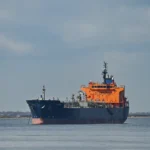
This week’s installment of Supply Chain and Logistics news includes stories about record increases in oil prices, Rivian’s autonomous taxis, and much more. Firstly, the Trump administration has issued a 60-day waiver of the Jones Act, a century-old regulation that requires goods moved between US ports to be transported by US-built vessels, etc. Additionally, this week Uber & Rivian announced a partnership for Rivian to build 50,000 autonomous robotaxis by 2031 with over a billion dollars in investment from Uber. Schneider Electric and EcoVadis announced a partnership to target emissions in the health care sector. Lastly, DHL announces 10 warehousing sites to be used for data center manufacturing capacity, and Mind Robotics raises 100 million in series A funding.
Your Biggest Stories in Supply Chain and Logistics here:
Trump Administration Issues Pause on Century-old Maritime Law to Ease Oil Prices
The Trump administration has issued a 60-day waiver of the Jones Act. This century-old regulation typically requires goods moved between US ports to be carried on vessels that are US-built, US-owned, and US-crewed. However, with oil prices surging toward $100 a barrel due to escalating conflict in the Middle East, the suspension aims to ease logistics for vital commodities like oil, natural gas, and fertilizer. While the move is intended to lower costs at the pump and support farmers during the spring planting season, it has sparked a debate between those seeking immediate economic relief and domestic maritime unions concerned about the long-term impact on American shipping and labor.
Uber and Rivian Partner to Deploy up to 50,000 Fully Autonomous Robotaxis
Uber and Rivian have announced a massive strategic partnership that signals a major shift in the future of autonomous logistics and urban mobility. Under the terms of the deal, Uber is set to invest up to $1.25 billion in Rivian through 2031, a move specifically tied to the achievement of key autonomous performance milestones. The primary focus of this collaboration is the deployment of a specialized fleet of fully autonomous R2 robotaxis, with an initial order of 10,000 vehicles and an option to scale up to 50,000 units. From a supply chain perspective, this represents a significant commitment to vertical integration; Rivian is managing the end-to-end production of the vehicle, the compute stack, and the sensor suite, including its in-house RAP1 AI chips, while Uber provides the scaled platform for deployment. Commercial operations are slated to begin in San Francisco and Miami in 2028, eventually expanding to 25 cities globally by 2031.
Schneider Electric and EcoVadis Announce Partnership to Decarbonize Global Healthcare Supply Chains
Schneider Electric, a major player in the digital transformation of energy management and automation, and EcoVadis, a provider of business sustainability ratings, have announced a strategic partnership aimed at accelerating decarbonization within the healthcare industry. “Energize” is a collective initiative to engage pharmaceutical industry suppliers in climate action. The collaboration focuses on addressing Scope 3 emissions, those generated within a company’s value chain, which often represent the largest portion of a healthcare organization’s carbon footprint. By combining Schneider Electric’s expertise in energy procurement and sustainability consulting with EcoVadis’s supplier monitoring and rating platform, the partnership provides a structured pathway for pharmaceutical and medical device companies to transition their global suppliers toward renewable energy.
Mind Robotics, a Rivian spin-off, raises $500 million in Series A Funding
RJ Scaringe, CEO of Rivian, is positioning his new $2 billion spin-off, Mind Robotics, as a technological solution to the chronic shortage of manufacturing labor in the Western world. By developing a “foundation model” that acts as an industrial brain alongside specialized mechatronic bodies, the company aims to move beyond the rigid, fixed-motion plans of traditional robotics toward systems capable of human-like reasoning and adaptation. Scaringe emphasizes that while these machines must perform with human-level dexterity, they don’t necessarily need to be humanoid in form; instead, the focus is on creating a data-driven “flywheel” within Rivian’s own facilities to lower production costs and help domestic manufacturing remain globally competitive.
DHL is significantly scaling its data center logistics (DCL) footprint in North America, announcing the addition of 10 dedicated sites totaling over seven million square feet of warehousing capacity. This expansion is a direct response to the explosive demand for AI-driven infrastructure and the specific needs of hyperscale and colocation data center operators. By offering specialized services like rack pre-configuration, white-glove handling of sensitive IT hardware, and warehouse-to-site transportation, DHL is positioning itself as an end-to-end partner in a sector where 85% of operators express a preference for a single logistics provider. This move not only addresses the logistical complexities of moving high-value components like GPUs and cooling systems across global borders but also underscores the critical role of integrated supply chains in maintaining the build speed of the digital backbone.
Song of the Week:
The post Supply Chain and Logistics News March 16th-19th 2026 appeared first on Logistics Viewpoints.


AI Is Moving Into the Physical Supply Chain: What Leaders Should Watch

Walmart AI Pricing Patents Signal Shift Toward Real-Time Retail Execution

Supply Chain and Logistics News March 16th-19th 2026

Walmart and the New Supply Chain Reality: AI, Automation, and Resilience
Ex-Asia ocean rates climb on GRIs, despite slowing demand – October 22, 2025 Update
13 Books Logistics And Supply Chain Experts Need To Read
Trending
-
 Non classé1 an ago
Walmart and the New Supply Chain Reality: AI, Automation, and Resilience
- Non classé5 mois ago
Ex-Asia ocean rates climb on GRIs, despite slowing demand – October 22, 2025 Update
- Non classé7 mois ago
13 Books Logistics And Supply Chain Experts Need To Read
- Non classé2 mois ago
Container Shipping Overcapacity & Rate Outlook 2026
- Non classé4 mois ago
Ocean rates climb – for now – on GRIs despite demand slump; Red Sea return coming soon? – November 11, 2025 Update
- Non classé1 mois ago
Ocean rates ease as LNY begins; US port call fees again? – February 17, 2026 Update
- Non classé1 an ago
Unlocking Digital Efficiency in Logistics – Data Standards and Integration
-
 Non classé6 mois ago
Navigating the Energy Demands of AI: How Data Center Growth Is Transforming Utility Planning and Power Infrastructure