
Non classé
What Buyers Actually Mean by “Supply Chain AI” – (And Why Vendors and Buyers Often Miss Each Other)

Published
2 mois agoon
By
“AI” has become one of the most frequently used terms in supply chain technology discussions. It is also one of the least precisely defined.
In recent enterprise evaluations, buyers routinely ask for “AI-driven” capabilities. Vendors describe AI as a core differentiator. Deals continue to move forward. Yet when these conversations are examined more closely, particularly later in the buying process, it becomes clear that the term is being used to describe very different things.
Over the past year, it has become increasingly difficult to treat “Supply Chain AI” as a single concept. In many late-stage discussions, the term functions less as a technical requirement and more as a signal: a way for buyers to express dissatisfaction with existing decision processes and the difficulty of explaining outcomes internally.
Vendors, understandably, respond to that signal through the lens of their own architectures and product capabilities. The result is not disagreement so much as misalignment.
What buyers tend to describe
In post-RFP and late-stage evaluation conversations, buyers rarely focus on algorithms, model training, or specific AI techniques. Instead, they describe situations where decision-making has become harder to justify.
Common themes include difficulty:
identifying issues early enough to act meaningfully
narrowing a growing set of options into a defensible course of action
explaining tradeoffs to executive stakeholders
maintaining consistency in decisions made under time pressure
In these discussions, “AI” is often used as shorthand for a system that can help reduce ambiguity and support decision justification. The expectation itself is rarely stated explicitly, and different stakeholders within the same organization often describe it differently.
This does not indicate confusion about technology as much as uncertainty about outcomes.
Where descriptions begin to diverge
Vendors typically explain AI in terms of structure and capability: learning models, optimization engines, predictive analytics, or automated recommendations. These descriptions are accurate within their own contexts, but they do not always align with how buyers describe the problems they are trying to address.
As a result, buyers frequently struggle, especially in internal discussions, to articulate why one platform’s AI approach is meaningfully different from another’s. This is not usually evident early in the evaluation process. It tends to surface later, when executive reviews, implementation planning, or expansion discussions require clearer explanations.
At that point, the issue is less about functionality and more about interpretation.
Observable changes in buying behavior
One observable outcome of this dynamic is that shortlists are forming earlier in the evaluation cycle.
In several recent enterprise selections, familiar vendors, incumbent platforms, or broadly recognized brands have been shortlisted before buyers could clearly describe the architectural tradeoffs involved. Evaluation timelines compress, but the need for understanding does not diminish. It is deferred.
This has practical consequences. Buyers commit before clarity forms. Vendors secure deals that may later prove more difficult to expand or anchor strategically.
These patterns do not reflect immaturity in the technology itself. They reflect the strain placed on shared language as capabilities converge and terminology becomes overloaded.
Why this is becoming visible now
The supply chain technology market has reached a point where “AI” alone no longer provides sufficient explanatory value. Capabilities overlap across planning, execution, visibility, and analytics platforms. Claims increasingly sound similar, even when underlying approaches differ.
As a result, buyers are being asked to make distinctions without a stable set of concepts to rely on. Vendors are being interpreted through language that no longer maps cleanly to outcomes.
In this environment, misunderstandings are more likely, not because vendors are overstating capabilities, but because the terms being used to describe those capabilities are doing too much work.
Implications for vendors and buyers
Vendors that can connect their AI capabilities to specific decision outcomes, using language that buyers can repeat internally, are likely to be better understood. Vendors that rely primarily on broad AI positioning may find themselves misclassified, even when their technology is sound.
For buyers, the risk is not selecting the wrong platform, but selecting before the criteria for differentiation are well formed. That risk tends to emerge after selection, not before.
From an analyst perspective, the issue is not whether AI claims are valid. It is how those claims are being interpreted, where interpretation diverges from intent, and how that divergence shapes buying behavior over time.
The category itself is not broken.
But the language supporting it is increasingly strained.
Until clearer distinctions emerge, “Supply Chain AI” will continue to mean different things to the people selling it and the people buying it.
_________________________________
Analyst Note
The observations above reflect patterns that are still being examined across recent enterprise evaluations and vendor discussions.
If you are a supply chain technology provider and this perspective aligns with, or differs from, your own experience, we are currently speaking with a limited number of vendors to better understand how buyer interpretation and vendor intent diverge in practice.
This is not a briefing and not a commercial discussion. It is a short, one-on-one conversation focused on clarifying how “Supply Chain AI” is being understood in the market, before definitions and assumptions become more firmly established.
Those interested are welcome to reach out directly.
The post What Buyers Actually Mean by “Supply Chain AI” – (And Why Vendors and Buyers Often Miss Each Other) appeared first on Logistics Viewpoints.
You may like
Non classé
Amazon Tests Structured Delivery Windows as It Repositions Speed
Published
14 heures agoon
26 mars 2026By

Amazon is testing a delivery model that divides the day into ten delivery windows across a 24-hour period. This follows recent efforts around sub-hour delivery and a proposed one-hour “rush” pickup model using stores such as Whole Foods Market.
The direction is straightforward: delivery speed is being segmented and potentially priced, rather than treated as a single standard.
From Uniform Speed to Tiered Service
The delivery window model introduces structured choice:
Customers select defined delivery windows
Faster or narrower windows may carry higher cost
Broader windows allow for lower-cost fulfillment
This allows Amazon to shape demand instead of only responding to it.
Operational Impact
The focus is control over network flow rather than absolute speed. With defined windows, Amazon can:
Improve route density
Reduce peak congestion
Align delivery timing with available capacity
The proposed “rush” pickup model extends this into physical locations. By combining online inventory with store stock, stores function as local fulfillment nodes.
Competitive Context
Walmart continues to expand store-based fulfillment and drone delivery. The competitive focus remains:
Proximity to demand
Flexibility in fulfillment options
Cost to serve at different service levels
Amazon’s approach emphasizes range of options rather than a single fastest promise.
Economic Model
This structure creates a clearer link between service level and cost. As supply chains become more dynamic, companies are aligning service commitments with operational constraints and capacity . Delivery windows apply that logic to the last mile.
Implications
If this model scales:
Speed becomes a selectable service level
Customer choice influences network efficiency
Pricing can be used to balance demand and capacity
The change is practical. The objective is not simply faster delivery, but more controlled execution of it.
The post Amazon Tests Structured Delivery Windows as It Repositions Speed appeared first on Logistics Viewpoints.
Non classé
NVIDIA and the Role of AI Infrastructure in Supply Chains
Published
19 heures agoon
26 mars 2026By

NVIDIA is not a supply chain software provider. It is part of the infrastructure layer now supporting how supply chain decisions are made.
As AI moves from isolated use cases into core operations, compute and runtime environments become part of system design. NVIDIA’s role sits at that layer.
Infrastructure, not applications
NVIDIA provides the underlying components used to build and run AI systems:
GPU hardware for model training and inference
CUDA and supporting libraries
Enterprise AI deployment software
Simulation platforms such as Omniverse
These are used by software vendors and enterprises. They are not supply chain applications themselves.
From isolated models to concurrent workloads
Earlier AI deployments in supply chains were limited to specific functions. Forecasting, routing, and warehouse automation were typically deployed independently.
With access to scalable compute, multiple models can now run in parallel and update outputs more frequently. This supports:
Continuous forecast updates
Real-time routing adjustments
Computer vision in warehouse operations
Network-level scenario modeling
The change is not the use case. It is the ability to operate them together and at higher frequency.
Planning is no longer periodic
Traditional systems operate in cycles. Data is collected, plans are generated, and execution follows. AI systems supported by GPU infrastructure operate on shorter loops.
Forecasts are updated as new data arrives
Transportation decisions adjust during execution
Inventory positions shift as conditions change
Exceptions are identified earlier
This reduces the time between signal and response.
Simulation as a planning tool
Simulation has been used in supply chains for years, but often with limited scope. GPU-based environments allow more detailed models:
Warehouse layout and flow
Distribution network scenarios
Equipment and automation performance
Platforms such as Omniverse support these use cases. The objective is to evaluate decisions before deployment.
Multi-system coordination
As AI expands across functions, coordination becomes a constraint.
Running multiple models simultaneously requires:
Sufficient compute capacity
Low-latency processing
Integration across systems
NVIDIA’s platforms are commonly used in environments where these conditions are required.
Why this matters
Supply chains are operating with higher variability across demand, supply, and cost.
Systems designed for stable conditions are less effective in this environment.
AI-based approaches increase the frequency and scope of decision-making. That depends on infrastructure capable of supporting continuous model execution.
Implications
The primary question is not whether to adopt AI, but how it is supported. This includes:
Compute availability for training and inference
Data integration across systems
Ability to run models continuously
Use of simulation in planning
AI deployment in supply chains is increasingly tied to infrastructure decisions.
The shift underway is practical. Companies are working through how to run models more frequently, connect systems more effectively, and make decisions with less delay. The enabling technologies are becoming clearer, and the path forward is less about experimentation and more about execution.
The post NVIDIA and the Role of AI Infrastructure in Supply Chains appeared first on Logistics Viewpoints.
Non classé
Designing Supply Chain Networks for Energy Volatility
Published
19 heures agoon
26 mars 2026By
Energy is no longer a background cost in supply chain operations. It is becoming a primary design constraint.
For years, network design focused on labor, transportation, and inventory positioning. Energy was assumed to be stable and largely interchangeable across regions. That assumption is breaking down.
Volatility in fuel and electricity prices, combined with regulatory pressure and increasing electrification, is reshaping cost structures and operational risk. As a result, supply chain leaders are being forced to rethink how networks are designed and managed.
Energy Is Now a Structural Variable
Three forces are driving this shift:
Price volatility across fuel and grid-based energy
Regulatory pressure tied to emissions and reporting
Increased dependency from automation and electrification
In many networks, energy is now one of the most dynamic and least controlled inputs.
A network optimized for transportation cost alone may now be exposed to regional energy spikes. A warehouse automation investment may reduce labor but increase sensitivity to energy pricing. These trade-offs were not historically modeled.
From Static Models to Adaptive Networks
Traditional network design assumes relatively stable inputs and periodic optimization.
That model no longer holds.
Modern supply chains require:
Dynamic cost modeling that incorporates real-time energy inputs
Scenario-based design that accounts for regional volatility
Adaptive routing and sourcing decisions
This reflects a broader shift toward adaptive, data-driven operations described in ARC research . Energy is now one of the variables forcing that transition.
Embedding Energy Into Network Design
Leading organizations are beginning to incorporate energy directly into network decisions:
Facility Placement
Evaluating locations based on grid stability, long-term pricing, and regulatory exposure
Consumption Optimization
Managing energy usage across warehousing, transportation, and fulfillment operations
Integrated Planning
Linking energy considerations into transportation, inventory, and sourcing decisions
This moves energy from a cost line item to a system-level design factor.
Building Resilience Against Volatility
Energy introduces a new layer of operational risk:
Regional grid instability
Fuel price shocks
Regulatory shifts affecting flows and sourcing
Resilience now requires diversified network structures, flexible transportation strategies, and scenario planning that includes energy as a core variable.
The Strategic Implication
Supply chains are becoming more context-aware, adaptive, and interconnected. Energy is not a side consideration. It is a driver of network design, cost performance, and long-term competitiveness.
Organizations that incorporate energy into their network models will operate with greater stability and control. Those that do not will face increasing exposure to volatility they cannot predict or manage.
Download the Energy Report
Designing networks for energy volatility requires new assumptions, new models, and a more integrated approach to planning and execution.
Download the full report to learn how to optimize consumption, build resilience, and design energy-aware supply chains for long-term advantage.
The post Designing Supply Chain Networks for Energy Volatility appeared first on Logistics Viewpoints.


Amazon Tests Structured Delivery Windows as It Repositions Speed

NVIDIA and the Role of AI Infrastructure in Supply Chains

Designing Supply Chain Networks for Energy Volatility

Walmart and the New Supply Chain Reality: AI, Automation, and Resilience
Ex-Asia ocean rates climb on GRIs, despite slowing demand – October 22, 2025 Update
13 Books Logistics And Supply Chain Experts Need To Read
Trending
-
 Non classé1 an ago
Walmart and the New Supply Chain Reality: AI, Automation, and Resilience
- Non classé5 mois ago
Ex-Asia ocean rates climb on GRIs, despite slowing demand – October 22, 2025 Update
- Non classé7 mois ago
13 Books Logistics And Supply Chain Experts Need To Read
- Non classé2 mois ago
Container Shipping Overcapacity & Rate Outlook 2026
- Non classé5 mois ago
Ocean rates climb – for now – on GRIs despite demand slump; Red Sea return coming soon? – November 11, 2025 Update
- Non classé1 mois ago
Ocean rates ease as LNY begins; US port call fees again? – February 17, 2026 Update
- Non classé1 an ago
Unlocking Digital Efficiency in Logistics – Data Standards and Integration
-
 Non classé6 mois ago
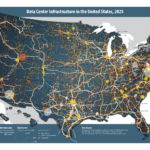
Navigating the Energy Demands of AI: How Data Center Growth Is Transforming Utility Planning and Power Infrastructure