
Non classé
Venezuela Has Oil. What It Lacks Is a Working Supply Chain

Published
3 mois agoon
By

Venezuela’s Oil Return Is a Supply Chain Reconstruction Problem, Not a Production Decision
In an earlier piece, we argued that Venezuela’s oil challenge is fundamentally a supply chain problem. This article examines what that means in operational terms.
Discussions about Venezuela’s potential return to global oil markets often focus on reserves, production targets, or price implications. From a supply chain perspective, those elements are secondary. The binding constraint is execution. What Venezuela faces is not a restart of oil production but the reconstruction of a degraded, multi-tier industrial supply chain.
Venezuela holds some of the world’s largest proven oil reserves, yet production has fallen sharply over the past two decades. This decline is not driven by geology. It reflects the steady erosion of infrastructure, supplier networks, workforce capability, service capacity, and operational discipline across the energy value chain. Reversing that erosion requires coordinated rebuilding across multiple tiers, each of which must function reliably before output can be sustained.
From a Logistics Viewpoints standpoint, this is best understood as a systems problem rather than a resource problem.
Production Is the Output, Not the Starting Point
Oil production is the visible output of a functioning supply chain. It sits at the end of a long sequence of inputs that must operate in coordination. When any of those inputs fail, production targets become aspirational rather than operational.
In Venezuela’s case, upstream assets have been idled, overused, or cannibalized. Midstream infrastructure has deteriorated unevenly. Export logistics have become unreliable. The supporting ecosystem of suppliers and service providers has thinned or disappeared. Reassembling this system cannot be accomplished through isolated investments or short-term interventions.
Sustained production depends on restoring continuity across multiple tiers simultaneously.
Tier One: Upstream Operating Inputs
The first tier consists of the equipment and consumables required to extract crude. This includes drilling rigs, compressors, pumps, artificial lift systems, chemicals, instrumentation, and spare parts. Much of this equipment has been idle for long periods or operated without proper maintenance. In some cases, assets were dismantled to keep other equipment running.
Before production can scale, these assets must be inspected, refurbished, or replaced. That process requires qualified vendors, access to parts, and technicians capable of performing work safely and consistently. It also requires maintenance schedules that are followed rather than deferred.
Supplier requalification is critical at this tier. Vendors that exited the country years ago will require enforceable contracts, predictable payment terms, and confidence that equipment will not be stranded or immobilized. Without that confidence, participation will be limited and costs will reflect elevated risk.
Tier Two: Industrial Equipment and Materials
The second tier includes manufacturers and distributors of industrial equipment and materials. Pipe, valves, rotating equipment, electrical systems, control hardware, and safety systems must be sourced and delivered in sequence. These components are not interchangeable, and delays in one category can halt progress across an entire project.
Many of the original suppliers that supported Venezuela’s energy sector are no longer present. Reestablishing these relationships requires more than purchase orders. It depends on customs clearance reliability, port throughput, inland transportation capacity, and secure storage.
This tier also introduces long lead times. Certain components, particularly large rotating equipment and specialized valves, can take months or years to procure. Without accurate planning and sequencing, capital can be deployed without corresponding gains in throughput.
Tier Three: Physical Infrastructure
Infrastructure forms the backbone of the supply chain. Ports, storage terminals, pipelines, roads, power generation, and telecommunications systems must all function reliably and in coordination. These assets are highly interdependent. A failure at any node propagates downstream and disrupts the entire flow from field to export market.
In Venezuela, infrastructure degradation is widespread but uneven. Some facilities may be repairable with moderate investment, while others require full replacement. Synchronizing these assets is a complex task. Restoring a port without reliable power, or a pipeline without secure pumping stations, does not increase effective capacity.
From a logistics perspective, this tier presents one of the largest challenges because infrastructure failures are often binary. Systems either work or they do not. Partial functionality rarely translates into proportional throughput.
Service Providers as a Binding Constraint
Across all tiers sit service providers. Oilfield services firms, logistics operators, maintenance contractors, security services, and workforce training organizations are essential to daily operations. These firms supply not only labor but also process discipline and operational continuity.
Many service providers previously operating in Venezuela experienced unpaid invoices, stranded equipment, or forced operational shutdowns. As a result, service capacity is not immediately available. Any re-entry is likely to be cautious, contract-driven, and priced to reflect elevated commercial and operational risk.
This has direct supply chain implications. Even with capital available, execution slows when service capacity is constrained or fragmented. In complex industrial environments, service providers often become the limiting factor in ramp-up timelines.
Workforce and Institutional Knowledge
Physical assets alone do not produce oil. Skilled labor and institutional knowledge are equally important. Venezuela’s energy workforce has been significantly reduced through emigration and attrition. Training new workers or re-attracting experienced personnel takes time.
Workforce rebuilding is not limited to operators. Engineers, planners, maintenance supervisors, safety professionals, and logistics coordinators are all required to run an integrated operation. Gaps at these levels increase the likelihood of equipment failure, safety incidents, and unplanned downtime.
From a supply chain perspective, workforce capacity affects reliability more than nameplate capacity. Without experienced personnel, even refurbished assets struggle to achieve consistent throughput.
Governance as an Operational Variable
Governance cuts across the entire supply chain. Contract enforcement, currency settlement, procurement transparency, and physical asset security directly influence whether capital remains deployed long enough to deliver returns. These factors determine supplier behavior, pricing, and willingness to commit resources.
Weak governance introduces friction at every tier. Suppliers shorten payment terms, reduce inventory exposure, and limit local presence. Service providers constrain scope. Infrastructure projects stall due to disputes or uncertainty. The cumulative effect is reduced throughput regardless of resource potential.
For supply chains operating at national scale, governance functions as enabling infrastructure. When it is weak, physical investments deliver diminishing returns.
Time, Capital, and Sequencing
Restoring Venezuela’s oil sector requires not only significant capital but disciplined sequencing. Deploying capital without synchronized planning across tiers results in stranded assets. Pipelines without power, refineries without feedstock, and ports without storage capacity do not increase exports.
Effective sequencing requires centralized planning, realistic timelines, and continuous coordination among stakeholders. This is why recovery timelines are measured in years rather than quarters. Each tier must reach minimum functional reliability before the next can deliver incremental value.
Facts & Constraints: The Non-Negotiables Shaping Execution
Capital Requirement
Industry estimates suggest that restoring Venezuela’s oil sector to sustained, materially higher output would require approximately $250–300 billion in cumulative investment. This includes upstream asset rehabilitation, replacement of degraded equipment, midstream and export infrastructure repair, power and utilities stabilization, and the reconstitution of supplier and service networks.
Timeline
Even under favorable conditions, recovery is expected to take 5–7 years to reach stable, higher production levels. Long lead times for industrial equipment, infrastructure sequencing constraints, workforce rebuilding, and supplier requalification all contribute to this timeline.
Oilfield Services Exposure
Major oilfield services providers, including SLB and Halliburton, previously experienced unpaid invoices, idle equipment, and operational disruptions. As a result, service capacity is not immediately available. Any re-entry is likely to be cautious and priced to reflect elevated risk, constraining ramp-up speed regardless of capital availability.
Citgo Litigation Overhang
Citgo Petroleum remains subject to ongoing litigation related to expropriation claims, with outstanding legal exposure estimated at approximately $21 billion. This unresolved liability continues to influence financing, asset security, and creditor risk assessments connected to Venezuela’s energy supply chain.
A Supply Chain Problem by Definition
Viewed through a Logistics Viewpoints lens, Venezuela’s situation follows a familiar pattern. Complex industrial systems degrade gradually but recover slowly. Recovery requires rebuilding trust, restoring process discipline, and re-establishing reliable flows across multiple tiers. There are no shortcuts.
The key question is not whether oil can be produced. It is whether a fragmented supply chain can be reassembled, synchronized, and governed long enough to sustain production at scale. That outcome will be determined by execution discipline over multiple years, not by short-term production targets.
Executive Takeaway
Venezuela’s return to meaningful oil exports is constrained less by reserves than by supply chain execution. Restoring output requires rebuilding upstream equipment, industrial supplier networks, infrastructure, service capacity, workforce capability, and governance mechanisms in parallel. Each tier is interdependent, and failure at any node limits throughput across the system. From our perspective, this is a long-horizon supply chain reconstruction effort, measured in years and sustained capital deployment, rather than a simple production restart.
The post Venezuela Has Oil. What It Lacks Is a Working Supply Chain appeared first on Logistics Viewpoints.
You may like
Non classé
Why Most RAG Systems Fail Before Generation Begins: The Missing Retrieval Validation Layer
Published
22 heures agoon
27 mars 2026By

Most RAG systems fail not on generation, but on unvalidated retrieval. Agentic RAG introduces a control loop that improves decision quality in multi-source environments.
Most retrieval-augmented generation (RAG) implementations do not fail at the model layer. They fail earlier, when systems proceed without validating whether retrieved information is sufficient.
In supply chain environments, where decisions depend on fragmented data across planning systems, execution platforms, and external signals, this limitation becomes operationally significant.
This is a structural issue, not a model performance issue.
Where Standard RAG Breaks Down
A conventional RAG architecture is linear. A query is embedded, relevant documents are retrieved from a vector database, and a language model generates a response. This works well when the question is clear and the knowledge base is well organized.
The limitations emerge under more realistic conditions:
Ambiguous queries are taken at face value, with no attempt to clarify intent
Answers distributed across multiple sources are only partially retrieved
Retrieval results that appear relevant but are incomplete or outdated are treated as sufficient
In each case, the system proceeds without validating whether the inputs are adequate. The model generates an answer regardless of the quality of the retrieval step.
In a supply chain context, this can translate directly into poor decisions. A system may retrieve an outdated tariff rule, incomplete supplier performance data, or a partial inventory position and still produce a confident recommendation.
The failure mode is not visible until the decision is already made.
From Pipeline to Loop
Agentic RAG introduces a control loop into this process.
Instead of a single pass from query to answer, the system evaluates intermediate results and can take corrective action. The sequence becomes:
Retrieve
Evaluate relevance and completeness
Decide whether to proceed or refine
Retrieve again if necessary
Generate response
This introduces decision points that were previously absent. The language model is no longer limited to generation. It can also act, selecting tools, reformulating queries, and routing across sources.
The architectural change is modest in concept but significant in effect. It converts retrieval from a one-shot operation into an iterative process with feedback.
This aligns with how advanced supply chain systems evolve, from static planning runs toward continuous, feedback-driven control processes.
Three Functional Capabilities
Agentic RAG systems typically introduce three capabilities that directly address the known failure modes.
Query refinement allows the system to rewrite or decompose ambiguous inputs before retrieval. This improves alignment between user intent and search results.
Routing and tool selection allow the system to query multiple sources. In supply chain environments, this is critical. A single question may require access to ERP data, transportation events, supplier records, and external regulatory sources.
Self-evaluation introduces a checkpoint between retrieval and generation. The system assesses whether the retrieved content is relevant, complete, and current. If not, it retries.
These functions are not independent features. Together, they form the control logic that governs the loop.
Supply Chain Use Cases
The value of this approach becomes clearer in multi-source, decision-heavy workflows.
Trade compliance
Determining import requirements may require combining tariff schedules, product classifications, and country-specific regulations. A single retrieval pass is often insufficient.
Supplier risk assessment
Evaluating a supplier may involve financial data, historical delivery performance, geopolitical exposure, and contract terms. These signals are rarely co-located.
Inventory and fulfillment decisions
Answering a seemingly simple question like “Can we fulfill this order?” may require checking available inventory, inbound shipments, allocation rules, and transportation constraints across systems.
In each case, the ability to evaluate and retry retrieval materially improves decision quality.
Trade-Offs Are Material
The addition of a control loop is not free.
Latency increases with each iteration. A simple query that would resolve in one pass may now require multiple retrieval and evaluation cycles.
Cost scales with the number of model calls. Systems operating at enterprise query volumes can see a meaningful increase in token consumption.
Determinism declines. Because the agent can make different decisions at each step, the same query may produce different paths and outputs across runs. This complicates debugging and validation.
There is also a structural limitation. The evaluation step itself relies on a language model. The system is effectively using one probabilistic model to judge the output of another.
These constraints directly affect production viability.
Where Agentic RAG Fits
Agentic RAG is not a universal upgrade. It is a targeted architectural choice.
It is appropriate when:
Queries are ambiguous or multi-step
Information is distributed across multiple systems
Decision quality is more important than latency
It is less appropriate when:
Queries are simple and repetitive
The knowledge base is clean and centralized
Response time and cost are tightly constrained
A hybrid model is likely to emerge as the standard approach. Standard RAG handles high-volume, low-complexity queries. Agentic RAG is invoked selectively when the system detects ambiguity or low retrieval confidence.
This mirrors how supply chain systems separate routine execution from exception-driven processes.
What This Means for Deployment
For supply chain leaders and technology providers, the implication is practical:
Do not introduce agentic loops to compensate for poor data or weak retrieval design
Apply agentic RAG selectively to high-value, multi-source decision workflows
Maintain simpler architectures for high-volume operational queries
Treat evaluation and retry logic as part of system design, not model tuning
In most cases, improving data quality and retrieval structure will deliver more value than adding additional reasoning layers.
Closing Perspective
The shift from pipeline to loop is a broader pattern in AI system design.
Static architectures assume that inputs are sufficient. Control-based architectures assume that they are not, and build mechanisms to test and correct them.
Agentic RAG applies this principle to retrieval.
The value is not in the agent itself. It is in the decision points introduced between retrieval and generation. Those checkpoints determine whether the system proceeds, retries, or escalates.
The implication is straightforward.
Agentic RAG should be treated as a targeted control mechanism, not a default architecture.
Apply it where decisions depend on fragmented, multi-source information and the cost of error is high. Avoid it where speed, predictability, and scale dominate.
The distinction is not technical. It is operational. Organizations that apply it selectively will improve decision quality. Those that apply it broadly risk adding cost and complexity without measurable gain.
The post Why Most RAG Systems Fail Before Generation Begins: The Missing Retrieval Validation Layer appeared first on Logistics Viewpoints.
Non classé
Supply Chain and Logistics News March 23rd-26th 2026
Published
23 heures agoon
27 mars 2026By
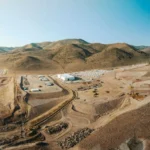
This week in logistics and supply chain news, the industry sees a major shift in industrial software with the launch of Velotic, a standalone company integrating powerhouse platforms like Proficy, Kepware, and ThingWorx. The landscape further evolves as Walmart secures AI patents for real-time pricing and demand forecasting, while Crusoe and Redwood Materials scale their modular AI data center partnership in Nevada. Rounding out the updates, a modernized EU-US trade deal restores structured access for steel line pipe, and the USPS announces a temporary 8% rate hike for select domestic services starting in late April.
Your top Supply Chain and Logistics News for the Week:
Velotic announced its launch as an independent industrial software company, bringing together multiple established platforms to support evolving industrial and manufacturing requirements. The formation of Velotic coincides with the closing of TPG’s previously announced acquisitions of Proficy, the former manufacturing software business of GE Vernova, and PTC’s former industrial connectivity and Internet of Things (IoT) businesses.
According to Craig Resnick, Vice President, ARC Advisory Group, “The industrial software market is entering a pivotal moment. Manufacturers are under pressure to modernize operations, extract greater value from data, and rapidly adopt AI—without sacrificing reliability, safety, or control. Against this backdrop, the formation of Velotic as a new standalone industrial software company bringing together Proficy®, Kepware® and ThingWorx® represents more than a corporate restructuring. It signals a shift in how industrial data, analytics, and operations technology (OT) can be delivered at scale, that ARC strongly advocates.”
Walmart AI Pricing Patents Signal Shift Toward Real-Time Retail Execution
Walmart has secured two patents related to automated pricing and demand forecasting, drawing attention to how large retailers are evolving their pricing and execution capabilities. One patent, System and Method for Dynamically Updating Prices on an E-Commerce Platform, covers a system that can dynamically update online prices based on changing market conditions. A second, Walmart Pricing and Demand Forecasting Patent Classification, relates to demand forecasting technology designed to estimate what customers will buy and recommend pricing accordingly. At the same time, Walmart is expanding digital shelf labels across its U.S. stores, replacing paper labels with centrally managed electronic displays.
Individually, none of these elements are new. Retailers have long used forecasting models, pricing tools, and store execution processes. What is notable is the combination.
Walmart now has three capabilities aligned:
Demand forecasting tied to predictive models
Price recommendation based on that demand
Store-level infrastructure capable of rapid execution
Crusoe and Redwood Materials Expand Strategic Partnership
On March 24, 2026, Crusoe, an AI infrastructure company, and Redwood Materials, a leader in battery recycling and energy storage, announced a major expansion of their existing partnership. The move scales their joint operations in Sparks, Nevada, to seven times the original AI infrastructure density, providing a blueprint for how second-life batteries can power high-performance computing. The expansion follows a successful pilot program launched in June 2025. Initially, the project utilized four Crusoe Spark™ modular data centers. Following seven months of high performance, the companies are increasing the deployment to 24 modular data centers. This growth is made possible by the hardware’s “modular” nature. Unlike traditional data centers that require years of stationary construction, modular units can be manufactured off-site and deployed in months.
EU Parliament Approves Key Terms of US Trade Deal
The newly approved EU–US line pipe agreement updates the terms under which European steel line pipe can enter the U.S. market, reinstating duty‑free access under a revised tariff‑rate quota system. Under the deal, the U.S. will allow a defined volume of EU‑produced line pipe to enter without Section 232 duties, while volumes exceeding the quota remain subject to tariffs. The agreement also includes strengthened verification requirements intended to prevent transshipment of line pipe originating from non‑EU countries—particularly China—through Europe. By formalizing these updated quota levels and compliance rules, the two sides have effectively modernized an earlier arrangement that had lapsed, restoring a structured, more predictable framework for EU steelmakers and U.S. importers.
USPS Sets 8% Temporary Rate Hike for Select Domestic Products
The U.S. Postal Service has approved a temporary rate increase for its Ground Advantage and Parcel Select services, raising prices for shippers during the peak spring and summer mailing period. The adjustment, which requires approval from the Postal Regulatory Commission, is structured as a seasonal surcharge designed to help USPS manage higher operating costs while maintaining service performance. Under the proposal, rates for Ground Advantage parcels would rise modestly across weight and distance tiers, while Parcel Select—often used by high‑volume shippers and consolidators—would see increases targeted at heavier packages and longer delivery zones. The temporary pricing would take effect April 28 and remain in place through July 13, after which rates revert to prior levels.
Song of the week:
The post Supply Chain and Logistics News March 23rd-26th 2026 appeared first on Logistics Viewpoints.
Non classé
Amazon Tests Structured Delivery Windows as It Repositions Speed
Published
2 jours agoon
26 mars 2026By

Amazon is testing a delivery model that divides the day into ten delivery windows across a 24-hour period. This follows recent efforts around sub-hour delivery and a proposed one-hour “rush” pickup model using stores such as Whole Foods Market.
The direction is straightforward: delivery speed is being segmented and potentially priced, rather than treated as a single standard.
From Uniform Speed to Tiered Service
The delivery window model introduces structured choice:
Customers select defined delivery windows
Faster or narrower windows may carry higher cost
Broader windows allow for lower-cost fulfillment
This allows Amazon to shape demand instead of only responding to it.
Operational Impact
The focus is control over network flow rather than absolute speed. With defined windows, Amazon can:
Improve route density
Reduce peak congestion
Align delivery timing with available capacity
The proposed “rush” pickup model extends this into physical locations. By combining online inventory with store stock, stores function as local fulfillment nodes.
Competitive Context
Walmart continues to expand store-based fulfillment and drone delivery. The competitive focus remains:
Proximity to demand
Flexibility in fulfillment options
Cost to serve at different service levels
Amazon’s approach emphasizes range of options rather than a single fastest promise.
Economic Model
This structure creates a clearer link between service level and cost. As supply chains become more dynamic, companies are aligning service commitments with operational constraints and capacity . Delivery windows apply that logic to the last mile.
Implications
If this model scales:
Speed becomes a selectable service level
Customer choice influences network efficiency
Pricing can be used to balance demand and capacity
The change is practical. The objective is not simply faster delivery, but more controlled execution of it.
The post Amazon Tests Structured Delivery Windows as It Repositions Speed appeared first on Logistics Viewpoints.


Why Most RAG Systems Fail Before Generation Begins: The Missing Retrieval Validation Layer

Supply Chain and Logistics News March 23rd-26th 2026

Amazon Tests Structured Delivery Windows as It Repositions Speed

Walmart and the New Supply Chain Reality: AI, Automation, and Resilience
Ex-Asia ocean rates climb on GRIs, despite slowing demand – October 22, 2025 Update
13 Books Logistics And Supply Chain Experts Need To Read
Trending
-
 Non classé1 an ago
Walmart and the New Supply Chain Reality: AI, Automation, and Resilience
- Non classé5 mois ago
Ex-Asia ocean rates climb on GRIs, despite slowing demand – October 22, 2025 Update
- Non classé7 mois ago
13 Books Logistics And Supply Chain Experts Need To Read
- Non classé2 mois ago
Container Shipping Overcapacity & Rate Outlook 2026
- Non classé5 mois ago
Ocean rates climb – for now – on GRIs despite demand slump; Red Sea return coming soon? – November 11, 2025 Update
- Non classé1 mois ago
Ocean rates ease as LNY begins; US port call fees again? – February 17, 2026 Update
- Non classé1 an ago
Unlocking Digital Efficiency in Logistics – Data Standards and Integration
-
 Non classé6 mois ago
Navigating the Energy Demands of AI: How Data Center Growth Is Transforming Utility Planning and Power Infrastructure