
Non classé
Hainan Free Trade Port’s Island-wide Customs Closure: Reshaping Global Supply Chains as a “China Hub”

Published
2 mois agoon
By
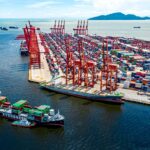
On December 18, 2025, the Hainan Free Trade Port (FTP) officially commenced island-wide customs closure operations. This initiative is far more than a simple policy adjustment; it represents a comprehensive, systematic, and institutional upgrade, designed to transform Hainan into a new gateway of “the highest level of openness” that connects China with the world, particularly Southeast Asian markets.
Its impact will extend well beyond the island, affecting global manufacturing layouts, port competitiveness, and regional economic integration.
I. Definition and Core Policy Framework of Island-wide Customs Closure
“Island-wide customs closure” does not signify isolation but a greater degree of openness. Its core is the implementation of a special customs supervision system defined as “eased access at the first line, controlled access at the second line, and free flow within the island.”
“Eased access at the first line” refers to the boundary between Hainan and overseas. Except for goods explicitly prohibited or restricted by law, other commodities can move in and out freely with minimal customs procedures.
“Controlled access at the second line” refers to the boundary between Hainan and the Chinese mainland. Goods entering the mainland from Hainan are subject to standard import regulations, primarily for taxation and compliance, ensuring national tax revenue security and market order.
“Free flow within the island” means goods, capital, personnel, and other factors of production can circulate freely within Hainan.
The supporting policy framework delivers breakthroughs in key areas:
Expanded “Zero-Tariff” Coverage: Post-closure, “zero-tariff” eligible goods expand from about 1,900 to approximately 6,600 tariff lines, increasing coverage from 21% to 74% of total import/export items, encompassing most production equipment and raw materials. This exemption applies to import tariffs, import VAT, and consumption tax, potentially saving enterprises about 20% in tax costs on imported equipment.
Optimized “Tariff Exemption for Value-added Processing” Policy: One of the most transformative measures, this policy sees significantly relaxed restrictions (e.g., on core business income ratios) and now allows cumulative value-added calculation across upstream and downstream enterprises. This makes it easier for businesses to meet the “over 30% value-added” threshold for tariff exemption when selling finished products into the mainland market. Companies can ship primary products or components to Hainan for substantial processing; if the value-added meets the standard, the final products can enter the mainland market tariff-free.
“Dual 15%” Tax Incentives as a Long-term Advantage: Encouraged industries registered and substantively operating in the Hainan FTP enjoy a reduced 15% corporate income tax rate. Eligible high-end and in-demand talents benefit from an individual income tax exemption for the portion exceeding 15%, providing long-term, stable fiscal predictability.
Enhanced Trade and Investment Liberalization/Facilitation: Measures include implementing a negative list for cross-border trade in services, relaxing foreign investment access, adopting a “commitment-based registration system” for business setup, and streamlining procedures. A visa-free policy for nationals of 59 countries is in effect, with further eased entry-exit restrictions for business personnel.
II. Strategic Opportunities for Global Supply Chains and Manufacturing
Hainan’s customs closure provides global supply chains with a cost- and efficiency-advantaged “super interface” into the Chinese market.
Reshaping “China-ASEAN” Supply Chain Geography: Situated at the nexus between China and Southeast Asia, Hainan is the nearest maritime gateway for China’s southwestern and central-western regions, saving an average of about 10 days compared to eastern coastal ports. Post-closure, Hainan evolves from a geographical “corridor” to an institutional “hub,” poised to become a preferred transit and processing base for ASEAN raw materials/agricultural products entering China and for Chinese manufactured goods bound for ASEAN.
Dual Solution for Global Manufacturing: “Cost Restructuring” & “Market Access”: For multinationals in sectors like high-end manufacturing, biopharmaceuticals, and green tech, Hainan offers a unique proposition:
Cost Restructuring: Leveraging zero-tariff imports of high-end equipment and raw materials, combined with the “dual 15%” tax incentives and competitive operational costs, enables the establishment of highly cost-competitive production bases.
Market Access: The “value-added processing” policy facilitates meeting rules of origin requirements for mainland market entry, effectively navigating traditional trade barriers.
Catalyzing Emerging Industrial Chains and Innovation Clusters: Policy incentives favor high-tech sectors. Hainan, prioritizing future-focused industries like the planting industry, deep-sea technology, and aerospace, has attracted multinational R&D centers. This is driven not only by cost advantages from duty-free hardware imports but also by Hainan’s institutional alignment with high-standard international trade rules. Through over 110 pilot initiatives, Hainan is proactively integrating with frameworks like the CPTPP and DEPA, ensuring better alignment for cross-border R&D flows and intellectual property protection.
III. Implications for Hong Kong and Singapore
Hainan’s rise poses structural implications for traditional Asia-Pacific hubs—Hong Kong and Singapore—driving a regional functional shift towards “competition-complementarity.”
For Hong Kong: Towards Functional Complementarity and Upgrading: Short-term competition exists in goods trade, duty-free consumption, and some professional services. However, core strengths differ fundamentally:
Hong Kong excels in its common law system, internationalized financial markets, free capital flow, and status as a global offshore RMB hub—deep-rooted institutional “soft power.”
Hainan offers emerging institutional dividends backed by the vast domestic market, competitive trade/manufacturing costs, and strategic geography.
A rational trend is cross-border synergy: “Hong Kong services + Hainan manufacturing/market access.” A “Hainan-Hong Kong Cooperation Memorandum” is signed. From January-July 2025, Hong Kong’s utilized investment in Hainan grew 99.3% year-on-year. Future supply chains could follow a “Hong Kong ordering – Hainan production – global sales” model, with Hong Kong focusing on international finance, legal, arbitration, and high-end business services, while Hainan handles manufacturing, processing, and mainland market access.
For Singapore: Challenging the “Transshipment Hub” Model, Driving Service Upgrades: Hainan directly challenges Singapore’s traditional transshipment model.
Direct Competition: Cases exist of Indonesian cargo ships routing directly to Hainan’s Yangpu Port instead of Singapore, saving up to 32% in costs. Yangpu’s customs clearance efficiency (e.g., e-declarations processed within an hour) is competitive. The “value-added processing” policy attracts cargo previously only transshipped or warehoused in Singapore for substantive processing in Hainan.
Structural Impact: With entrepôt trade constituting about 90% of Singapore’s total trade, the model is challenged when sufficient China-ASEAN trade volume enables direct shipping to policy-advantaged hubs like Hainan that offer added value. This pressures Singapore to evolve from a “global transshipment station” to a “global high-tech shipping and supply chain management center,” focusing on high-end services like green shipping, digital trade, and maritime law.
Notably, competition fosters cooperation. For example, PSA International has signed agreements with Hainan, operating stable direct shipping routes. The future Asia-Pacific shipping network may thus evolve from a Singapore-centric “hub-and-spoke” model to a “multi-nodal network” including Hainan and other Chinese coastal ports.
IV. Conclusion: Towards a More Diverse and Resilient Era for Global Supply Chains
The island-wide customs closure of the Hainan FTP represents a proactive offer of “certainty” and “openness dividends” by China amidst rising anti-globalization trends.
For China, it creates a strategic junction for domestic and international economic circulation, using high-level openness to spur domestic reform and providing a pivotal platform for China’s deeper participation in Asia-Pacific economic integration.
For Global Supply Chains, it adds a vital “China option,” offering multinationals a new solution for optimizing Asia-Pacific and global production footprints, thereby enhancing supply chain diversity and resilience.
For Regional Economies, it is altering the industrial and trade geography of East and Southeast Asia, fostering closer value-creating regional production networks, while prompting mature centers like Hong Kong and Singapore to reposition and upgrade their service offerings.
The post Hainan Free Trade Port’s Island-wide Customs Closure: Reshaping Global Supply Chains as a “China Hub” appeared first on Logistics Viewpoints.
You may like
Non classé
Supply Chain and Logistics News February 23rd- 26th 2026
Published
24 heures agoon
27 février 2026By

This week’s supply chain landscape is defined by a massive push to bridge the gap between having data and actually using it. From the high-stakes legal battle over billion-dollar tariffs to a radical AI-driven workforce restructuring at WiseTech Global, the industry is moving past simple visibility toward a period of high-consequence execution. Whether it is the Supreme Court’s intervention in trade policy or the operationalization of decision intelligence showcased at the 30th Annual ARC Forum, the recurring theme is clear: the next competitive advantage belongs to those who can synchronize their technology, their inventory, and their legal strategies in real time. In this edition, we break down the four critical shifts—architectural, legal, operational, and structural—shaping the final days of February 2026.
Your News for the Week:
The Technology Gap: Why Supply Chain Execution Still Isn’t Fully Connected Yet
Richard Stewart of Infios argues that the primary technology gap in modern supply chain execution is not a lack of ambition or budget, but rather an architectural failure. Most existing systems, such as WMS and TMS, are designed to optimize within their own silos, leaving a critical disconnect during real-time disruptions where manual workarounds and spreadsheets are still required to coordinate responses. Citing the Supply Chain Execution Readiness Report, Richard highlights that 69% of leaders struggle with data quality and integration, driving a shift in buying criteria toward interoperability and real-time visibility. Ultimately, Richard suggests that the next competitive advantage will belong to organizations that move beyond simple visibility toward “connected execution,” prioritizing modular architectures that synchronize decisions across the entire operational landscape rather than just reporting on them.
FedEx sues the US Government, seeking a full refund over Trump Tariffs
FedEx has officially filed a lawsuit against the US government, seeking a full refund for duties paid under the Trump administration’s recent tariff policies. The move follows a landmark 6-3 Supreme Court ruling that found the president overstepped his authority by using emergency powers to bypass Congress’s sole power to levy taxes. While the court’s decision stopped the specific enforcement mechanism, it left the status of the estimated $175 billion already collected in limbo. As the first major carrier to seek reimbursement, FedEx’s legal challenge could set a precedent that could affect the logistics industry and thousands of other importers currently navigating a volatile trade environment.
From Hidden Inventory to Returns Recovery: Exposing Operational Blind Spots
Hiu Wai Loh sheds light on the hidden inventory crisis and the costly returns black hole that plagues supply chains long after peak season ends. The research reveals that a staggering number of organizations suffer from fragmented data, leading to false stockouts and millions of dollars trapped in reverse logistics limbo. To overcome these operational blind spots, the author argues that companies must tear down silos and adopt a unified, real-time inventory model. By leveraging AI-driven smart disposition, businesses can efficiently route returns to their most profitable next destination, transforming a traditional cost center into a powerful engine for full-price recovery and year-round agility.
Avantor and Aera Technology were present at the 30th Annual ARC Forum and presented on how they are operationalizing Decision Intelligence. They explore how modern supply chains are navigating the paradox of increasing global disruptions alongside record-breaking operational efficiency. By highlighting a case study from Avantor, the presentation demonstrated how Decision Intelligence (DI) can move beyond theoretical AI to automate thousands of routine daily decisions, such as stock rebalancing and purchase order prioritization. The key takeaway from the ARC Advisory Group’s 30th Leadership Forum is that companies should focus on “change-ready” solutions that solve immediate, high-impact problems rather than waiting for perfect data or fully autonomous systems.
WiseTech Global Cutting 30% of Workforce in AI restructure:
WiseTech Global, the developer of the CargoWise platform, has announced a major two-year restructuring plan that will involve cutting approximately 2,000 jobs, or 29% of its global workforce. This strategic pivot aims to integrate artificial intelligence deeper into both its internal operations and its customer-facing software, which currently handles a massive 75% of global customs transaction data. The layoffs are expected to hit the company’s U.S. cloud division, E2open, particularly hard, with some reports suggesting cuts of up to 50% there. This move comes at a turbulent time for the Australian tech giant, as it seeks to regain investor confidence following a 68% drop in share price since late 2024 amid leadership controversies and shifting market dynamics.
Song of the week:
The post Supply Chain and Logistics News February 23rd- 26th 2026 appeared first on Logistics Viewpoints.
Non classé
Burger King’s AI “Patty” Moves AI Into Frontline Execution
Published
2 jours agoon
26 février 2026By

Burger King is piloting an AI assistant called “Patty” inside employee headsets as part of its broader BK Assistant platform. This is not a marketing chatbot. It is an operational system embedded into restaurant execution.
Patty supports crew members with preparation guidance, monitors equipment status, and analyzes customer interactions for defined service language such as “please” and “thank you.” Managers can query performance metrics tied to service quality in real time.
The architecture matters more than the novelty.
AI Inside the Operational Core
Patty is integrated with a cloud based point of sale system. That connection allows:
near real time inventory updates across channels
equipment downtime alerts
synchronized digital menu adjustments
structured service quality measurement
If a product goes out of stock or a machine fails, availability can be updated across kiosks, drive through boards, and digital systems within minutes.
This is AI operating inside the transaction layer, not sitting above it.
Earlier fast food AI experiments focused on automated drive through ordering. Burger King is more measured there. The more consequential shift is internal execution intelligence.
Efficiency, Visibility, and Risk
Across retail and logistics sectors, AI agents are being embedded directly into workflows to standardize performance and compress response times. The value comes from integration and coordination, not conversational capability.
At the same time, customer sentiment toward fully automated service remains mixed. Privacy, workforce implications, and over automation risk are active concerns. As AI begins monitoring tone and behavior, governance becomes part of the deployment decision.
Operational AI improves visibility. It also expands accountability.
Implications for Supply Chain and Operations Leaders
Three themes emerge:
Execution instrumentation – AI is now measuring soft metrics and converting them into structured operational data.
Closed loop response – When connected to POS and inventory systems, AI can both detect issues and trigger corrective updates.
Governance at scale – Embedding AI at the edge requires clear oversight, performance auditability, and workforce alignment.
Burger King plans to expand BK Assistant across U.S. restaurants by the end of 2026, with Patty currently piloting in several hundred locations.
This is not a fast food curiosity. It is a signal.
AI is moving from analytics to execution. From dashboards to headsets. From advisory tools to operational participants.
For supply chain leaders, the question is no longer whether AI will enter frontline operations. The question is how intentionally it will be architected and governed once it does.
The post Burger King’s AI “Patty” Moves AI Into Frontline Execution appeared first on Logistics Viewpoints.
Non classé
AI and Enterprise Software: Is the “SaaSpocalypse” Narrative Overstated?
Published
2 jours agoon
26 février 2026By

Capital is rotating. Growth has given way to value, and within technology the divergence is increasingly pronounced. While broad indices have stabilized, many software names have not. Since late 2025, software equities have materially underperformed other parts of the technology complex. Forward revenue growth across many mid-cap SaaS firms has slowed from prior expansion levels, net retention rates have edged down in several categories, and valuation multiples have compressed accordingly. Markets are repricing both growth durability and margin structure.
The prevailing explanation is straightforward. Generative AI lowers barriers to entry, reduces the cost of building applications, and compresses differentiation. If application logic becomes easier to produce, competitive intensity increases and pricing power weakens. The result is visible not only in equity valuations, but in moderated expansion rates and tighter forward guidance. There is substance behind that concern. But reducing enterprise software economics to code production misses where the structural leverage in these platforms actually resides.
The Core Bear Case
The bearish thesis rests on three related propositions: AI commoditizes application logic, accelerates competitive entry, and pressures margins. If enterprises can generate software dynamically, recurring subscription models face structural pressure. If workflows can be automated through agents, reliance on fixed applications may decline. If code becomes less scarce, incumbents may struggle to defend premium multiples.
The repricing in software reflects these risks. Multiples have compressed meaningfully, and growth expectations have moderated across several verticals. In certain categories, retention softness suggests substitution pressure is already emerging. These signals should not be dismissed as temporary volatility.
At the same time, equating software value solely with feature output or code generation is a simplification. Enterprise software durability rarely rests on feature sets alone.
What Enterprise Software Actually Represents
In supply chain environments, systems function as operational coordination layers rather than isolated applications. Transportation management systems, warehouse platforms, planning suites, and multi-enterprise visibility networks sit at the center of integrated transaction flows. They embed years of configuration, exception handling logic, compliance mappings, and cross-functional workflows. Over time, they accumulate operational data that informs sourcing, forecasting, transportation optimization, and execution decisions across the enterprise.
Replacing those systems is not equivalent to generating new code. It requires rebuilding institutional memory, re-establishing integration points, and re-validating compliance controls across internal and external stakeholders. The switching cost is not interface retraining; it is operational re-architecture.
In our research on AI system design in supply chains
AI in the Supply Chain-sp
, the recurring conclusion is that structural advantage stems from coordination, persistent context, and integration density. Model capability matters. Economic durability flows from how systems connect and govern activity across distributed networks. That distinction is central to evaluating enterprise software in the current environment.
Where Risk Is Real
Not all software categories have equivalent structural protection. Risk is most evident in narrowly defined vertical tools, lightweight workflow utilities, and productivity-layer applications with limited proprietary data accumulation. In these segments, generative models can replicate core functionality with relatively low switching friction. Pricing pressure can intensify quickly, and margin compression may prove structural rather than cyclical.
By contrast, enterprise workflow orchestration platforms deeply embedded in core business processes create operational dependency. Replacing them requires redesigning process architecture, not simply substituting interfaces. Systems that accumulate years of transaction data, customization layers, and ecosystem integrations generate switching costs that extend beyond feature parity. Observability and monitoring platforms that collect continuous telemetry function as operational infrastructure; as AI agents proliferate, the need for measurement, traceability, and governance increases rather than declines.
In supply chain software specifically, planning platforms and transportation orchestration systems accumulate integration density over time. That density represents economic friction against displacement and reinforces durability when market volatility increases.
AI as Architectural Pressure
AI will alter software economics. It will increase development intensity, shorten product cycles, and compress margins in commoditized segments. Vendors operating at the surface layer of functionality will face sustained pressure.
However, AI simultaneously increases coordination complexity. As autonomous agents proliferate, enterprises require more governance controls, more integration layers, and more persistent contextual memory. The economic question shifts from “Who can build features fastest?” to “Who can coordinate distributed intelligence most reliably?”
Agent-to-agent communication, contextual memory frameworks, retrieval-based reasoning, and graph-aware modeling are becoming foundational design considerations in supply chain environments, as described in ARC’s white paper AI in the Supply Chain: Architecting the Future of Logistics. Vendors capable of governing these interactions at scale may strengthen their structural position. Vendors confined to interface-layer differentiation may see pricing pressure intensify. The outcome is not uniform decline; it is structural differentiation within the sector.
Valuation vs. Structural Impairment
Markets reprice sectors quickly when uncertainty rises. The current adjustment reflects legitimate concerns: slower growth trajectories, reduced retention durability, increased competitive intensity, and rising research and development requirements. These are measurable economic factors.
The open question is whether valuations reflect permanent impairment across enterprise software broadly, or whether the market is failing to distinguish between commoditized applications and structurally embedded coordination platforms.
Some observers argue that AI may ultimately expand the addressable market for enterprise systems rather than compress it. As AI adoption increases, enterprises may require additional orchestration frameworks, governance layers, and system-level controls. In that scenario, platforms with embedded workflows and distribution reach could see increased strategic relevance. The impact will vary materially by category and architectural depth.
In supply chain markets, complexity is not declining. Cross-border regulation is tightening, network volatility remains elevated, and multi-enterprise coordination is becoming more demanding. Economic value accrues to platforms that integrate and govern transactions, not to those that merely present information.
Implications for Enterprise Buyers
For supply chain leaders, the relevant issue is not short-term equity performance but architectural positioning. Does the platform function as a system of record embedded in transaction flows, or as a reporting layer adjacent to them? How deeply is it integrated into compliance processes, procurement logic, and transportation execution? Does it accumulate proprietary operational data that reinforces switching costs over time? Is it evolving toward coordinated AI architectures, or layering assistive tools onto a static foundation?
AI will not eliminate enterprise systems. It will expose those whose economic value rests primarily on surface functionality rather than integration depth.
A Measured Conclusion
The current narrative captures real pressure within segments of the software sector, but it does not fully account for structural differentiation. Certain categories face sustained pricing compression where differentiation is shallow and switching friction is low. Others may strengthen as AI increases coordination demands, governance requirements, and integration complexity.
The decisive factor will not be branding or feature velocity. It will be integration density, data gravity, and the ability to coordinate distributed intelligence across enterprise and partner networks. In supply chain contexts, platforms that govern transactions, maintain contextual continuity, and orchestrate multi-node operations retain structural advantage. Platforms that merely automate isolated tasks face a more uncertain economic trajectory.
That distinction, rather than headline narrative, will determine long-term outcomes.
_______________________________________________________________________________
Download the Full Architecture Framework
A2A is only one component of a broader intelligent supply chain architecture. For a structured analysis of how A2A integrates with context-aware systems, retrieval frameworks, graph-based reasoning, and data harmonization requirements, download the full white paper:
The paper outlines the architectural model, governance considerations, and practical implementation path for enterprises building connected intelligence across their supply networks.
Download the white paper to explore the complete framework.
The post AI and Enterprise Software: Is the “SaaSpocalypse” Narrative Overstated? appeared first on Logistics Viewpoints.


Supply Chain and Logistics News February 23rd- 26th 2026

Burger King’s AI “Patty” Moves AI Into Frontline Execution

AI and Enterprise Software: Is the “SaaSpocalypse” Narrative Overstated?

Walmart and the New Supply Chain Reality: AI, Automation, and Resilience
Ex-Asia ocean rates climb on GRIs, despite slowing demand – October 22, 2025 Update
13 Books Logistics And Supply Chain Experts Need To Read
Trending
-
 Non classé12 mois ago
Walmart and the New Supply Chain Reality: AI, Automation, and Resilience
- Non classé4 mois ago
Ex-Asia ocean rates climb on GRIs, despite slowing demand – October 22, 2025 Update
- Non classé7 mois ago
13 Books Logistics And Supply Chain Experts Need To Read
- Non classé1 mois ago
Container Shipping Overcapacity & Rate Outlook 2026
- Non classé4 mois ago
Ocean rates climb – for now – on GRIs despite demand slump; Red Sea return coming soon? – November 11, 2025 Update
- Non classé1 an ago
Unlocking Digital Efficiency in Logistics – Data Standards and Integration
-

 Non classé6 mois ago
Blue Yonder Acquires Optoro to Revolutionize Returns Management
-

 Non classé5 mois ago
Navigating the Energy Demands of AI: How Data Center Growth Is Transforming Utility Planning and Power Infrastructure