
Non classé
February 24th – 27th 2025 Supply Chain & Logistics News

Published
1 an agoon
By

In the ever-evolving world of logistics, adaptability is key. This week’s top stories highlight the shifting landscape of supply chain resilience, major corporate investments, and geopolitical developments. From strategies to build antifragile supply chains that thrive in disruption to Apple’s historic $500 billion investment in AI-driven infrastructure, businesses are reshaping their operations for the future. Meanwhile, a newly ratified dockworkers’ contract ensures labor stability until 2030, while impending U.S. tariffs on Mexico, Canada, and China could disrupt trade flows. Lastly, Ukraine’s preliminary mineral deal with the U.S. signals economic shifts amid ongoing conflict. Stay ahead with the latest insights in global logistics.
Here are This Weeks Biggest News Headlines:
Beyond Resilience: 5 Steps to Building an Antifragile Supply Chain
Global VP of Industry Practices Alex Rotenberg published an article detailing steps to building an Antifragile Supply Chain. Here is a synopsis, building an antifragile supply chain is essential in today’s unpredictable world. Unlike resilient supply chains that merely withstand disruptions, antifragile supply chains thrive and grow stronger from them. The process begins with identifying breaking points using the TTR-TTS framework and prioritizing supplier risks with the Kraljic Matrix. Next, redundancy and flexibility are built through Sheffi’s Resilience Model. Network science is then employed to prevent domino effects, ensuring that a single failure doesn’t cascade through the entire system. Finally, the OODA Loop accelerates response times, allowing for swift and effective action in the face of disruptions.
Apple’s $500 Billion Investment in Artificial Intelligence
Apple recently announced a groundbreaking investment plan, committing over $500 billion in the United States over the next four years. This initiative aims to transform various aspects of the supply chain, including manufacturing, job creation, research and development, infrastructure upgrades, and sustainability efforts. Apple plans to hire 20,000 new employees and expand its 24 silicon-producing factories across multiple states. A new advanced manufacturing facility in Houston will produce servers for Apple Intelligence. The investment will enhance domestic production, reduce dependency on international supply chains, and promote green technologies, ensuring Apple’s continued leadership in technological innovation and sustainability.
US East and Gulf Coast Dockworkers Ratify New Six Year Contract
More than 45,000 U.S. dockworkers, represented by the International Longshoremen’s Association (ILA), have ratified a new six-year contract, ensuring labor peace until 2030. The agreement, which includes a 62% wage hike, improved healthcare, and increased retirement contributions, was reached after resolving disputes over automation. This contract, effective from October 1, 2024, to September 30, 2030, raises the hourly base rate for workers to $63, making them some of the highest-paid blue-collar workers in the U.S. The deal, approved by a 99% vote, is expected to cost employers an estimated $35 billion and provides stability for shippers amid global uncertainties.
Trump Vows March Tariff Hikes for Mexico, Canada, extra 10% for China due to Fentanyl
U.S. President Donald Trump announced that his proposed 25% tariffs on Mexican and Canadian goods will take effect on March 4, 2025, and he threatened an additional 10% tariff on Chinese imports due to ongoing fentanyl inflows. Despite some confusion over deadlines, the White House clarified that the tariffs are in response to insufficient progress in reducing fentanyl deaths. Canadian and Mexican officials are set to meet with U.S. counterparts to discuss the tariffs, while China has called for dialogue to address trade concerns. The administration is closely monitoring the situation, with significant attention on the fentanyl crisis.
Ukraine Announces a Preliminary Mineral Deal with US, No Security Guarantee
Ukraine has reached a preliminary agreement with the United States to jointly develop its natural resources, including rare earths, critical minerals, oil, and gas. This deal is crucial for Ukraine to secure U.S. engagement amid ongoing conflict with Russia. The agreement includes the creation of a Reconstruction Investment Fund, managed by both countries, to reinvest revenues from Ukrainian resources into the country’s development. Despite the deal, the U.S. has not provided security guarantees to Ukraine. The agreement aims to attract investment and promote economic stability, but significant profits from these resources may take years due to the war and underinvestment.
Song of the week:
The post February 24th – 27th 2025 Supply Chain & Logistics News appeared first on Logistics Viewpoints.
You may like
Non classé
Crusoe and Redwood Materials Expand Strategic Partnership
Published
15 heures agoon
25 mars 2026By

On March 24, 2026, Crusoe, an AI infrastructure company, and Redwood Materials, a leader in battery recycling and energy storage, announced a major expansion of their existing partnership.
The move scales their joint operations in Sparks, Nevada, to seven times the original AI infrastructure density, providing a blueprint for how second-life batteries can power high-performance computing.
From Pilot to Scale: 7x Growth
The expansion follows a successful pilot program launched in June 2025. Initially, the project utilized four Crusoe Spark™ modular data centers. Following seven months of high performance, the companies are increasing the deployment to 24 modular data centers.
This growth is made possible by the hardware’s “modular” nature. Unlike traditional data centers that require years of stationary construction, modular units can be manufactured off-site and deployed in months.
Powering AI with Second-Life Batteries
A central component of this partnership is the use of “second-life” electric vehicle (EV) batteries. When EV batteries are no longer optimal for automotive use, they often retain significant capacity for stationary energy storage.
Redwood Materials integrates these repurposed batteries into a 12-megawatt (MW) / 63-megawatt-hour (MWh) microgrid. This system, combined with on-site solar power, provides the energy required to run Crusoe’s AI-optimized GPUs. The orchestration of these batteries is handled by Redwood’s “Pack Manager” technology, which ensures steady power delivery for the intense workloads required by AI model training and inference.
Reliability and Performance Metrics
A primary concern with renewable-powered microgrids is “uptime”, the percentage of time the system is operational. The press release highlights several key performance indicators from the initial seven-month period:
99.2% Operational Availability: The microgrid exceeded reliability expectations while running on renewable sources and battery storage.
99.9% Total Uptime: By leveraging the traditional power grid as a backup source, Crusoe Cloud maintained a nearly constant state of operation.
Supply Chain and Sustainability
The partnership addresses two of the most significant bottlenecks in the current AI boom: energy consumption and deployment speed.
Sustainability: By using recycled materials and on-site renewable energy, the “AI factory” model reduces the carbon footprint associated with massive data processing.
Predictability: The ability to scale in months rather than years allows AI providers to meet the rapidly fluctuating demand for compute power.
As the demand for intelligence grows, the convergence of innovative energy storage and modular infrastructure—as demonstrated by Crusoe and Redwood Materials—offers a potential path forward for sustainable and rapid industrial scaling.
The post Crusoe and Redwood Materials Expand Strategic Partnership appeared first on Logistics Viewpoints.
Non classé
Velotic Launches as Independent Industrial Software Company Integrating Proficy, Kepware, and ThingWorx
Published
19 heures agoon
25 mars 2026By

Velotic announced its launch as an independent industrial software company, bringing together multiple established platforms to support evolving industrial and manufacturing requirements. The formation of Velotic coincides with the closing of TPG’s previously announced acquisitions of Proficy, the former manufacturing software business of GE Vernova, and PTC’s former industrial connectivity and Internet of Things (IoT) businesses.
Backed by TPG, Velotic provides a suite of data-driven solutions designed to help improve operational efficiency, enhance productivity, and increase visibility across complex industrial environments. The combined portfolio integrates Proficy’s automation and production management capabilities, Kepware’s industrial connectivity technologies, and ThingWorx’s industrial data and analytics applications.
According to Craig Resnick, Vice President, ARC Advisory Group, “The industrial software market is entering a pivotal moment. Manufacturers are under pressure to modernize operations, extract greater value from data, and rapidly adopt AI—without sacrificing reliability, safety, or control. Against this backdrop, the formation of Velotic as a new standalone industrial software company bringing together Proficy®, Kepware® and ThingWorx® represents more than a corporate restructuring. It signals a shift in how industrial data, analytics, and operations technology (OT) can be delivered at scale, that ARC strongly advocates.”
Velotic is positioned to help address increasing demand for integrated, AI-enabled industrial software by combining established technologies into a unified offering. The company focuses on helping to enable manufacturers to manage data more effectively and support operational decision-making across distributed environments.
Manufacturing software executive Brian Shepherd has been appointed CEO of Velotic. He brings over 25 years of experience in manufacturing technology, including leadership roles at Rockwell Automation, Hexagon Manufacturing Intelligence, and PTC. James Heppelmann, former Chairman and CEO of PTC, has been named Executive Chairman.
Velotic operates as a hardware-agnostic platform provider with a focus on flexibility and interoperability. Proficy, Kepware, and ThingWorx will continue as distinct product lines within the broader portfolio. The company is headquartered in the Boston area and reports more than $300 million in revenue, serving customers across manufacturing, oil and gas, utilities, and infrastructure sectors.
The post Velotic Launches as Independent Industrial Software Company Integrating Proficy, Kepware, and ThingWorx appeared first on Logistics Viewpoints.
Non classé
Lytica and the Emergence of a Pricing Science Layer in Procurement
Published
21 heures agoon
25 mars 2026By
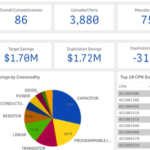
A recent briefing with Lytica highlights a shift in procurement from opaque negotiation toward statistically grounded pricing intelligence.
Procurement has long operated with an imbalance of information.
Suppliers understand pricing across customers, volumes, and market conditions. Buyers rely on internal history, limited benchmarks, and negotiation experience to determine whether a price is competitive. In categories such as electronic components, this gap is amplified by volatility and limited transparency.
The result is consistent. Different companies, and often different divisions within the same company, pay materially different prices for the same component.
Lytica is attempting to address that condition.
From Transaction Data to Market Intelligence
Lytica’s platform is built on anonymized buyer transaction data aggregated across a network of companies. This creates a continuously updated view of pricing across suppliers, regions, and time.
This is not modeled data or survey input. It reflects observed market behavior.
That distinction allows procurement teams to assess pricing against a broader market reference:
Where are we overpaying
How do suppliers price across customers
What does competitive pricing look like
This represents a move from internal spend analysis to external market intelligence.
From Benchmarking to a Pricing Discipline
The more important development is how this data is modeled.
Lytica treats pricing as a measure of competitiveness rather than a fixed value. Prices exist within a distribution shaped by real transactions. Each company occupies a position within that distribution.
This enables a more structured evaluation of procurement performance:
Prices can be ranked relative to the market
Outliers can be identified and examined
Expected price ranges can be estimated using observed data
The question shifts from “Is this price good” to “How competitive is this price relative to the market”
This introduces a more disciplined approach to procurement performance.
Quantifying Leverage in Negotiation
Once pricing is modeled this way, negotiation becomes more structured.
Procurement teams can enter discussions with:
Target pricing ranges based on transaction data
Evidence of variance across comparable buyers
Supplier-specific pricing patterns over time
This replaces qualitative positioning with data-backed arguments.
The result is more consistent outcomes and shorter negotiation cycles.
From Data to Decision Support
The next step is applying this dataset in operational workflows.
As outlined in modern supply chain architectures , AI systems become more useful when grounded in domain-specific data and applied with context.
In this case, systems can:
Identify deviations from competitive pricing levels
Estimate expected pricing ranges based on observed transactions
Generate supplier-specific negotiation guidance
Monitor pricing performance over time
These outputs are typically delivered as structured guidance for sourcing teams.
The Role of Context and Retrieval
The effectiveness of this approach depends on how data is accessed and retained.
Retrieval-based architectures allow systems to reference current transaction data when generating recommendations. Context-aware systems retain supplier history, pricing behavior, and prior outcomes across decision cycles.
This supports continuity in decision making rather than isolated analysis.
Positioning in the Stack
Lytica does not replace ERP or sourcing platforms. It operates as an intelligence layer above them.
This reflects a broader shift:
Systems of record manage transactions
Systems of execution manage workflows
Systems of intelligence guide decisions
Over time, as confidence in recommendations increases, this layer is likely to become more integrated into execution.
The Bottom Line
Lytica reflects a shift in procurement.
Pricing is moving from opaque negotiation toward structured, data-based market positioning.
This changes how procurement operates:
From internal benchmarks to external reference points
From periodic sourcing to continuous evaluation
From intuition to structured decision support
In more volatile supply environments, this type of capability becomes increasingly relevant.
Organizations that adopt it early will have a clearer understanding of their market position and a more consistent approach to improving it.
The post Lytica and the Emergence of a Pricing Science Layer in Procurement appeared first on Logistics Viewpoints.


Crusoe and Redwood Materials Expand Strategic Partnership

Velotic Launches as Independent Industrial Software Company Integrating Proficy, Kepware, and ThingWorx

Lytica and the Emergence of a Pricing Science Layer in Procurement

Walmart and the New Supply Chain Reality: AI, Automation, and Resilience
Ex-Asia ocean rates climb on GRIs, despite slowing demand – October 22, 2025 Update
13 Books Logistics And Supply Chain Experts Need To Read
Trending
-
 Non classé1 an ago
Walmart and the New Supply Chain Reality: AI, Automation, and Resilience
- Non classé5 mois ago
Ex-Asia ocean rates climb on GRIs, despite slowing demand – October 22, 2025 Update
- Non classé7 mois ago
13 Books Logistics And Supply Chain Experts Need To Read
- Non classé2 mois ago
Container Shipping Overcapacity & Rate Outlook 2026
- Non classé4 mois ago
Ocean rates climb – for now – on GRIs despite demand slump; Red Sea return coming soon? – November 11, 2025 Update
- Non classé1 mois ago
Ocean rates ease as LNY begins; US port call fees again? – February 17, 2026 Update
- Non classé1 an ago
Unlocking Digital Efficiency in Logistics – Data Standards and Integration
-

 Non classé6 mois ago
Navigating the Energy Demands of AI: How Data Center Growth Is Transforming Utility Planning and Power Infrastructure