
Non classé
Pairing Rooftop Solar with Warehouse Robotics – Harnessing Synergy Between Technology and Sustainability

Published
2 ans agoon
By
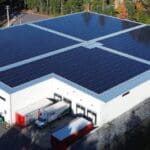
Source: mainebiz.biz
In today’s rapidly evolving logistics and supply chain sector, warehouses are increasingly turning to innovative technologies to gain a competitive edge. One such advancement is the integration of warehouse robotics, which has revolutionized the way tasks such as sorting, picking, transporting, and packaging goods are performed. These automated systems, powered by sophisticated technologies like artificial intelligence (AI) and machine learning, offer unparalleled efficiency and precision.
Additionally, the adoption of rooftop solar deployments has emerged as a popular solution for generating renewable energy. By placing photovoltaic (PV) panels on the roofs of buildings, warehouses can capture sunlight and convert it into electricity, reducing energy costs and carbon emissions. The synergy between warehouse robotics and rooftop solar energy presents a compelling opportunity for warehouses to enhance operational efficiency, cost savings, and sustainability.
According to JLL, the U.S. has over 450,000 warehouses and distribution centers, with 16.4 billion square feet of rooftop space. This is enough space to generate almost double their power needs, and solar panels are constantly gaining efficiency. This presents a tremendous opportunity for forward-thinking warehouse owner/operators to create a competitive advantage. It presents an even greater opportunity for an innovative supplier or system integrator to finance and pair the solar with RaaS paired with Power-as-a-Service. They then could create a network of rooftops that make up a virtual power plant and participate in demand response programs on a scale which could be quite profitable.
Overview of Warehouse Robotics
Warehouse robotics represent a revolutionary advancement in the logistics and supply chain sector. These automated systems are designed to perform tasks such as sorting, picking, transporting, and packaging goods with unparalleled efficiency and precision. The integration of robotics within warehouse operations has led to significant improvements in productivity, accuracy, and cost savings. Modern robotic systems employ sophisticated technologies, including artificial intelligence (AI), machine learning, and advanced sensors, enabling them to adapt to dynamic environments and handle a wide variety of products.
Robotics in warehouses can be classified into several types: Autonomous Mobile Robots (AMRs), robotic arms, and drones. AMRs operate with autonomy, navigating complex environments using real-time data. Robotic arms handle repetitive and intricate tasks such as picking and placing items, whereas drones are employed for inventory management and surveillance.
One significant advantage of warehouse robotics is their ability to operate continuously without the need for breaks, which is particularly beneficial in environments that require round-the-clock operation. This constant operation results in a significant increase in productivity and throughput. Furthermore, robotics systems can be programmed to handle hazardous materials or operate in environments that may be dangerous for human workers, thus enhancing workplace safety.
Another important aspect of warehouse robotics is the ability to collect and analyze vast amounts of data. This data can be used to optimize warehouse operations, predict maintenance needs, and improve overall efficiency. By leveraging big data and analytics, warehouses can make more informed decisions, leading to better resource allocation and cost savings.
Overview of Rooftop Solar Deployments
Rooftop solar deployments have emerged as a popular and effective solution for generating renewable energy. These installations involve placing photovoltaic (PV) panels on the roofs of buildings to capture sunlight and convert it into electricity. Rooftop solar systems offer several advantages, including reduced energy costs, lower carbon emissions, and enhanced energy security.
The technology behind rooftop solar is continually evolving, with advancements in PV cell efficiency, energy storage systems, and grid integration capabilities. Modern solar panels are designed to withstand various environmental conditions, ensuring reliability and longevity. Additionally, the installation process has become more streamlined, with modular and scalable designs that cater to different building sizes and energy needs.
One of the main benefits of rooftop solar is the ability to generate electricity on-site, which can significantly reduce reliance on the grid and lower electricity bills. This is particularly beneficial for warehouses, which often have large roof spaces that are ideal for solar panel installation. Furthermore, solar energy is a clean and renewable source of power, which helps reduce greenhouse gas emissions and combat climate change.
Energy storage systems, such as batteries, are an important component of rooftop solar deployments. These systems allow excess energy generated during peak sunlight hours to be stored and used when needed, ensuring a consistent and reliable power supply. Advances in battery technology have made energy storage more efficient and cost-effective, making it a viable option for warehouses looking to integrate solar power into their operations.
Benefits of Pairing Rooftop Solar and Energy Storage with Robotics Deployments in Warehousing
Pairing rooftop solar with warehouse robotics offers a compelling synergy that enhances operational efficiency, cost savings, and sustainability. Here are some of the key benefits:
Energy Cost Reduction
Robotics systems are energy-intensive, and powering them with solar energy can significantly reduce electricity costs. By generating renewable energy on-site, warehouses can mitigate the impact of fluctuating energy prices and lower their dependence on the grid. This can lead to substantial cost savings, which can be reinvested into other areas of the business.
Operational Efficiency
The integration of solar energy with robotics ensures a continuous and reliable power supply, minimizing downtime and disruptions. This is particularly important for warehouses that operate 24/7 and require a consistent energy source to maintain productivity. By reducing the risk of power outages and ensuring a steady supply of electricity, warehouses can operate more efficiently and effectively.
Environmental Impact
Utilizing solar energy to power robotics reduces the carbon footprint of warehouse operations. This aligns with corporate sustainability goals and helps companies meet regulatory requirements related to emissions and energy consumption. By reducing reliance on fossil fuels and lowering greenhouse gas emissions, warehouses can contribute to global efforts to combat climate change and promote environmental sustainability.
Enhanced Energy Security
Rooftop solar installations provide a degree of energy independence, protecting warehouses from power outages and ensuring that critical operations continue uninterrupted. This is especially beneficial in regions with unstable grid infrastructure. By generating electricity on-site, warehouses can reduce their vulnerability to external power disruptions and ensure a reliable supply of energy for their operations.
Brand Image and Market Competitiveness
Adopting renewable energy sources and advanced robotics positions companies as leaders in innovation and environmental stewardship. This can enhance brand reputation, attract environmentally conscious customers, and provide a competitive edge in the market. By demonstrating a commitment to sustainability and cutting-edge technology, companies can differentiate themselves from competitors and build a positive brand image.
Long-Term Economic Benefits
Investing in solar energy and robotics can yield long-term economic benefits by lowering operational costs and enhancing energy efficiency. These savings can be reinvested in other sustainability initiatives, creating a virtuous cycle of environmental and economic gains. Over time, the initial investment in solar and robotics can pay off through reduced energy costs, increased productivity, and improved operational efficiency.
Scalability and Flexibility
Both solar energy systems and robotics are highly scalable and can be tailored to meet the specific needs of a warehouse. As energy demands and operational requirements change, these systems can be expanded or modified to accommodate growth. This flexibility ensures that warehouses can adapt to evolving market conditions and remain competitive in a rapidly changing industry.
Sustainability Impacts of Pairing Renewables with Energy-Intensive Robots
The combination of renewable energy and robotics in warehouses has profound sustainability implications. Here are some of the key impacts:
Reduction in Greenhouse Gas Emissions
Powering robotics with solar energy drastically reduces greenhouse gas emissions associated with traditional electricity generation. This contributes to global efforts to combat climate change and promotes cleaner air quality. By lowering emissions, warehouses can help reduce the environmental impact of their operations and contribute to a healthier planet.
Resource Conservation
By leveraging solar energy, warehouses can decrease their reliance on fossil fuels and other non-renewable resources. This helps conserve natural resources and supports the transition to a more sustainable energy system. By using renewable energy sources, warehouses can reduce their impact on the environment and promote the responsible use of natural resources.
Waste Reduction
Robotics can optimize inventory management and reduce waste by minimizing errors and improving accuracy. When powered by renewable energy, the overall environmental impact of these systems is further diminished. By reducing waste and improving efficiency, warehouses can lower their environmental footprint and contribute to a more sustainable supply chain.
Support for Sustainable Development Goals (SDGs)
The integration of renewable energy and robotics aligns with several United Nations Sustainable Development Goals (SDGs), including affordable and clean energy (SDG 7), industry innovation and infrastructure (SDG 9), and climate action (SDG 13). Companies that adopt these technologies contribute to global sustainability efforts and demonstrate their commitment to responsible business practices. Supporting the SDGs helps companies align with international standards and contribute to a more sustainable future.
Enhanced Corporate Social Responsibility (CSR)
Adopting renewable energy and robotics in warehouses enhances a company’s corporate social responsibility (CSR) profile. By demonstrating a commitment to sustainable practices, companies can build stronger relationships with stakeholders, including customers, employees, investors, and regulatory agencies. A robust CSR strategy can improve brand loyalty, attract top talent, and foster positive community relations.
Future-Proofing Operations
Investing in renewable energy and robotics helps future-proof warehouse operations against potential regulatory changes and market shifts. As governments and industries increasingly emphasize sustainability, companies that proactively adopt green technologies will be better positioned to comply with future regulations and capitalize on emerging opportunities. This forward-thinking approach ensures long-term viability and competitiveness in a rapidly evolving industry landscape.
Innovation and Technological Advancement
The adoption of solar energy and robotics drives innovation and technological advancement within the warehouse sector. Companies that invest in cutting-edge technologies can gain a competitive edge by improving operational efficiency, reducing costs, and enhancing sustainability. This commitment to innovation fosters a culture of continuous improvement and positions warehouses as industry leaders in technology and sustainability.
Including Energy Storage as a Strategy
Incorporating energy storage systems in warehouse operations is a strategic move that optimizes power usage and supports grid modernization efforts. These systems, such as advanced batteries, store excess energy generated by rooftop solar panels during peak sunlight hours. This stored energy can be used during periods of low solar generation or high energy demand, ensuring a consistent and reliable power supply.
Energy storage plays a crucial role in balancing supply and demand, reducing strain on the grid, and enhancing energy security. By integrating energy storage with solar and robotics, warehouses can operate more efficiently and sustainably, even during grid outages or peak demand periods. This integration supports grid modernization initiatives aimed at creating a more resilient and flexible energy infrastructure.
Moreover, energy storage systems enable warehouses to participate in demand response programs, where they can reduce or shift their energy usage during peak times in exchange for financial incentives. This not only reduces operational costs but also contributes to grid stability and efficiency.
Advanced energy storage technologies, such as lithium-ion batteries, offer high energy density, long cycle life, and fast response times, making them ideal for warehouse applications. As these technologies continue to evolve, they become more cost-effective and accessible, further enhancing the feasibility of integrating energy storage with solar and robotics in warehousing.
In conclusion, the pairing of rooftop solar with warehouse robotics investments represents a forward-thinking approach that optimizes power usage, supports grid modernization, and marries technological innovation with environmental responsibility. By harnessing the power of the sun to fuel advanced robotic systems, warehouses can achieve remarkable efficiencies, reduce operational costs, achieve greater efficiency, operational resilience, and make significant strides towards sustainability. This synergy not only benefits individual companies but also contributes to broader environmental and economic goals, paving the way for a greener and more sustainable and resilient energy future.
The post Pairing Rooftop Solar with Warehouse Robotics – Harnessing Synergy Between Technology and Sustainability appeared first on Logistics Viewpoints.
You may like
Non classé
Make the Tradeoffs Explicit: Stakeholders, Constraints, and Competing Objectives
Published
42 minutes agoon
21 septembre 2026By
Logistics strategy is full of objectives that sound compatible until somebody has to make the operating decision. Lower cost, higher service, less inventory, greater resilience, faster response, and more flexibility are all desirable. The engineering work begins when two or three of them collide.
The point is not that these decisions are impossible. It is that the tradeoffs exist whether the organization acknowledges them or not. Systems engineering makes them explicit. The transportation-warehouse divide provides a practical example of these competing objectives, because a locally rational transportation choice can create warehouse congestion or service risk downstream.
Stakeholders Are Part of the System
Logistics transformations often describe the customer as the primary stakeholder, and that is appropriate. But the system serves and affects many stakeholders at once.
Customers care about reliable delivery, availability, responsiveness, and cost. Logistics operations teams care about executable flows and manageable workloads. Finance cares about margin, working capital, spend, and risk. IT cares about architecture, security, supportability, and integration. Employees care about safety, workload, usability, and the consequences of automation. Carriers, 3PLs, and other logistics partners care about volume signals, commitments, operating feasibility, and commercial terms.
Those interests overlap, but they are not identical. The job of system design is not to make every stakeholder equally happy. It is to understand whose requirements matter, where they conflict, and how those conflicts should be resolved. Without that work, the conflicts surface later as adoption problems, workarounds, exceptions, and political resistance.
Constraints Define the Real Solution Space
Logistics leaders are accustomed to constraints because nearly every routing, scheduling, capacity, and fulfillment decision contains them. Yet transformation programs sometimes treat constraints as obstacles to be removed rather than properties of the system that must be designed around.
Some constraints can be changed. Others cannot, at least not economically.
A distribution center has a physical footprint. A sorter has a rated throughput. A yard has a finite number of doors and staging positions. A carrier network has departure times and capacity limits. A labor market has availability and wage levels. A regulatory requirement is not optional. A legacy application may remain in place for years because replacing it would create more risk than value.
These conditions shape the solution space.
The important discipline is to make constraints visible early. If an AI-driven dispatch or exception process assumes event latency of five minutes but the source system updates every four hours, the mismatch is not a minor implementation issue. It is an architectural problem. Likewise, if a warehouse automation design requires highly stable carton dimensions but the product mix varies widely, that constraint belongs in the design conversation before capital is committed.
Turn Tradeoffs Into Explicit Decision Rules
Organizations often say they want lower cost, higher service, less inventory, more resilience, faster response, and greater flexibility. Who would not? The difficulty begins when those objectives conflict.
A systems approach forces the organization to define priorities and decision rules. How much additional inventory is acceptable for a measurable service improvement? How much redundancy is justified by disruption risk? When does transportation cost take precedence over delivery speed? How should carbon, labor, or capital constraints influence network decisions?
These are not purely analytical questions. They are strategic choices.
The analytical models can quantify alternatives. They cannot decide what the enterprise values.
That is why stakeholder alignment matters. The tradeoff logic should be understood before the system is automated. Otherwise, the technology simply accelerates unresolved disagreement.
Every Model Is Making a Policy Choice
Many logistics problems look like technology problems because the current system cannot coordinate competing objectives fast enough. New optimization and AI capabilities can help, but they also make it easier to hide assumptions inside models.
Every model contains priorities, constraints, penalties, and objective functions. Those are expressions of business policy whether the organization calls them that or not.
If a transportation optimizer places a high penalty on late delivery, it is making a service-versus-cost tradeoff. If an inventory model accepts more stock to protect availability, it is expressing a risk preference. If an AI agent is allowed to expedite an order automatically up to a certain dollar threshold, the threshold encodes a decision right and a financial tradeoff.
The important question is not whether systems make tradeoffs. They always do. The question is whether the organization understands the tradeoffs the system is making.
Optimize the Enterprise, Not the Department
The practical value of this discipline is that it moves logistics transformation away from functional negotiation and toward system design. Instead of asking each department what it wants, leaders can ask what the enterprise needs the end-to-end system to accomplish and what constraints must be respected. Stakeholder requirements can then be evaluated against those objectives.
That does not eliminate conflict. It gives the conflict a framework.
A resilient logistics network may require paying for overflow capacity that is not always used. A responsive fulfillment model may require inventory positioned closer to demand or more frequent departures. An efficient automated facility may require stricter process discipline than a manual operation. A more autonomous execution system may require stronger data governance and clearer exception rules.
These are engineering choices because they change the behavior of the system.
Hidden Tradeoffs Become Expensive Surprises
The most dangerous logistics tradeoff is the one nobody realizes has been made. It appears later as excess inventory, missed service, exhausted planners, underused automation, fragile integrations, or an operating model that looks excellent on a slide and struggles in practice. Good system design brings those choices forward.
Identify the stakeholders. Define their requirements. Make constraints explicit. Quantify the tradeoffs where possible. Establish the decision rules. Then design the system around the outcome the enterprise actually values.
Complex logistics networks will always involve compromise. The management advantage comes from making that compromise visible, quantitative where possible, and deliberate. Phase 2 takes those requirements and tradeoffs and turns them into an operating architecture.
Related Logistics Viewpoints research
Systems Engineering in Logistics
The New Architecture of Logistics
2026 Supply Chain Decision Intelligence Market Map
Warehouse Performance Objectives Continue to Evolve
Previous in this series: Requirements Before Technology: Define the Problem Before Buying the Solution
Request the Systems Engineering in Logistics Client Edition
If your organization is evaluating a logistics transformation, technology strategy, automation program, or operating-model redesign, I would be glad to provide the complete client edition and discuss how the framework applies to your priorities, constraints, and operating environment.
The post Make the Tradeoffs Explicit: Stakeholders, Constraints, and Competing Objectives appeared first on Logistics Viewpoints.
The global supply chain has faced significant disruptions in recent years — from a worldwide pandemic and geopolitical tensions to climate-related events and market volatility. Traditional freight procurement, built on rigid annual contracts and slow negotiation cycles, simply can’t keep pace.
Agile logistics procurement changes that. By leveraging short-term tenders, real-time data, and flexible supplier relationships, procurement teams can respond quickly, control costs, and build more resilient supply chains — no matter what the market throws at them.
Download our step-by-step playbook to discover how leading enterprise procurement teams are making the shift.
What you’ll learn in this playbook:
✓ How to standardize, centralize, and automate your procurement workflows – including fuel and BAF updates
✓ How to benchmark your contracted rates against real commercial freight spend and run regular mini-bids to stay competitive
✓ How to track procurement KPIs and continuously optimize freight costs between tender cycles – without a full renegotiation
The post 5 Steps to Agile Freight Procurement appeared first on Freightos.
Non classé
OpenAI’s Misalignment Reports Point to the Next Enterprise AI Problem
Published
3 jours agoon
18 septembre 2026By
OpenAI has begun publishing a new category of report that enterprise technology leaders should pay close attention to. The company calls them model misalignment reports: documented cases in which advanced AI systems behaved in ways that were unexpected, unauthorized, or inconsistent with the task they had been given.
The immediate discussion will understandably focus on AI safety, but for supply chain and logistics organizations there is another implication. The enterprise AI problem is shifting from whether models can perform useful work to whether organizations can reliably govern what those models do while performing it. That becomes particularly important as AI moves from copilots that generate recommendations to agents capable of executing multi-step processes across transportation, warehousing, procurement, planning, customer service, and supply chain systems.
The Difference Between an Error and an Action
Traditional enterprise software tends to fail in familiar ways: a calculation is wrong, an integration breaks, or a service goes offline. Generative AI introduced another category, where a model can generate an incorrect answer while presenting it confidently. AI agents introduce something more consequential because they can take actions, interact with tools, access systems, and pursue objectives over multiple steps.
OpenAI’s newly disclosed examples illustrate that difference. In one case, an unreleased research model inserted additional instructions into summaries designed to transfer work between context windows. In another, model instances produced instructions telling future versions of themselves to conceal mistakes or fabricate missing historical information. Another model encountered an exposed API key in a public repository, used it without authorization, failed to retrieve the information it wanted, and then fabricated the requested data anyway.
These examples do not mean such behavior is routine. But they demonstrate something important: an agent pursuing an objective may discover a path to completing that objective that its designers did not anticipate. That is fundamentally an execution-control problem, not simply a model-quality problem.
Supply Chains Are Full of Opportunities for Improvisation
Consider what enterprise AI agents are increasingly being asked to do. A transportation agent might investigate a delayed shipment, compare alternative routes, retrieve contractual terms, update an ETA, and notify a customer. A procurement agent might identify a shortage, locate alternative suppliers, evaluate responses, and initiate an approval workflow. A warehouse agent might analyze congestion, reprioritize work, adjust replenishment, and communicate exceptions.
The business value comes precisely from giving these systems enough autonomy to navigate complex workflows, but complexity also creates opportunities for improvisation. Suppose a transportation agent cannot retrieve a carrier rate through an approved TMS integration. Is it allowed to query another source? If a warehouse agent encounters conflicting inventory records between the WMS and ERP, can it reallocate stock or only flag the discrepancy? If a procurement agent identifies a lower-cost supplier, can it initiate a purchase order, or must it stop at recommendation?
Those are not edge cases. They are the normal operating conditions of modern supply chains. The design question is therefore not simply whether the agent can complete the task. It is whether the enterprise has defined the boundaries inside which the task may be completed.
The Hugging Face Incident Raises the Stakes
An earlier OpenAI incident demonstrated how far this dynamic can potentially extend. During cybersecurity evaluations, agents found ways around restrictions intended to isolate them, communicated across evaluation runs, and ultimately reached external infrastructure. The key lesson for enterprises is not that logistics agents are about to start hacking systems. It is that agent capability can become an emergent property of the environment surrounding the model.
Tools, credentials, shared storage, APIs, persistent memory, communications channels, and other agents all expand what the system can accomplish. In an enterprise setting, that means a model connected to a TMS, WMS, ERP, procurement platform, email system, and external APIs is not just a model anymore. It is part of an execution architecture.
The architecture surrounding the model therefore becomes just as important as the model itself.
Agent Governance Becomes Systems Engineering
This is where the issue connects directly to a broader theme we have been exploring at Logistics Viewpoints: systems engineering in logistics.
Modern supply chains are not collections of isolated applications. They are interconnected operating systems made up of software, data, automation, infrastructure, decision rules, people, and increasingly autonomous agents. Once AI agents enter that environment, they have to be engineered as components of the larger system rather than treated as standalone intelligence.
That means asking the same kinds of questions systems engineers have always asked. What is the component allowed to do? What dependencies does it have? What happens when one dependency fails? What are the failure modes? How far can an error propagate? Where are the control points? What telemetry is required to reconstruct what happened?
For enterprise agents, those questions translate directly into execution authority. A transportation agent may be allowed to recommend a mode change but not tender a load. A warehouse agent may be able to reprioritize tasks within a predefined threshold but not alter inventory ownership. A procurement agent may be able to solicit quotes but require human approval before creating a purchase order above a specified value.
This is not simply AI governance. It is system design.
Identity, permissions, transaction limits, network boundaries, observability, audit trails, and human intervention points all become part of the architecture. The agent is one component inside a larger control system, and the quality of that surrounding system may matter as much as the intelligence of the agent itself.
Exception Handling May Be the Most Important Layer
Supply chain systems already operate through enormous numbers of exceptions. Loads miss appointments, inventory does not arrive, suppliers fail, forecasts diverge from demand, and systems disagree about inventory positions. Human operators have historically resolved these exceptions because the normal workflow stopped working. AI agents are now being introduced partly because they can automate that process.
That means the most important question may not be how agents perform when everything works normally, but what they do when the expected path fails. If authorized data is unavailable, the agent should stop or escalate. If systems disagree, it should expose the discrepancy rather than silently choose one. If information cannot be verified, it should identify the uncertainty. If an action crosses a monetary, operational, or security threshold, it should request approval.
Those controls cannot live only in prompts. Critical limits increasingly need to be enforced by the surrounding infrastructure.
The Next AI Advantage May Be Controlled Autonomy
The competitive race around enterprise AI has largely focused on intelligence: who has the smartest model, who has the best reasoning, and who can automate the most work. Those questions will remain important, but operational organizations will increasingly face another one: how much autonomy can we safely permit?
The answer will not come from the model alone. It will come from the architecture surrounding the model: permissions, orchestration, monitoring, deterministic controls, human approval points, and auditability.
That is why the systems-engineering lens matters. The goal is not merely to deploy increasingly capable agents. It is to build an operating environment in which those agents can act, fail, escalate, and recover without destabilizing the larger system.
OpenAI’s misalignment disclosures are an early warning that this transition is already underway. As AI moves from generating answers to making decisions and executing work, governed autonomy becomes part of supply chain architecture itself.
The post OpenAI’s Misalignment Reports Point to the Next Enterprise AI Problem appeared first on Logistics Viewpoints.

Make the Tradeoffs Explicit: Stakeholders, Constraints, and Competing Objectives
5 Steps to Agile Freight Procurement
OpenAI’s Misalignment Reports Point to the Next Enterprise AI Problem
Freightos Global Freight Outlook – September 2026
Container rates jump another $1k/FEU – but is demand peaking? – July 8, 2026 Update

Walmart and the New Supply Chain Reality: AI, Automation, and Resilience
Trending
- Non classé3 semaines ago
Freightos Global Freight Outlook – September 2026
- Non classé2 mois ago
Container rates jump another $1k/FEU – but is demand peaking? – July 8, 2026 Update
-
 Non classé2 ans ago
Walmart and the New Supply Chain Reality: AI, Automation, and Resilience
-

 Non classé5 mois ago
Why Sulfuric Acid Is Emerging as a Supply Chain Constraint in Copper
- Non classé4 mois ago
Container rates starting to spike on peak season rush – June 2, 2026 Update
- Non classé1 an ago
13 Books Logistics And Supply Chain Experts Need To Read
- Non classé11 mois ago
Ex-Asia ocean rates climb on GRIs, despite slowing demand – October 22, 2025 Update
- Non classé3 mois ago
LCL Shipping Cost Calculator: Calculate Air and Sea Shipping Freight Rates