
Non classé
The Small Bottleneck with a Big Impact: Why Automating Box Opening Could Be the Next Frontier in Warehouse Productivity

Published
3 heures agoon
By
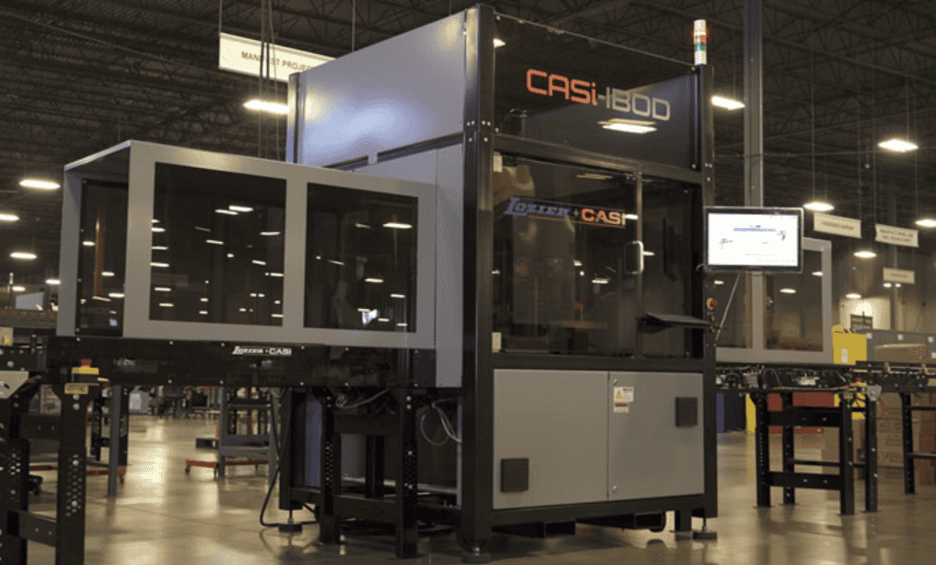
When supply chain leaders discuss warehouse automation, the conversation typically centers on high-profile technologies. Autonomous mobile robots (AMRs), automated storage and retrieval systems (ASRS), robotic picking, sortation systems, artificial intelligence, and digital twins tend to dominate both investment discussions and industry headlines. Yet some of the most significant productivity opportunities are not found in billion-dollar distribution center transformations. They are hidden in the seemingly mundane processes that occur thousands of times each day. One such process is carton opening.
At first glance, box cutting appears too simple to warrant strategic attention. Warehouses have been opening cartons manually for decades. Associates use box cutters, inventory moves downstream, and operations continue. But as distribution centers become increasingly automated, manually opening inbound cartons stands out as an area where yesterday’s processes often collide with today’s performance expectations. The question is not whether organizations can automate carton opening. The more interesting question is whether small workflow improvements can generate disproportionate gains in safety, productivity, and return on investment.
The Hidden Cost of Small Tasks
Warehouse operators continuously focus on eliminating bottlenecks. Traditionally, attention gravitates toward activities that are highly visible or capital intensive. Storage density, picking productivity, transportation optimization, and labor availability often become top priorities. Yet operational performance is ultimately the sum of thousands of individual activities. A two-second delay repeated 50,000 times per month becomes a significant loss of productive capacity. Similarly, a task that introduces variability, safety risks, or rework can create ripple effects that extend well beyond the activity itself. Manual carton opening falls into this category.
Inbound receiving operations depend on a predictable flow of goods into inspection, decanting, storage, quality control, and fulfillment processes. When carton opening relies entirely on manual labor, performance can vary significantly between operators, shifts, packaging types, and facility conditions. These variations may seem insignificant individually. Collectively, they introduce friction into an environment where efficiency increasingly determines competitive advantage.
Automation Is Expanding Beyond the Obvious
The supply chain industry is entering a new phase of automation maturity. The first wave focused primarily on replacing highly repetitive and labor-intensive activities with technology. More recently, organizations have begun examining the connective tissue of operations, looking for smaller opportunities that create cumulative gains.
This evolution is evident in technologies such as:
AI-assisted labor planning
Vision-guided robotic picking
Automated dimensioning and scanning
Real-time inventory visibility
Drone-based cycle counting
Autonomous yard management
Intelligent workflow orchestration
Each innovation addresses a specific operational pain point. The value does not necessarily come from revolutionizing an entire facility. Instead, it comes from removing friction from critical workflows. Automated carton opening fits squarely within this broader trend. Rather than viewing box cutting as a manual necessity, forward-thinking operators are beginning to evaluate it as a process that can be standardized, measured, and optimized.
Safety Is Becoming a Strategic Metric
Historically, warehouse investments were often justified primarily through labor savings. Today, safety carries equal weight in many automation decisions. This shift is understandable. Labor shortages continue to challenge warehouse operators across many markets. Recruiting and retaining associates has become increasingly difficult, while workplace injuries create both human and financial costs. Manual box cutting introduces several challenges simultaneously.
Associates frequently handle sharp tools while working at high speeds. Packaging configurations vary widely, and products are often positioned close to carton seams. A simple cutting mistake can damage inventory, create rework, or result in employee injury. From a management perspective, safety incidents are expensive. Beyond direct costs, organizations must consider productivity losses, training requirements, workers’ compensation expenses, and employee retention impacts. Automation that reduces repetitive knife usage therefore delivers benefits that extend beyond labor efficiency alone.
The ROI Equation Is Larger Than Labor
Perhaps the most common mistake in evaluating warehouse automation is viewing return on investment strictly through a labor-replacement lens. Modern automation projects succeed because they generate value across multiple dimensions.
For carton opening, potential benefits include:
Reduced workplace injuries
Lower product damage rates
Improved inbound throughput
More predictable processing times
Better labor utilization
Increased operational consistency
Reduced training requirements
Consider a distribution center receiving 5,000 cartons per day. Saving only a few seconds per carton may appear insignificant in isolation. However, across millions of annual cartons, those small efficiencies translate into substantial labor capacity gains. The same principle applies to exception handling. If automation reduces damaged inventory by even a small percentage, the resulting savings can be meaningful, particularly in industries handling high-value products. This is a reminder that automation ROI is often cumulative rather than transformational. Small gains across dozens of workflows frequently generate greater value than a single large improvement.
The Future Warehouse Will Optimize Everything
The next generation of supply chain innovation will likely be defined less by standalone technologies and more by workflow orchestration. The warehouses that outperform their peers will not simply deploy the most robots or install the most automation equipment. They will systematically identify inefficiencies throughout the operation and apply technology where it creates measurable value. That mindset changes the way organizations evaluate processes such as carton opening. Rather than asking whether box cutting is important enough to automate, leaders should ask a different question: If a process occurs thousands of times per day, influences safety, affects throughput, and creates variability, why wouldn’t it be optimized?
The future of warehouse automation will certainly include advanced robotics, artificial intelligence, and increasingly autonomous operations. But it will also include a relentless focus on improving the countless small activities that collectively determine operational performance. Sometimes the next productivity breakthrough is not found in the warehouse’s most complex system. Sometimes it begins with opening a box.
The post The Small Bottleneck with a Big Impact: Why Automating Box Opening Could Be the Next Frontier in Warehouse Productivity appeared first on Logistics Viewpoints.
You may like
Non classé
SpaceX Reports $4.4 Billion Profit as AI and Starlink Businesses Expand
Published
1 heure agoon
20 octobre 2026By
SpaceX reported strong third-quarter financial results on Tuesday, October 20, with revenue increasing 161% year-over-year to $14.6 billion and net income reaching $4.4 billion. The results were driven by rapid growth in the company’s artificial intelligence business and continued expansion of its Starlink satellite communications network.
The earnings reflect a significant change in SpaceX’s business. While rocket launches remain central to its operations, AI infrastructure and satellite connectivity now account for the majority of its revenue. Both businesses have implications for transportation and logistics, particularly as companies expand their use of connected equipment, cloud applications, and AI-enabled decision-making.
AI Infrastructure Drives Revenue Growth
SpaceX’s Super Intelligence (SI) business generated $7.56 billion in third-quarter revenue, up 830% from $813 million a year earlier. The segment now accounts for more than half of the company’s total revenue, exceeding its connectivity business.
Growth came from cloud computing contracts, increased adoption of Grok applications, and the August acquisition of AI software company Cursor.
SpaceX has expanded its computing infrastructure considerably. By the end of September, the company had 1.7 gigawatts of nameplate computing capacity, compared with 600 megawatts a year earlier.
The SI business reported $431 million in operating income, reversing a $1.72 billion operating loss in the same quarter last year.
That growth has required substantial investment. SpaceX reported $19.6 billion in capital expenditures during the quarter, including approximately $16.4 billion for AI infrastructure.
The spending illustrates a challenge facing the broader AI industry. Building and operating large-scale computing facilities requires enormous amounts of equipment, electrical power, cooling capacity, and supporting infrastructure. Demand for these resources is increasing as companies expand their AI operations.
These investments are also generating business for the industrial supply chains that support data center construction and operations. Computing hardware, electrical equipment, power distribution systems, and cooling technologies are all benefiting from the expansion.
Starlink Gains Ground in Enterprise Connectivity
SpaceX’s connectivity business generated $5.25 billion in third-quarter revenue, an increase of 69% year-over-year. Operating income reached $2.37 billion, up 99%.
Starlink ended September with 13.6 million consumer subscribers, adding approximately 1.6 million during the quarter.
Enterprise and government connectivity revenue increased 91% to $2.13 billion, demonstrating growing commercial demand for satellite broadband services.
Transportation represents one of the markets where Starlink has established a presence. SpaceX reported that more than 3,800 aircraft were equipped with Starlink connectivity as of September 30.
The company’s technology is also being adopted in maritime operations, where maintaining reliable communications has traditionally presented challenges.
Commercial vessel operators are using satellite broadband to support communications between ships and shore-based operations, transmit equipment data, and provide remote access to enterprise applications.
Goldenport Shipmanagement, for example, has deployed Starlink across its fleet to improve ship-to-shore communications and support operational systems.
For logistics providers, satellite connectivity can help address gaps in communications infrastructure. Ships at sea, vehicles operating in remote regions, and facilities outside reliable cellular coverage often have limited options for transmitting operational information.
More dependable connectivity creates opportunities to improve asset monitoring, equipment diagnostics, and shipment visibility. It can also support remote maintenance and more frequent exchanges of operational data.
The business case will vary by application. Service costs, integration requirements, cybersecurity, and reliability remain important considerations.
Starship Adds Satellite Deployment Capacity
SpaceX’s space operations business generated approximately $1.77 billion in third-quarter revenue, up 6% from the previous year.
The company also completed its first revenue-generating Starship mission, deploying 26 next-generation Starlink V3 satellites.
According to SpaceX, the mission added approximately ten times the downlink capacity of a typical Falcon 9 Starlink launch.
Additional satellite capacity is important to Starlink’s growth strategy. As the company adds subscribers and enterprise customers, maintaining network performance will require continued investment in satellite deployment and ground infrastructure.
Starship’s greater payload capacity could allow SpaceX to expand its satellite network more efficiently, provided the company can establish reliable and repeatable launch operations.
SpaceX also announced an October agreement to acquire additional wireless spectrum as part of its Starlink Mobile strategy. The transaction remains subject to regulatory approval and other closing conditions.
The initiative could eventually extend Starlink’s role in mobile connectivity, although commercial applications and service capabilities will depend on network development and regulatory requirements.
Implications for Supply Chain Technology
SpaceX’s results are relevant to logistics for two reasons.
First, the expansion of AI infrastructure is increasing the computing resources available to support more sophisticated business applications. Supply chain planning, transportation optimization, warehouse management, and exception management are among the areas where companies are evaluating greater use of AI.
Computing capacity alone will not determine adoption. Data quality, integration with enterprise systems, cost, and the ability to demonstrate operational value will remain critical.
Second, satellite communications are becoming a more practical option for connecting transportation assets and remote operations.
Supply chain visibility depends on obtaining accurate, timely information from equipment, vehicles, vessels, and facilities. Communications gaps can limit the effectiveness of even sophisticated transportation management and visibility platforms.
Satellite broadband offers another option for addressing those gaps, particularly in maritime transportation and geographically remote operations.
There is an important distinction between infrastructure growth and actual operational improvements. SpaceX’s financial results demonstrate commercial demand for AI computing and communications services. They do not establish how extensively logistics companies are using those capabilities or what returns they are achieving.
Nevertheless, the scale of investment is significant. SpaceX is committing billions of dollars to expanding computing and communications infrastructure while its connectivity business continues to generate substantial operating income.
For transportation and logistics companies, the relevant development is the increasing availability of computing power and connectivity that can support more advanced digital operations. The challenge will be translating those capabilities into measurable improvements in service, productivity, and cost.
The post SpaceX Reports $4.4 Billion Profit as AI and Starlink Businesses Expand appeared first on Logistics Viewpoints.
Non classé
The Decision Bottleneck Is Becoming a Logistics Capacity Constraint
Published
5 heures agoon
20 octobre 2026By
Decision speed matters because logistics capacity can be constrained by queues of unresolved choices just as surely as by a shortage of trucks, doors, labor, or inventory. The important mechanism is the decision bottleneck: work waits while people assemble context, negotiate tradeoffs, secure authority, and translate a choice into action.
A logistics network may have available trucks, open dock doors, sufficient warehouse labor, and inventory on hand and still fail to use that capacity effectively because nobody can make the necessary decision in time. The bottleneck is visible in the earlier decision-to-action chain, where waiting can accumulate across context assembly, analysis, approval, and execution even when the physical assets themselves remain available.
That sounds like a management problem. Increasingly, it is an operating-capacity problem. Logistics capacity is normally expressed in physical terms: trucks, trailers, drivers, dock doors, labor hours, storage positions, conveyor throughput, cubic space, and miles of network infrastructure.
Those measures remain essential. But as logistics becomes more dynamic and more observable, another resource becomes increasingly important: the ability to make and execute decisions at the speed of the operation.
Exceptions Consume Capacity
Consider a late inbound load.
The physical system may have several feasible responses. The warehouse could move the appointment. Labor could be reassigned. Another shipment could be prioritized. A downstream load could be changed. An alternate source of inventory might be available.
But those options have no value if the exception sits in a queue while someone gathers information and seeks approval. During that delay, doors can sit idle, labor can wait, trailers can dwell, and customer commitments can deteriorate. Decision latency converts theoretical physical capacity into unusable capacity.
The Exception Queue Is a Hidden Bottleneck
Many logistics operations have a queue that is not represented on a facility drawing or network model: the queue of unresolved decisions. Planners work through alerts, emails, calls, messages, dashboards, and system worklists. Some issues require seconds. Others require research across multiple systems and coordination with several parties. When exception arrival exceeds decision-processing capacity, the queue grows.
This is operationally similar to any other bottleneck. Work accumulates in front of a constrained resource.
Planner Attention Is Finite
Experienced logistics professionals are high-value resources, yet many organizations use them as integration middleware. They search for shipment status, reconcile conflicting data, copy information between applications, send repetitive messages, and chase approvals. The organization depends on their judgment, but consumes much of their time on information assembly. That is why automation of routine decision work can create capacity even without reducing headcount. If a planner can supervise twice as many exceptions because software assembles context and handles routine steps, the logistics organization has increased its decision-processing capability.
Manual Approval Chains Are Physical Constraints in Disguise
Governance is necessary, but approval design can create latency. A small freight-cost increase may require several approvals even when delay costs are rising by the minute. A carrier substitution may be operationally obvious but contractually restricted. A dock change may require coordination across teams that use different systems.
The question is not whether controls should disappear. It is whether decision rights match the speed and reversibility of the decision. Low-risk, reversible decisions can often tolerate more delegated or automated authority than high-impact, difficult-to-reverse decisions.
Decision Velocity Is Not Decision Recklessness
Faster is not always better. A poor decision made instantly can be worse than a good decision made deliberately. The objective is to reduce unnecessary latency, not eliminate judgment. That requires distinguishing between decisions that are routine and bounded, decisions that require expert interpretation, and decisions that require executive or customer authority.
The architecture should accelerate each category appropriately.
AI Can Compress the Decision Cycle
This is where AI and orchestration become economically interesting. Software can monitor events continuously, assemble context, retrieve policies, calculate alternatives, estimate consequences, and prepare or execute responses. Agents can perform repetitive multi-step work. Optimization can rank feasible options. Human experts can focus on ambiguity and trade-offs.
The objective is not autonomous decision-making for its own sake. It is reducing the time and effort between an event and an effective response.
Measure Decision Capacity
If decision velocity matters, logistics organizations need better measures. Useful metrics could include time from material event to recognition, time from recognition to decision, time from decision to execution, percentage of exceptions resolved without escalation, override rates, queue age, and planner time per exception. Those measures can be connected to physical outcomes such as dwell, detention, service recovery, throughput, and asset utilization. This makes decision latency visible as an operating variable rather than an anecdotal complaint.
A New Definition of Capacity
The logistics network of the future will still need trucks, warehouses, labor, and infrastructure. Software does not repeal physics. But the usable capacity of those assets will increasingly depend on the intelligence and authority surrounding them. A company that recognizes a disruption earlier, evaluates alternatives faster, and executes a response with fewer handoffs can extract more performance from the same physical network. Decision velocity therefore becomes a multiplier on physical capacity.
From Faster Decisions to a Different Operating Model
Once physical state becomes observable, execution systems become connected, routine decisions become orchestrated, and AI can handle bounded work, logistics begins to cross an important threshold. It does not become fully autonomous. It becomes selectively autonomous. That distinction is the foundation of the final article in this series: the autonomous logistics network.
Related Logistics Viewpoints research
The New Architecture of Logistics
Systems Engineering in Logistics
2026 Autonomous Exception Management Market Map
Decision Velocity Is a Form of Supply Chain Capacity
Previous in this series: The Physical Logistics Network Is Getting an Intelligence Layer
Request The New Architecture of Logistics Client Edition
If your organization is assessing connected execution, orchestration, AI, observability, decision velocity, or selective autonomy, I would be glad to provide the complete client edition and discuss the implications for your logistics operating model and technology architecture.
The post The Decision Bottleneck Is Becoming a Logistics Capacity Constraint appeared first on Logistics Viewpoints.
Non classé
Nuclear-Powered Car Carriers Face a Reality Test
Published
8 heures agoon
20 octobre 2026By
A nuclear-powered car carrier traveling between South Korea and the United States sounds like a concept from the distant future. Two logistics companies have now begun a practical examination of what would be required to operate one commercially. The distinction between studying the idea and ordering a ship is essential.
Hyundai Glovis and U.S.-based Liberty Global Logistics announced a memorandum of understanding in early October to evaluate a pure car and truck carrier powered by a small modular reactor, or SMR. The initial concept is potential service between South Korea and the United States, with regulatory feasibility work focused initially on U.S. West Coast ports. Their work will examine commercial viability, regulatory approvals, vessel construction, ports, and operating requirements.
Hyundai Glovis had previously received Approval in Principle from Lloyd’s Register for its nuclear-powered car carrier concept in June. That is a meaningful design-review milestone, but it is not permission to build, fuel, or operate a nuclear merchant vessel.
Why nuclear propulsion is attracting attention
Ocean shipping remains heavily dependent on conventional marine fuels. Operators face pressure to reduce greenhouse gas emissions while navigating uncertain fuel costs, evolving regulations, and uneven availability of lower-carbon alternatives.
Nuclear propulsion offers an unusual theoretical advantage: a vessel could travel for extended periods without conventional fuel bunkering or carbon emissions from onboard fuel combustion. Long-range vehicle carriers might benefit from reduced bunker dependence and greater freedom from fuel-supply constraints.
The value proposition is more complex than the fuel bill, however. Reactor procurement, shielding, safety systems, maintenance, specialized crews, decommissioning, and financing would need to be included in a full lifecycle assessment. It is not yet clear what these costs would look like for a commercially operated car carrier.
The nuclear option also introduces risks that conventional ships do not face, including radiation protection, security, emergency response, and specialized infrastructure obligations. A technically feasible vessel may still be commercially impractical.
The port question comes first
A merchant ship cannot operate on an ocean route without access to suitable ports. Liberty Global Logistics will evaluate the U.S. regulatory and operational environment, initially concentrating on West Coast ports. Hyundai Glovis will examine the corresponding Korean requirements.
This work is arguably more consequential than the headline propulsion technology. Ports would need to assess berth access, emergency planning, security, environmental processes, liability arrangements, and coordination with multiple government authorities.
Shipowners would need to know which ports could accept the vessel and under what conditions. Port operators, local communities, terminal customers, and regulators may have different requirements and concerns. A car carrier with an advanced propulsion system is of little commercial use if its intended ports cannot receive it reliably.
International service adds additional complexity: flag-state rules, coastal-state requirements, ship classification, insurance, crew qualifications, and cross-border oversight must all be addressed.
The companies say they will study potential shipyards and vessel classification requirements. Those are foundational questions rather than administrative details.
A new kind of supply chain dependency
Nuclear propulsion could reduce dependence on frequent marine fuel deliveries, but it would introduce different dependencies. Reactor manufacture, specialized components, qualified service organizations, nuclear-fuel stewardship, and long-term maintenance arrangements would become part of the shipping supply chain.
The logistics provider would also have to manage how the vessel fits within a larger automotive distribution network. Vehicle flows depend on factory schedules, port throughput, vessel rotations, destination terminals, and inland transportation. Any operating restrictions specific to nuclear-powered vessels could affect network flexibility.
An operator should therefore test the concept against commercial scenarios: demand shifts, diversion to alternative ports, weather disruption, unplanned maintenance, and changes in trade lanes. If the vessel can call only at a narrow range of terminals, some fuel-related advantages might be offset by network constraints.
What feasibility should actually demonstrate
The study needs to establish more than reactor performance. A credible business case would compare the full lifecycle cost and operating reliability of nuclear propulsion with alternative-fuel and conventional designs under consistent assumptions.
It should evaluate available vessel payload and space, construction lead times, financing costs, crew requirements, emergency-response obligations, port charges, insurability, and end-of-life liabilities. Regulators and industry partners would also need credible safety cases supported by evidence.
An Approval in Principle and a memorandum of understanding are useful steps in a long development process. Neither represents a commercial deployment commitment, and the companies have not established a service launch date.
That does not make the initiative irrelevant. It indicates that a major automotive logistics operator and a U.S. partner see sufficient potential to examine the difficult questions outside the design office.
A realistic view of the future
Shipping’s energy transition will probably involve multiple technologies rather than one universal fuel or propulsion answer. Vessel type, route length, port infrastructure, cargo economics, and regulation will determine which options are viable.
Nuclear-powered merchant shipping faces a particularly high burden of demonstration because its success depends as much on institutions, safety and permissions as on engineering. The Hyundai Glovis–Liberty Global Logistics initiative is worth watching precisely because it is moving into that feasibility work.
The next important announcement will not be another futuristic rendering. It will be evidence that the partners can establish a workable regulatory route, realistic port access, and an economically credible operating model.
Until then, nuclear car carriers belong in the category of serious exploration—not imminent fleet deployment.
Sources: iMarine, October 19, 2026; Maritime Professional, October 5, 2026.
The post Nuclear-Powered Car Carriers Face a Reality Test appeared first on Logistics Viewpoints.

SpaceX Reports $4.4 Billion Profit as AI and Starlink Businesses Expand

The Small Bottleneck with a Big Impact: Why Automating Box Opening Could Be the Next Frontier in Warehouse Productivity
The Decision Bottleneck Is Becoming a Logistics Capacity Constraint
Freightos Global Freight Outlook – September 2026
Container rates jump another $1k/FEU – but is demand peaking? – July 8, 2026 Update

Walmart and the New Supply Chain Reality: AI, Automation, and Resilience
Trending
- Non classé2 mois ago
Freightos Global Freight Outlook – September 2026
- Non classé3 mois ago
Container rates jump another $1k/FEU – but is demand peaking? – July 8, 2026 Update
-
 Non classé2 ans ago
Walmart and the New Supply Chain Reality: AI, Automation, and Resilience
-

 Non classé6 mois ago
Why Sulfuric Acid Is Emerging as a Supply Chain Constraint in Copper
- Non classé5 mois ago
Container rates starting to spike on peak season rush – June 2, 2026 Update
- Non classé1 an ago
13 Books Logistics And Supply Chain Experts Need To Read
- Non classé12 mois ago
Ex-Asia ocean rates climb on GRIs, despite slowing demand – October 22, 2025 Update
- Non classé4 mois ago
LCL Shipping Cost Calculator: Calculate Air and Sea Shipping Freight Rates