
Non classé
Infios Brings a Broader Execution Model to Transportation and Warehousing

Published
5 heures agoon
By
Infios represents an important trend in supply chain execution software: the gradual movement away from treating warehouse and transportation applications as isolated systems. The company’s heritage includes deep warehouse-management functionality, while its broader portfolio increasingly spans transportation, order execution, automation, and intelligent operational workflows.
On the warehouse side, Infios combines mature functional depth with modern cloud architecture, extensive configurability, and support for complex, high-volume, automation-enabled environments. Low-code and no-code tools are intended to give operators flexibility without creating an upgrade path dominated by custom development, while integrations with robotics, labor, yard, and other execution technologies position the WMS as part of a larger operating ecosystem.
The addition of transportation capabilities strengthens that execution story. Warehouse and transportation decisions are tightly linked: appointment timing influences labor, order release affects dock activity, transportation capacity changes shipment priorities, and fulfillment choices affect freight cost. Bringing these domains closer together can reduce the operational latency created by separate systems and separate data models.
The opportunity for Infios is to turn portfolio breadth into a coherent execution architecture rather than simply a larger application catalog. Buyers should test how consistently workflows, data, analytics, and automation operate across the portfolio and whether the combined environment simplifies execution or creates another layer of integration work.
Infios appears in both the Logistics Viewpoints Transportation Management Systems MarketMap and Warehouse Management Systems MarketMap. The two MarketMaps offer a useful framework for evaluating the company’s expanding role across warehouse and transportation execution.
The post Infios Brings a Broader Execution Model to Transportation and Warehousing appeared first on Logistics Viewpoints.
You may like
Non classé
C.H. Robinson’s $5.8 Billion RXO Acquisition: Scale, Density, and AI Reshape Freight Brokerage
Published
6 heures agoon
9 octobre 2026By
C.H. Robinson’s planned $5.8 billion acquisition of RXO is more than another consolidation move in the freight brokerage market. It represents a major bet that the next phase of competition in third-party logistics will be driven by the combination of network scale, transportation density, broader service capabilities, and increasingly automated operations.
Announced October 5, the stock-and-cash transaction would create a combined company with an enterprise value of more than $25 billion. Under the agreement, RXO shareholders would receive consideration valued at $30.25 per share, a 29 percent premium to RXO’s October 2 closing price. The companies expect the transaction to close during the first half of 2027, subject to shareholder and regulatory approvals.
For the logistics industry, however, the strategic rationale is more interesting than the transaction mechanics.
Building a Much Denser North American Network
At its core, the deal significantly expands C.H. Robinson’s position in North American surface transportation. RXO brings a substantial truck brokerage operation as well as managed transportation, expedited transportation, and last-mile capabilities.
RXO generated approximately $5.7 billion in revenue during 2025, including $4.2 billion from truck brokerage and nearly $1.2 billion from last-mile operations. Its brokerage business expanded significantly following RXO’s acquisition of Coyote Logistics, giving C.H. Robinson another large pool of shipper relationships, carrier capacity, freight transactions, and transportation data.
That scale matters because brokerage economics are increasingly influenced by density. A larger network provides more opportunities to match freight with available capacity, reduce empty miles, improve carrier utilization, and create more competitive options for shippers.
C.H. Robinson explicitly identified increased network density as one of the strategic benefits of the transaction. The combined organization should also be able to offer customers a wider portfolio spanning truck brokerage, managed transportation, global forwarding, expedited transportation, and last mile.
The significance is therefore not simply that a large broker is becoming larger. The value comes from how effectively the combined network can be orchestrated.
Last Mile Adds an Important Capability
RXO also gives C.H. Robinson a much larger presence in final-mile transportation.
This is particularly significant for shipments involving appliances, furniture, exercise equipment, building materials, and other large products that require scheduled residential delivery or specialized handling. RXO generated nearly $1.2 billion in last-mile revenue in 2025, making it a meaningful operating business rather than a small adjacent capability.
C.H. Robinson has historically been identified primarily with freight brokerage and managed transportation. RXO broadens that value proposition, potentially allowing the company to manage a greater portion of the transportation journey for customers.
This also reflects a broader 3PL trend. Large logistics providers increasingly want to offer shippers multiple transportation modes and services through a common commercial and technology platform rather than competing within a single transportation category.
The Most Interesting Part May Be the Technology
C.H. Robinson expects approximately $300 million in net run-rate cost synergies within two years following the transaction. Importantly, management is tying a significant portion of that opportunity to the extension of its “Lean AI” operating model across RXO.
That makes this acquisition particularly interesting.
For decades, freight brokerage was inherently labor intensive. People searched for capacity, called carriers, negotiated rates, entered information, tracked shipments, communicated exceptions, and handled enormous volumes of routine transactions.
AI and automation are steadily changing that operating model.
C.H. Robinson has been aggressively applying automation and AI across functions such as pricing, carrier matching, appointment scheduling, shipment planning, and customer interactions. Adding RXO potentially gives those systems a much larger transactional environment in which to operate.
The Wall Street Journal reported that the combined businesses would represent nearly 14 percent of the domestic transportation-management market and noted that C.H. Robinson expects RXO’s additional data to improve the speed and accuracy of its AI models.
That creates an important potential flywheel: more freight generates more data; more data can improve algorithms; better algorithms can increase productivity and service performance; and greater productivity can make additional scale more valuable.
If that model works, technology becomes more than an IT investment. It becomes part of the economics of consolidation.
Integration Will Determine the Outcome
There are still significant execution risks.
C.H. Robinson is paying a substantial premium for RXO, and investors reacted cautiously to the announcement. C.H. Robinson shares fell sharply following the deal announcement, reflecting concern over valuation, integration risk, new debt, and whether the projected synergies can actually be achieved.
Integrating large brokerage organizations is also complicated. Customer relationships, carrier networks, sales organizations, pricing processes, technology platforms, and operating cultures all need to be reconciled while freight continues moving every day.
The $300 million synergy target therefore deserves attention. Achieving it will require C.H. Robinson to demonstrate that its Lean AI operating model can scale across an acquired organization rather than simply within its existing operations.
If it succeeds, the acquisition could become an important case study in technology-enabled consolidation.
What This Means for the 3PL Market
The C.H. Robinson-RXO combination reinforces several trends already reshaping third-party logistics.
Scale is becoming more valuable, but scale alone is insufficient. The competitive advantage increasingly comes from combining freight density with automation, data, multimodal capabilities, and the ability to manage larger portions of a customer’s transportation network.
At the same time, AI is beginning to change the strategic calculus behind logistics M&A. Acquiring another brokerage no longer means simply acquiring its customers, employees, and carrier relationships. It also means acquiring millions of additional transactions that can feed increasingly sophisticated optimization and automation systems.
C.H. Robinson is effectively betting that it can take RXO’s freight network and run it more efficiently inside a larger, increasingly automated operating platform.
That is why this deal deserves attention well beyond the two companies involved. If C.H. Robinson can deliver the promised productivity improvements while retaining RXO’s customers, capacity, and talent, the transaction could provide a blueprint for the next wave of 3PL consolidation.
In that environment, the winners may not simply be the logistics providers with the largest networks. They will be the companies that can use technology to make those networks progressively smarter, denser, and more productive.
The post C.H. Robinson’s $5.8 Billion RXO Acquisition: Scale, Density, and AI Reshape Freight Brokerage appeared first on Logistics Viewpoints.
Non classé
EDI Is Not Dying—and APIs Were Never Going to Replace It
Published
8 heures agoon
9 octobre 2026By
Executive thesis. The EDI-versus-API debate is based on a false replacement narrative. Different interaction patterns solve different operating problems, and mature supply chains will continue to use multiple mechanisms deliberately.
The replacement narrative is too simple
For years, supply chain technology discussions have framed APIs as the modern successor to EDI. That framing confuses age with fitness for purpose. EDI remains deeply embedded in high-volume B2B document exchange because it provides stable transaction patterns across large partner ecosystems. APIs excel at different forms of interaction. The relevant question is not which technology wins, but which pattern fits the business exchange.
Different interactions have different requirements
A purchase order, shipment notice, invoice, real-time capacity request, status lookup, event notification, and analytical data feed do not have identical latency, coupling, governance, or partner requirements. Mature architectures use different patterns deliberately. Forcing every interaction into one protocol can increase complexity rather than simplify it.
Partner readiness matters
A large enterprise does not control the technology maturity of every carrier, supplier, broker, or customer. The integration architecture has to work across that heterogeneity. In some relationships, EDI will remain the most reliable mechanism. In others, APIs or events will enable more dynamic interaction. Flexibility at the edge is therefore an operating requirement, not a concession to legacy technology.
Modernization should target brittleness
The real target should be brittle mapping, opaque failures, manual onboarding, duplicated business logic, weak identity, and poor monitoring. Those problems can exist in an EDI estate or an API estate. Modernization is successful when it reduces the cost of partner change, improves observability, standardizes governance, and makes business events easier to use across the enterprise.
Architecture beats protocol ideology
Supply chain leaders should evaluate integration by interaction pattern, operational reliability, partner reach, security, observability, and change cost. A mixed architecture is not inherently messy if the enterprise has clear standards and ownership. In many cases, the strongest design will combine EDI, APIs, and event-driven patterns rather than attempt to eliminate one of them.
The Logistics Viewpoints EDI vs. APIs in Supply Chain and Logistics guide explains where each pattern fits, why protocol ideology is unhelpful, and how to choose based on interaction and partner requirements.
Executive implication
The modernization objective should be to remove brittleness, improve observability, and match interaction patterns to business requirements—not pursue protocol purity.
Go deeper: provides the durable buyer, architecture, and implementation reference for this topic. Data, Integration & Interoperability connects this analysis to the broader Logistics Viewpoints research architecture.
Related Logistics Viewpoints research
Supply Chain Integration: A Guide to APIs, EDI, and Modern Data Architecture
Go Deeper
Read the full EDI vs. APIs in Supply Chain and Logistics.
Explore the broader Data, Integration & Interoperability domain for related Logistics Viewpoints research and analysis.
The post EDI Is Not Dying—and APIs Were Never Going to Replace It appeared first on Logistics Viewpoints.
Non classé
Shared Automation and the Future of Warehousing
Published
9 heures agoon
9 octobre 2026By
Shared Automation and the Future of Warehousing
At a LogiSYM conference a few years ago, I recalled a business owner once asked a practical question: would it make sense for him to invest in installing warehouse automation in premises he leased? Would the expected period of occupancy justify the investment in equipment and supporting infrastructure?
The question highlighted how operating conditions can shape an automation decision. Potential productivity gains need to be weighed against upfront costs, deployment time, and the payback period. Expected occupancy also matters, particularly for fixed systems that would be costly to relocate.
A Different Way to Access Warehouse Automation
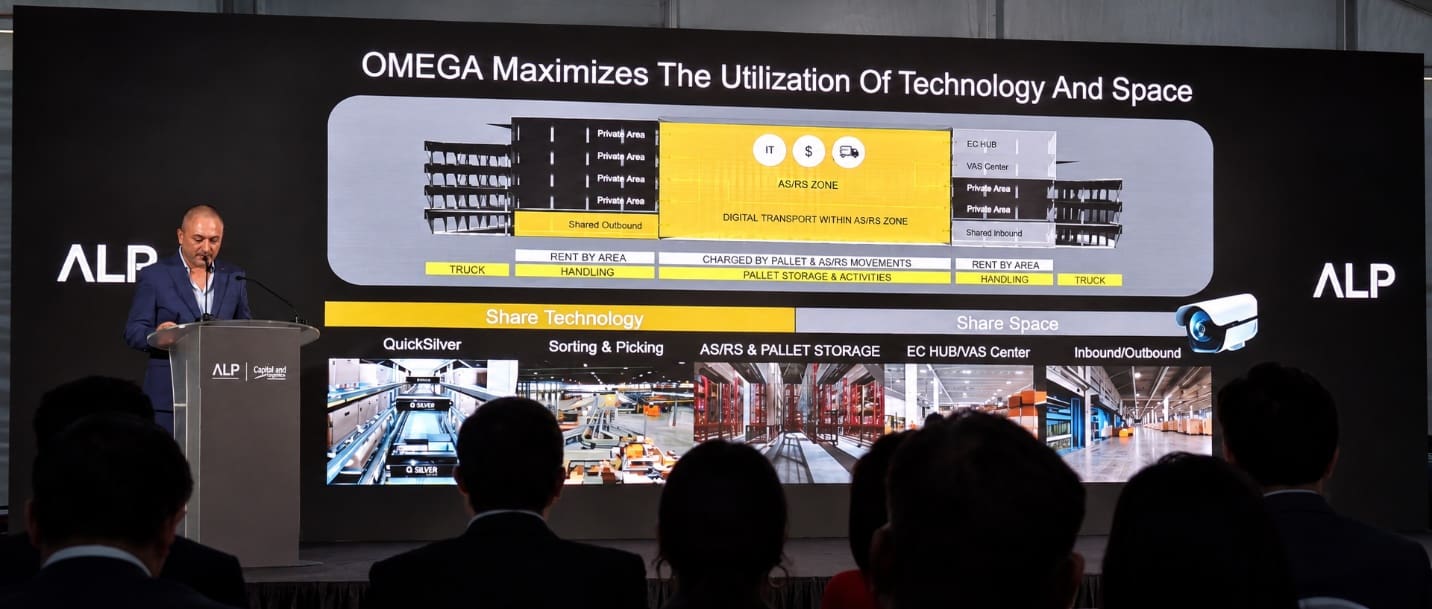
I attended the OMEGA 1 Singapore groundbreaking on September 24, 2026, where Ally Logistic Property (ALP) Co-founder and CEO Charlie Chang outlined a model that offers another way to approach these investment decisions. OMEGA brings together logistics real estate, shared automation, software, and maintenance services.
In a conventional warehouse lease, businesses typically rent space and arrange the equipment and systems needed for their operations. This may include racking, handling equipment, automation, and warehouse management software.
ALP describes OMEGA as logistics “infrastructure as a service”. Customers lease dedicated operating areas and access shared automated pallet capacity through a pay-as-you-use model. This allows businesses to use automation without each funding and integrating a separate system. Target users include 3PL operators and businesses in retail, e-commerce, FMCG, and technology.
For tenants, automation becomes part of the warehouse offering. Businesses can compare the cost of accessing shared capacity with purchasing and installing their own system. This may be relevant where volumes change over time or where the expected lease period makes a standalone investment difficult to justify.
ALP Co-founder and CEO Charlie Chang explains how OMEGA combines dedicated customer areas with shared automation and storage at the OMEGA 1 Singapore groundbreaking.
Designing the Warehouse for Automation
The approach also influences how the facility is planned. When automation is added to an existing warehouse, equipment and workflows must accommodate the building’s layout and structure. This can constrain storage arrangements and the movement of goods.
Charlie explained that OMEGA starts with how goods need to be stored and moved, then plans the building, automation, and software around those requirements. Designing them together gives more scope to align storage density with handling capacity and avoid bottlenecks across the operation.
Tenants can access a facility designed for automated operations, with development, integration of the shared systems, and maintenance handled by the provider. They still manage their own operations, but do not have to develop the underlying infrastructure themselves.
A Development to Watch in Southeast Asia
In land-constrained Singapore, combining dense automated storage with shared access is a proposition worth watching. It could help businesses make better use of space while reducing the upfront capital commitment and the risk of owning equipment that may no longer suit their requirements.
OMEGA 1 Singapore will include an automated storage and retrieval system (AS/RS) with more than 65,000 pallet positions. ALP’s ALPOS platform will connect tenants’ warehouse management systems with the automation, supported by on-site maintenance. Completion is targeted for the second half of 2028.
The project builds on ALP’s deployment in Taiwan and its expansion into Southeast Asia. OMEGA 2 Yangmei in Taiwan was completed in 2024 with 80,000 automated pallet positions. In Malaysia, OMEGA 1 Bukit Raja began operations in October 2024, while the first phase of OMEGA 1 Bang Na in Thailand was scheduled to begin operations on October 1, 2026. These projects show the pace at which ALP is extending the model across markets.
In a parallel development in Singapore, a robotics supplier said at CeMAT Southeast Asia 2026 that it was developing a smart warehouse in Tuas and seeking collaboration with local companies. Its commercial model was not specified, but the project shows that robotics suppliers are also exploring warehouse development.
Whether shared automated infrastructure becomes widely adopted will take time to assess. Its appeal will depend on pricing, service performance, and how well it accommodates different users’ operating needs.
Smart Warehouse Automation for Future-Ready Logistics
Alongside these developments, businesses continue to invest directly in their distribution operations. In September 2026, Schneider Electric announced a S$25 million investment to upgrade its Hub Asia Distribution Centre in Tuas and develop its workforce. The programme includes goods-to-person automation, an upgraded warehouse management system, and adaptable racking. The first automation phase had recently gone live, with further upgrades targeted for completion by 2027. The investment includes S$19 million for hiring and reskilling through 2030.
These developments reflect different approaches to adopting warehouse automation. Businesses may invest in systems tailored to their own facilities or access capabilities through shared infrastructure. In either case, the investment needs to support productivity while allowing operations to adapt to changing supply chain requirements.
The business owner’s question remains relevant, but the available options are broadening. Automation is becoming an important part of preparing logistics operations for the future. The decision involves both which capabilities businesses need and how best to fund and access them as their requirements evolve.
The post Shared Automation and the Future of Warehousing appeared first on Logistics Viewpoints.

Infios Brings a Broader Execution Model to Transportation and Warehousing
C.H. Robinson’s $5.8 Billion RXO Acquisition: Scale, Density, and AI Reshape Freight Brokerage
EDI Is Not Dying—and APIs Were Never Going to Replace It
Freightos Global Freight Outlook – September 2026
Container rates jump another $1k/FEU – but is demand peaking? – July 8, 2026 Update

Walmart and the New Supply Chain Reality: AI, Automation, and Resilience
Trending
- Non classé1 mois ago
Freightos Global Freight Outlook – September 2026
- Non classé3 mois ago
Container rates jump another $1k/FEU – but is demand peaking? – July 8, 2026 Update
-
 Non classé2 ans ago
Walmart and the New Supply Chain Reality: AI, Automation, and Resilience
-

 Non classé6 mois ago
Why Sulfuric Acid Is Emerging as a Supply Chain Constraint in Copper
- Non classé4 mois ago
Container rates starting to spike on peak season rush – June 2, 2026 Update
- Non classé1 an ago
13 Books Logistics And Supply Chain Experts Need To Read
- Non classé12 mois ago
Ex-Asia ocean rates climb on GRIs, despite slowing demand – October 22, 2025 Update
- Non classé3 mois ago
LCL Shipping Cost Calculator: Calculate Air and Sea Shipping Freight Rates