
Non classé
Supply Chain Visibility Is Evolving from Tracking to Intervention

Published
4 mois agoon
By
Series connection: The previous articles established the need for connected decisions and adaptive execution. This installment focuses on the sensing layer: visibility creates value only when an exception is connected to business impact and a governed response. Part 4 turns to the architecture required to support those connections.
Supply chain visibility once meant answering a basic operational question: Where is the shipment?
That question remains important, but it is no longer sufficient.
A modern visibility platform can provide shipment location, estimated arrival times, temperature conditions, route deviations, dwell events, and other operational signals. The harder question is what the company should do with that information.
Visibility is therefore evolving from tracking to intervention.
More Alerts Do Not Necessarily Produce Better Decisions
The first generation of visibility initiatives focused on consolidating data that was previously fragmented across carriers, freight forwarders, emails, spreadsheets, and telephone calls.
That created substantial value. It also created a new problem: alert volume.
An organization may have thousands of shipments in motion and hundreds of deviations on a given day. Most do not require executive attention. Some will resolve themselves. Others may be operationally inconvenient but financially insignificant. A small number may threaten production, revenue, customer service, regulatory compliance, or product integrity.
The challenge is to distinguish the exceptions that matter from the exceptions that merely exist.
FourKites’ February 2026 Loft launch provides a concrete example of the move from alerts to intervention. The platform is designed to combine external network intelligence with internal enterprise systems and preserve the logic behind automated decisions. Descartes’ February 2026 technology showcase similarly highlighted the use of connected logistics data and AI across routing, fleet operations, transportation, and trade processes. The announcement illustrates how visibility is increasingly being embedded in execution workflows rather than treated as a stand-alone tracking layer. These examples point toward business-impact visibility rather than event visibility.
An ETA Is Only the Beginning
An estimated arrival time provides a forecast. It does not provide a decision.
Consider an inbound component projected to arrive a day late. The company may have several options:
Expedite the shipment.
Substitute inventory from another location.
Reschedule production.
Reallocate finished goods.
Renegotiate a customer delivery commitment.
Accept the delay because the business impact is limited.
Selecting among those options requires context that a transportation feed alone may not contain. The system needs information about inventory, production schedules, customer priorities, material dependencies, contractual obligations, transportation costs, and alternative supply.
This is where visibility begins to overlap with planning, execution, and decision intelligence.
Kinaxis’ January 2026 outlook described adaptable supply chains as systems that sense shifts, predict impact, prescribe responses, and execute quickly. InterSystems’ May 2026 data-quality analysis stressed that trusted, harmonized data is essential for diagnosing root causes and supporting faster decisions. Blue Yonder’s February 2026 Orchestrator release focused on helping users understand the business impact of issues and move toward action. The approaches differ, but they share the premise that disruption data becomes more valuable when connected to consequences and response options.
Intervention Requires Prioritization
A mature visibility program should classify exceptions according to consequence, urgency, confidence, and available response options.
A disruption with a low probability of affecting the customer may require only monitoring. A high-confidence disruption affecting a constrained product or strategic account may justify immediate action. A temperature excursion involving regulated or perishable goods may trigger a predefined compliance workflow.
This is a decision-design problem as much as a data problem.
Companies must define which outcomes matter, what thresholds justify intervention, who owns each class of exception, and which actions can be automated. Without that discipline, visibility platforms can become sophisticated notification engines that transfer the burden of interpretation to already overloaded operators.
The objective should be a managed exception queue, not an expanding stream of warnings.
Visibility Must Extend Beyond Transportation
Transportation visibility was a natural starting point because shipment data could be collected from carriers, telematics systems, mobile devices, ocean data providers, and other external sources.
The next step is broader operational visibility.
A late truck may be caused by carrier performance, but its business impact depends on what is inside the truck, where inventory is positioned, whether production has alternatives, and what commitments have been made to customers.
Similarly, a warehouse delay, supplier quality issue, labor shortage, or production constraint may be more important than a transportation event.
End-to-end visibility is not achieved by placing more dots on a map. It requires understanding the relationships among materials, orders, capacities, inventory, suppliers, facilities, and customers.
A Practical Intervention Model
Consider a shipment of critical components that is projected to miss its delivery window by 14 hours.
A basic visibility system identifies the delay.
A more advanced process determines that the receiving plant has only six hours of available inventory, the component is required for a high-priority production sequence, and an alternate location has two days of excess stock. The system can then recommend an inventory transfer, estimate the premium freight cost, show the production risk avoided, and route the recommendation to the appropriate manager.
The underlying value does not come from knowing that the truck is late. It comes from connecting the delay to the operational consequence and identifying a viable response while there is still time to act.
From Decision Support to Controlled Automation
Once an organization can reliably identify material exceptions and evaluate response options, some interventions can be automated.
A low-risk shipment may be rerouted according to approved rules. A customer may receive a revised delivery estimate automatically. Warehouse appointments may be adjusted. An inventory transfer may be proposed for human approval. A planning workflow may be initiated when a supplier disruption crosses a defined threshold.
The progression is likely to occur in stages:
Detect the event.
Explain the likely impact.
Recommend an action.
Execute the action with approval.
Automate repeatable, governed decisions.
Trust will be critical. Users must understand why a recommendation was made, what data supported it, and what constraints were considered. Automation without transparency can create new operational risk.
The Real Measure of Visibility
The success of a visibility platform should not be measured primarily by the number of shipments tracked or alerts generated.
More meaningful measures include disruptions avoided, service failures prevented, expediting costs reduced, manual status inquiries eliminated, and the time required to move from detection to response.
Tracking remains the foundation. Intervention is where the larger economic value emerges.
The visibility market is therefore entering a more demanding phase. The most useful systems will not merely describe the supply chain more accurately. They will help organizations change the outcome while there is still time to act.
The post Supply Chain Visibility Is Evolving from Tracking to Intervention appeared first on Logistics Viewpoints.
You may like
Non classé
Octave Puts Trusted Industrial Data at the Center of OT Cybersecurity
Published
10 heures agoon
4 novembre 2026By
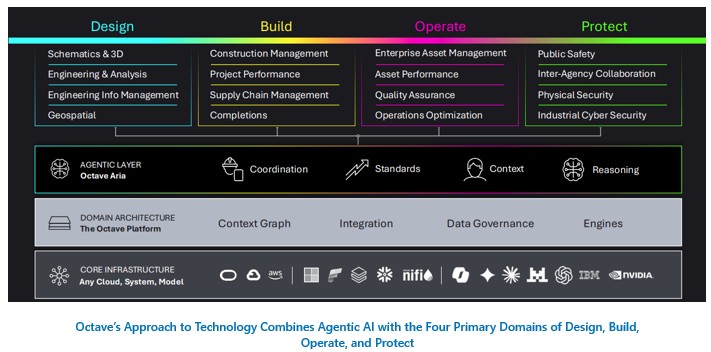
Octave is revamping its cybersecurity and operational technology software portfolio with a broader platform strategy emphasizing trusted industrial data, operational resilience, and ecosystem integration. A key component of this strategy is Octave Cyber Integrity, which addresses the need for accurate, detailed, and continuously updated information regarding assets, configurations, vulnerabilities, and changes across diverse control system environments in the world of OT.
Octave is positioning Cyber Integrity as a reliable foundation for OT cybersecurity by integrating deep configuration-based asset identification with broader industrial data sources. This approach signifies an intensified commitment and acceleration of capabilities to provide the market with continuously maintained, accurate cybersecurity data, which is critical for operational resilience, risk prioritization, ecosystem collaboration, and AI-enabled decision-making.
Octave takes a different approach from traditional OT asset discovery models that mainly rely on passive network monitoring or active scanning. The company emphasizes configuration-based visibility using backups and control system data to create a comprehensive representation of industrial assets, including devices from Level 0 to Level 3.5, as well as firmware, software, I/O, control strategies, patch status, and configuration baselines. This method is well-suited for critical infrastructure environments where active interrogation of control assets could introduce operational risks.
Octave’s new platform direction means that cybersecurity data is now being integrated into the industrial data layer rather than existing as a separate security dataset. By providing access to Cyber Integrity data through an intelligent layer, and eventually through APIs for third-party security and other cybersecurity vendors, Octave is establishing asset integrity and data integrity as essential for AI-enabled operations, more effective cyber risk management, and collaborative OT cybersecurity initiatives. With this approach to data, the company is also laying the foundation for the creation of a cybersecurity digital twin.
Octave Is Reframing Industrial Software Around Trusted Data
Octave is an independent software and SaaS company that emerged from Hexagon’s planned separation of several software businesses, including Hexagon’s Asset Lifecycle Intelligence and Safety and Infrastructure & Geospatial divisions, along with ETQ, Bricsys, and Projectmates. Hexagon announced the Octave name in 2025 as the identity for the spin-off, and the company completed its separation in mid-2026. Octave now operates as a standalone public company (Nasdaq: OCTV) focused on mission-critical software for industrial and public-sector organizations.
The company inherits a broad portfolio built around the lifecycle of physical assets. Its new approach spans four workflow environments: design, build, operate, and protect. This heritage means that Octave does not approach cybersecurity as a standalone discipline. It connects cybersecurity to engineering data, operations, asset lifecycle management, public safety, physical security, and quality workflows.
Octave positions itself as a differentiated industrial software company by combining engineering, operations, safety, cybersecurity, and physical security capabilities around an AI-ready industrial data fabric and continuous digital thread. Its strategy emphasizes open, contextualized data, SaaS delivery, and human-guided industrial AI to help asset-intensive organizations improve lifecycle efficiency, resilience, and operational decision-making.
Octave’s New Business Approach: A Common Foundation of Contextual Data
Octave’s new business approach moves the company beyond a product-centric model toward a platform and ecosystem model. Instead of treating OT cybersecurity, physical security, engineering data, and operational intelligence as isolated domains, Octave emphasizes a common foundation of contextualized industrial data. This approach aligns with the requirements of asset-intensive industries that must manage security, reliability, safety, compliance, and operational performance across complex multi-site operations.
This strategy matters most in industries such as oil and gas, power, chemicals, and utilities, where valuable cybersecurity insights often depend on engineering context and configuration detail that traditional IT security tools do not capture. Octave recognizes that no single vendor or detection method can fully address OT cybersecurity on its own. Effective programs require accurate asset intelligence, configuration integrity, operational context, and mechanisms to share trusted data with adjacent tools and workflows.
The Octave Platform: Building an Industrial Data Layer
The Octave platform strategy centers on a unified, trusted data layer that supports design, build, operate, and protect workflows. Cybersecurity data, especially asset inventory and configuration information, becomes a key input to this intelligence layer. In this model, OT cybersecurity extends beyond threat detection. It also requires a reliable representation of the industrial environment so security, operations, and engineering teams can act from a shared source of truth.
This platform direction matters because many OT risk programs still operate with fragmented asset data. Passive discovery tools identify network-connected devices, vulnerability tools maintain separate patch records, engineering systems hold configuration data, and compliance teams track controls in separate processes. Octave seeks to consolidate these data domains so organizations can use asset identity, configuration state, vulnerability exposure, backup status, and operational context together for faster and more effective remediation and mitigation of OT cybersecurity risk.
Octave Cyber Integrity and the Role of Deep Asset Identification
Cyber Integrity sits within Octave’s Protect portfolio. The product has its roots in PAS Cyber Integrity, which Hexagon previously offered through its Asset Lifecycle Intelligence business. As part of Octave, Cyber Integrity can now support a solution-level approach that combines deep OT asset and configuration data with lifecycle intelligence, operational context, and domain-specific AI. Octave Cyber Integrity identifies, evaluates, and prioritizes OT/ICS cybersecurity risk by capturing critical asset, vulnerability, and configuration data. This elevates the role of Cyber Integrity to that of a risk management and resilience platform for multi-vendor industrial control system environments.
Octave’s value proposition depends on the distinction between basic asset discovery and deep asset identification. Passive IDS-based discovery provides useful network visibility, including IP addresses, MAC addresses, and traffic relationships. However, passive discovery alone often lacks the depth required to validate control system configurations, identify firmware and software detail, understand patch posture, or maintain a known-good baseline. Active scanning adds detail, but in sensitive OT environments it can raise concerns about device stability, vendor warranty exposure, and operational disruption.
Cyber Integrity addresses this gap with a configuration-based approach. It collects backups and control system configuration data to build a more detailed inventory without directly interrogating live control assets in ways that could affect operations. This method requires more time and engineering effort than passive packet capture, but it provides richer data for vulnerability assessment, configuration change detection, compliance, recovery, and lifecycle planning.
Asset Integrity, Data Integrity, and OT Cybersecurity
Cyber Integrity links asset identification with data integrity by establishing a trusted representation of what exists in the control environment, how each asset is configured, whether that configuration has changed, and how those changes affect cyber risk and operational resilience. In OT environments, inaccurate data can lead to missed vulnerabilities, poor remediation priorities, failed audits, delayed recovery, and unnecessary operational disruption.
Deep configuration data also improves vulnerability management. Rather than relying only on generic device identification or network observations, organizations can correlate asset attributes, patch levels, firmware, installed software, system criticality, and configuration state. This context gives teams a stronger basis for determining whether a vulnerability applies, whether remediation is technically feasible, and which actions deserve priority based on operational impact.
Data integrity becomes all-important as industrial organizations apply AI and advanced analytics to OT cybersecurity and operations. AI models depend on the quality, completeness, and trustworthiness of the data they consume. By feeding verified asset and configuration data into a common intelligent layer, Octave positions Cyber Integrity as an enabler of more reliable analytics, decision support, threat detection, and remediation workflows.
Ecosystem and API Strategy
Octave also plans to expose deep asset inventory data through APIs for integration with third party cybersecurity vendors. Most end users rely on multiple tools, including passive monitoring, threat detection, vulnerability management, SIEM, and service management platforms. No single vendor owns the full workflow. By opening Cyber Integrity data to partners, Octave can allow products from vendors such as Dragos, Nozomi Networks, and Claroty to use a deeper asset and configuration foundation, subject to partner agreements and customer approvals. This approach strengthens the broader OT cybersecurity ecosystem by improving data quality across detection, vulnerability prioritization, incident response, and compliance workflows.
Recent Attacks on US Water Infrastructure Show the Importance of Good OT Asset and Configuration Data
Recent attacks on U.S. water and wastewater infrastructure underscore why trusted OT asset and configuration data have become operationally critical. Federal agencies have warned that malicious actors are targeting internet-facing programmable logic controllers, including Rockwell Automation/Allen-Bradley MicroLogix controllers, changing IP addresses and passwords, modifying project files, and causing operational effects such as loss of monitoring, loss of control, pressure loss, flooding, boil-water notices, and sustained manual operations. Earlier campaigns against PLCs in the water sector showed a similar pattern: exposed control devices, weak or default credentials, and limited visibility into controller configurations created opportunities for attackers to disrupt or deface operational systems.
Octave Cyber Integrity is relevant to these incidents because it focuses on the underlying weaknesses that made them possible. Incomplete OT inventories, undocumented internet exposure, weak configuration control, and limited ability to compare current controller state with trusted baselines are all major contributors to the likelihood of a serious cyber incident. By maintaining detailed asset identity, firmware, software, configuration, backup, vulnerability, and change data, Cyber Integrity can help water utilities identify exposed or misconfigured PLCs, validate whether unauthorized changes have occurred, prioritize remediation based on operational criticality, and restore systems from known-good backups. In this context, Cyber Integrity becomes more than an inventory exercise; it becomes a practical foundation for resilience in water infrastructure where operators must preserve safe service even when control systems are targeted.
Creating a Cybersecurity Digital Twin
Cyber Integrity data and the Octave platform have the potential to combine to create a cybersecurity digital twin. In this model, Cyber Integrity would provide the detailed technical foundation: asset identity, firmware, software, configuration files, control logic, backup status, patch levels, vulnerability exposure, and change history. The Octave platform would add lifecycle context, operational relationships, engineering data, workflow status, and domain-specific intelligence. Together, these data sets could create a continuously maintained digital representation of the OT cyber-physical environment.
Cybersecurity digital twins differ from traditional engineering digital twins because they focus on cyber risk, configuration integrity, and operational resilience. A cybersecurity digital twin can show which assets exist, how they connect to processes and systems, what known-good configurations look like, where vulnerabilities apply, which changes deviate from approved baselines, and how a cyber event or remediation action could affect operations. Security, engineering, and operations teams could use this shared model to evaluate cyber risk before taking action in the live environment.
The concept could also improve incident response and recovery. If an organization maintains a current cyber twin, it can compare the live environment with trusted baselines, identify unauthorized changes, assess the operational importance of affected assets, and prioritize restoration from validated backups. This would move cyber recovery from a largely reactive process toward a more structured, model-driven workflow that links cybersecurity decisions to process criticality and asset lifecycle data.
Over time, a cybersecurity digital twin could become a foundation for AI-assisted risk analysis. Octave could use verified Cyber Integrity data and broader platform context to help teams simulate attack paths, evaluate remediation options, identify high-risk configuration drift, and recommend actions based on both cyber exposure and operational impact. The value of this model would depend on data quality, governance, integration with partner tools, and the customer’s ability to keep the twin synchronized with the real OT environment.
Conclusions & Recommendations
Octave’s approach reflects an important industry trend: effective OT cybersecurity increasingly depends on the integrity of the underlying industrial data. Cyber Integrity is more than a simple OT asset inventory product. It serves as a source of trusted industrial cybersecurity data that supports risk management, resilience, compliance, and AI-enabled decision-making across the broader Octave platform. By capturing backups and configuration data, Cyber Integrity helps organizations build a more complete understanding of assets, vulnerabilities, baselines, and unauthorized change. Octave’s planned API and ecosystem strategy could further increase the value of Cyber Integrity by allowing customers and partner tools to use deep asset data without duplicating collection efforts. In ARC’s view, Octave is well positioned to benefit from growing market demand for reliable OT asset intelligence and stronger integration between cybersecurity, operations, and engineering data.
End users should evaluate Octave’s approach against their OT cybersecurity maturity. Early-stage programs may begin with passive discovery to establish basic visibility. More mature programs, especially in critical infrastructure, will benefit from using deep configuration-based inventory to strengthen vulnerability management, change control, compliance, backup, recovery, and operational resilience.
Octave’s platform strategy also reinforces the need to treat OT cybersecurity as part of enterprise industrial data management. Asset inventory, configuration state, vulnerability posture, and recovery data should not remain isolated within specialized security tools. These data sets should inform engineering workflows, maintenance planning, modernization decisions, compliance reporting, and executive-level cyber risk governance.
The post Octave Puts Trusted Industrial Data at the Center of OT Cybersecurity appeared first on Logistics Viewpoints.
Non classé
The Systems-Engineered Logistics Operation: From Transformation Projects to Continuous Design
Published
2 jours agoon
3 novembre 2026By
For years, logistics transformation has been organized as a succession of projects. Implement the platform. Build the control tower. Automate the facility. Add the AI layer. The problem is that logistics no longer changes on a project cadence.
That environment is disappearing. The future logistics will need to be designed continuously. The Autonomous Logistics Network is one expression of this end state, but reaching it requires continuous design rather than a one-time transformation project.
Stop Thinking in Technology Stacks
Modern logistics networks are becoming integrated combinations of physical assets, software, data, optimization, AI, robotics, people, partners, and automated decisions. Calling this a technology stack understates what is happening.
It is an operating system. The important design questions are no longer confined to which applications a company owns. Leaders have to consider how decisions flow, how data maintain continuity across systems, how automation interacts with people, how models are governed, how exceptions escalate, and how the organization behaves when components fail.
That is systems engineering territory. The companies that manage this architecture deliberately will have an advantage over those that continue adding capabilities one project at a time.
Intelligence Is Moving to the Point of Action
Logistics technology is moving from systems of record toward systems of decision. Traditional applications captured transactions and supported workflows. Analytical systems added prediction and optimization. The emerging layer increasingly combines real-time signals, AI, optimization, agents, and execution connectivity.
The result is intelligence closer to the point of action. A shipment delay can be identified, its impact evaluated, alternatives generated, and a response executed with limited human intervention. Transportation systems can continuously re-evaluate routes, capacity, and exceptions instead of waiting for manual replanning. Warehouse and yard systems can adjust priorities as conditions change.
This will make logistics faster. It will also make architecture and governance more consequential.
When software only reported information, a bad output could be ignored. When software acts, the operating envelope matters.
Human Work Moves Up the Decision Stack
More automation does not eliminate the human role. It changes it.
People will spend less time collecting information, reconciling spreadsheets, monitoring routine transactions, and making repetitive bounded decisions. They will spend more time dealing with novel exceptions, cross-functional tradeoffs, strategic choices, carrier and customer relationships, system design, and governance.
That is a better use of human capability. It is also a harder job.
The future planner, transportation manager, warehouse leader, or logistics executive will need to understand not only operations but the automated systems influencing operations. They will need to know when to trust a recommendation, when to challenge it, and how a decision in one part of the system affects another. Logistics expertise will become more architectural.
Continuous Design Requires Continuous Validation
If the system changes continuously, validation must become continuous as well.
AI models drift. Business priorities change. automation rules evolve. New interfaces are added. Local process changes accumulate. External conditions move.
The organization cannot wait for the next transformation program to determine whether the operating system still meets its requirements. Performance, model behavior, exception patterns, overrides, decision latency, data quality, and failure modes will need ongoing monitoring.
This creates a closed lifecycle: design, deploy, observe, validate, improve, and redesign. Transformation becomes less of an event and more of a management discipline.
Resilience Becomes an Architectural Property
The future of resilience is also likely to move beyond static buffers. Inventory and redundancy will remain important, but digital systems will make logistics more capable of sensing, simulating, and responding dynamically.
A disruption can trigger scenario analysis. A digital twin can estimate consequences. Optimization can evaluate alternatives. AI can interpret unstructured signals. Automated decision systems can act inside approved boundaries.
This does not eliminate the need for physical resilience. It allows physical resilience and decision resilience to work together.
The strongest logistics networks will not simply carry more protection. They will understand their dependencies and reconfigure faster when conditions change.
Architecture Becomes a Competitive Capability
For years, companies differentiated logistics through network scale, facility and transportation assets, carrier leverage, operational excellence, service design, and technology investment. Architecture is becoming another source of advantage.
Two companies may use similar software and still achieve very different results because one has better process integration, clearer decision rights, stronger data, more effective automation boundaries, better failure recovery, and tighter governance. The advantage does not come from owning the component. It comes from how the components have been engineered to work together.
Logistics Management Becomes Systems Management
That may be the larger lesson of this series. Logistics networks are already systems of systems. The technology is making them more connected, more autonomous, and more adaptive. That complexity cannot be managed indefinitely through functional optimization and periodic implementation projects.
The discipline has to evolve.
Define requirements before selecting solutions. Design the operating model. Architect processes, data, and decisions together. Engineer technology into the system rather than around it. Validate the outcome. Govern change. Design for failure. Improve continuously.
The competitive advantage will not come from owning the same AI, automation, TMS, WMS, visibility, and execution technologies everybody else can buy. It will come from how coherently those components have been engineered to work together. The future of logistics management is not simply more digital, more autonomous, or more intelligent. It is more engineered.
Related Logistics Viewpoints research
Systems Engineering in Logistics
The New Architecture of Logistics
2026 Supply Chain Decision Intelligence Market Map
Digital Transformation in Logistics
Previous in this series: Design for Failure: Resilience, Risk, and Failure Modes
Request the Systems Engineering in Logistics Client Edition
If your organization is evaluating a logistics transformation, technology strategy, automation program, or operating-model redesign, I would be glad to provide the complete client edition and discuss how the framework applies to your priorities, constraints, and operating environment.
The post The Systems-Engineered Logistics Operation: From Transformation Projects to Continuous Design appeared first on Logistics Viewpoints.
Non classé
Walmart and Symbotic: When Warehouse Automation Becomes a Network Strategy
Published
2 jours agoon
3 novembre 2026By
Warehouse automation has traditionally been discussed one facility at a time. A retailer installs an automated storage system, deploys mobile robots, adds robotic picking, or upgrades sortation. The business case is then measured against improvements within that particular building. Walmart and Symbotic are beginning to challenge that way of thinking.
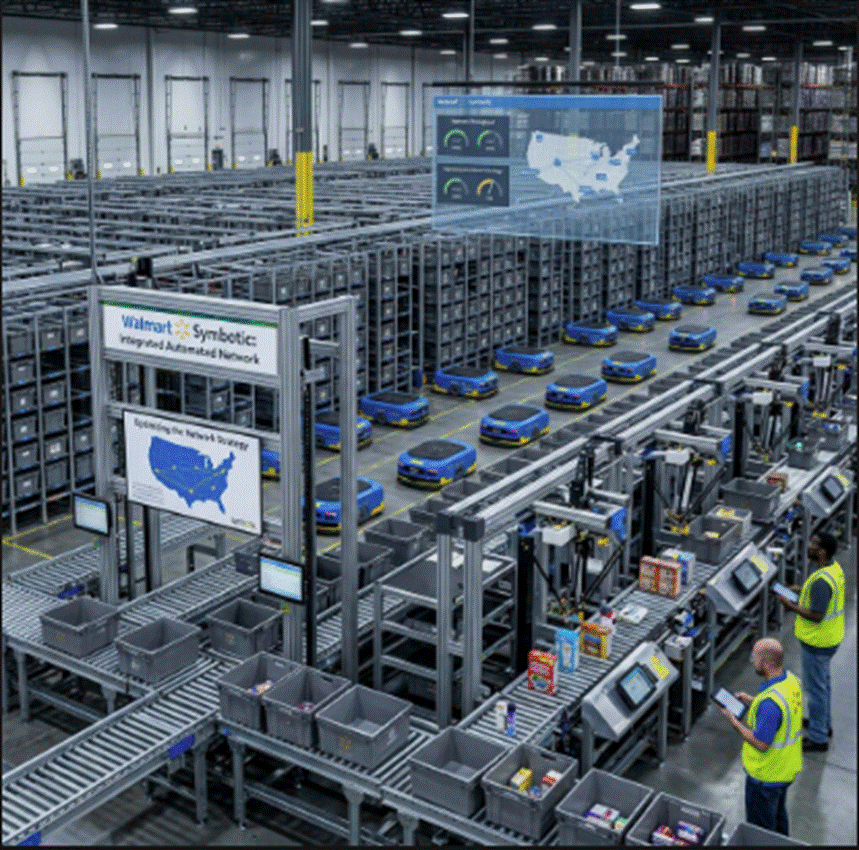
On October 29, Walmart and Symbotic announced an expanded commercial agreement that will bring additional automation capabilities to 25 U.S. regional distribution centers. The agreement includes an initial commitment of approximately $6 billion, covering work over several years and multiple locations. Walmart says the initiative is intended to support upstream e-commerce inventory management, increase storage capacity, and improve the movement of products through its supply chain. Those numbers make the announcement noteworthy. But the more interesting story is what the scale of the commitment says about the next phase of warehouse automation.
From an Automation Project to an Operating Model
For years, warehouse automation investments were frequently justified around specific bottlenecks: reduced picker travel, increase storage density, improve sortation throughput, or offset labor requirements. Those are still important objectives. But Walmart is evaluating automation against something larger: the performance of an interconnected distribution network supporting stores, pickup and home delivery.
Rob Montgomery, executive vice president for Walmart U.S. Supply Chain Operations, tied the expanded agreement to improving service, growing capacity, simplifying work for associates and lowering costs. The company also expects the expansion to support broader assortment, greater speed and more reliable replenishment. That distinction matters.
Warehouse automation increasingly needs to be evaluated not simply by asking, “How much faster can this facility pick?” but by asking, “What does this investment change across the supply chain?” Does additional storage capacity improve inventory positioning? Does automation enable later ordering cutoffs? Can replenishment become more predictable? Can the same technology architecture be repeated across multiple facilities without redesigning the operation every time? Those questions take warehouse automation discussions much closer to business strategy.
Scale Is Becoming Part of the Business Case
The Walmart-Symbotic relationship is particularly interesting because this is not a new pilot. Reuters reported that Symbotic has been helping automate Walmart’s supply chain since 2017, while the latest agreement extends automation to another 25 regional distribution centers. There is another layer to the expansion as well. Supply Chain Dive reported that Walmart committed an additional $125 million toward research and development of racking technology and related picking, process-flow and inventory-management capabilities. That is important because it suggests the competitive discussion is moving beyond individual pieces of robotic hardware. Warehouse automation is increasingly about how storage, picking, inventory, material movement and software operate together.
Symbotic’s current portfolio illustrates that evolution. The company says its integrated offering includes BreakPack for each-picking and SymMicro for e-commerce micro-fulfillment, supported by proprietary software that uses AI to orchestrate product movement. The question for warehouse operators, therefore, becomes less about which robot performs an individual task and more about how multiple automation layers combine into a repeatable operating system.
Walmart Is Not the Only Signal
Developments elsewhere reinforce the same trend. Amazon reported in 2026 that it has deployed more than one million robots across its operations network. Its systems now span inventory handling, mobile robotics, robotic arms and packaging automation. The company also says its Sequoia system can identify and store inventory up to 75 percent faster at fulfillment centers.
Meanwhile, DHL Supply Chain and Locus Robotics reached another useful measure of scale in 2026: one billion warehouse picks using Locus AMRs. Locus says thousands of its robots now operate across more than 40 DHL-managed sites worldwide. These examples are different applications with different economics. That is precisely the point. The warehouse automation market is moving beyond the question of whether robotics can work. Leading operators are increasingly confronting the harder questions of where automation should be deployed, how quickly it can scale, how well it integrates with existing operations, and whether benefits survive replication across a network.
The Metrics That Matter After Go-Live
The risk in covering a $6 billion automation agreement is treating announced spending as though it were demonstrated return. It is not. The more valuable story will develop as the systems go live. The measures worth watching include throughput, storage utilization, replenishment performance, labor productivity, system availability, fulfillment speed, implementation cost and the ability to maintain performance during demand peaks. That distinction should matter to technology buyers. A compelling demonstration can show what automation can do. A network-scale deployment begins to show whether the technology can generate similar value repeatedly under different facility and operating conditions. For Walmart, that makes the 25 distribution centers as important as the $6 billion headline.
Takeaway
The next chapter of warehouse automation will not be defined simply by more robots. It will be defined by whether operators can turn automation into a repeatable, measurable and scalable operating capability.
Walmart’s expanded relationship with Symbotic provides an unusually large test of that idea. The announced objectives are ambitious: more capacity, faster product movement, better replenishment, broader assortment, simpler work and lower costs. Now comes the more important part: measuring what changes when those systems are operating across the network. For other warehouse operators considering automation, that may ultimately be the most useful lesson from Walmart. Do not evaluate the robot alone. Evaluate what the automation changes in the economics and performance of the supply chain around it.
The post Walmart and Symbotic: When Warehouse Automation Becomes a Network Strategy appeared first on Logistics Viewpoints.


Octave Puts Trusted Industrial Data at the Center of OT Cybersecurity
The Systems-Engineered Logistics Operation: From Transformation Projects to Continuous Design
Walmart and Symbotic: When Warehouse Automation Becomes a Network Strategy
Freightos Global Freight Outlook – September 2026
Container rates jump another $1k/FEU – but is demand peaking? – July 8, 2026 Update

Walmart and the New Supply Chain Reality: AI, Automation, and Resilience
Trending
- Non classé2 mois ago
Freightos Global Freight Outlook – September 2026
- Non classé4 mois ago
Container rates jump another $1k/FEU – but is demand peaking? – July 8, 2026 Update
-
 Non classé2 ans ago
Walmart and the New Supply Chain Reality: AI, Automation, and Resilience
-

 Non classé7 mois ago
Why Sulfuric Acid Is Emerging as a Supply Chain Constraint in Copper
- Non classé5 mois ago
Container rates starting to spike on peak season rush – June 2, 2026 Update
- Non classé1 an ago
13 Books Logistics And Supply Chain Experts Need To Read
- Non classé1 an ago
Ex-Asia ocean rates climb on GRIs, despite slowing demand – October 22, 2025 Update
- Non classé4 mois ago
LCL Shipping Cost Calculator: Calculate Air and Sea Shipping Freight Rates