
Non classé
Supply Chain and Logistics News March 9th- 12th 2026

Published
9 heures agoon
By

The second week of March 2026 presents a supply chain landscape defined by a high-stakes tug-of-war between technological innovation and geopolitical volatility. While Blue Yonder pushes the boundaries of autonomous logistics through agentic AI and the U.S. formalizes the future of freight with new electric aircraft pilot programs, physical trade corridors face severe undercurrents of instability. Rising tensions in the Strait of Hormuz have sent oil prices climbing, triggering a massive global release of petroleum reserves, while a multi-state legal challenge against new 10% global tariffs adds a layer of regulatory uncertainty for international shippers. This week’s digest examines how industry leaders are navigating these sophisticated digital tools amid traditional energy and trade disruptions.
Your Supply Chain News for the Week:
Blue Yonder Expands Agentic AI and Mobile Experiences for Industry-Specific Supply Chain Execution
Blue Yonder has expanded its agentic AI and mobile experiences to bridge the gap between supply chain planning and real-time execution. By integrating AI agents across retail, manufacturing, and warehouse management, the platform now offers automated issue detection and resolution—such as correlating active loads with weather advisories or optimizing sourcing in real time. These updates, coupled with a new mobile orchestrator and expanded Microsoft Teams integration, aim to provide industry leaders with the mobility and intelligence needed to maintain resilience in increasingly complex global environments.
Strait of Hormuz Disruptions Raise Immediate Concerns for Global Supply Chains
Recent escalations in the Strait of Hormuz have triggered immediate concerns for global energy supply chains following a series of attacks on commercial vessels. With approximately 20% of the world’s oil supply transiting through this critical chokepoint, the instability has already caused oil prices to briefly surpass $100 per barrel. Beyond the direct threat to tankers, the disruption is impacting maritime insurance coverage, with some insurers considering a suspension of service in the region. For logistics leaders, the fallout extends to rising freight rates and increased production costs for petroleum-based industrial inputs, underscoring the persistent vulnerability of physical maritime corridors to geopolitical shifts. Global efforts to stabilize the market include a planned release of 400 million barrels from strategic petroleum reserves, but the long-term impact will depend on the restoration of safe passage through the waterway.
Electric Aircraft Pilot Program Opens a New Logistics Frontier
The U.S. Department of Transportation and the FAA have launched the eVTOL Integration Pilot Program (eIPP), marking a significant step toward a new aerial layer in logistics. By selecting eight pilot projects across states like Florida and New York, the program focuses on using electric vertical takeoff and landing aircraft for cargo delivery, medical response, and regional freight. This initiative aims to fill the efficiency gap between long-haul trucking and traditional aviation by enabling rapid, short-range transport without the need for extensive runway infrastructure. While full FAA certification and widespread charging networks are still pending, these pilots provide the operational data necessary to integrate autonomous electric aircraft into modern, multi-modal supply chain strategies.
States sue Trump in Bid to Halt 10% Global Tariff
The lawsuit filed by more than 20 states seeks to invalidate the 10% global tariff by arguing that the administration overstepped its legal authority under Section 122 of the Trade Act of 1974. The states contend that the president is incorrectly conflating trade deficits with balance of payment deficits, which is the specific condition required to trigger the statute. Furthermore, the legal challenge asserts that the tariffs lack the “broad and uniform application” required by the law due to various exemptions, and that the statute itself is an obsolete relic of a fixed-rate currency system. As the states push for full refunds on duties already paid, legal analysts suggest that while the administration’s interpretation of the law is a stretch, the outcome remains uncertain because Section 122 explicitly lists tariffs as a permissible remedy.
US to Release 172 Million Barrels of Oil for IEA Relief Plan
President Donald Trump has announced plans to tap into the Strategic Petroleum Reserve (SPR) to address skyrocketing oil prices fueled by the ongoing conflict with Iran. During an interview in Cincinnati, the president stated he intends to temporarily reduce reserve levels to lower costs for consumers, with plans to refill the caverns later. This decision follows a coordinated move by the International Energy Agency to release 400 million barrels of emergency oil the largest release in its history. While the SPR currently holds about 415 million barrels, roughly half its capacity, the administration faces significant political pressure to stabilize fuel costs ahead of the upcoming midterm elections. Although the system technically allows for a release of 4.4 million barrels per day, experts suggest the practical daily limit is likely much lower, and it will take approximately 13 days for the oil to reach the open market once the order is finalized.
Song of the Week:
The post Supply Chain and Logistics News March 9th- 12th 2026 appeared first on Logistics Viewpoints.
You may like
Non classé
MassRobotics, AWS, and NVIDIA Announce Second Cohort of Physical AI Fellowship
Published
6 heures agoon
13 mars 2026By
MassRobotics has announced the second cohort of its Physical AI Fellowship, a virtual accelerator program developed in collaboration with Amazon Web Services (AWS) Startups and NVIDIA Inception. The initiative follows an inaugural cohort in late 2025 and continues to focus on early-stage companies developing artificial intelligence systems designed to operate in physical, real-world environments.
The 2026 cohort includes nine startups working across application areas such as agriculture, construction and renewable energy, industrial automation, retail and logistics, robotics data infrastructure, teleoperation, and wearable and humanoid robotics. The participating companies are Burro, Config, Deltia, Haply Robotics, Luminous Robotics, Roboto AI, Telexistence, Terra Robotics, and WIRobotics.
Physical AI Moves from Concept to Deployment
The fellowship’s focus on physical AI aligns with a broader shift from traditional robot-centric automation toward systems in which intelligence increasingly resides in software, models, and data pipelines rather than mechanical hardware alone. This evolution can be framed as part of a larger competitive landscape in which hardware platforms, edge compute, simulation environments, and AI model architectures are converging into tightly coupled ecosystems.
Program Structure and Ecosystem Support
According to MassRobotics, the fellowship is designed to help startups progress from early prototypes toward enterprise-ready deployments by providing technical guidance, access to compute resources, and exposure to industry partners. Participating companies receive support from AWS technical teams, including scientists affiliated with the AWS Generative AI Innovation Center, along with cloud credits and engineering resources.
Through NVIDIA Inception, cohort members gain access to NVIDIA’s robotics and simulation toolchains, including the Isaac robotics frameworks and physics-based simulation assets. ARC has previously highlighted the growing importance of simulation to real workflows and NVIDIA’s role in enabling these pipelines as a foundation for scalable physical intelligence and agentic robotics systems.
In addition to virtual programming, fellows are given access to MassRobotics facilities and its broader robotics community, enabling physical prototyping, testing, and integration with partners across academia, industry, and government.
Industry Visibility and Next Steps
MassRobotics indicates that the 2026 fellowship cohort will be showcased at the Robotics Summit & Expo in Boston in late May, providing an opportunity for industrial end users, investors, and technology partners to evaluate emerging physical AI solutions in applied contexts.
_________________________________________________________________________________________
by Patrick Arnold, ARC Advisory Group
Patrick’s primary focus at ARC is industrial IoT networking solutions, including topics such as network infrastructure, software, and edge computing. Prior to joining ARC, Patrick worked as a process control engineer in the oil and gas industry, programming PLC and SCADA systems to promote connectivity and consistency in plant operations. Patrick’s experience also includes petrochemical research as well as machine learning and analytics.
The post MassRobotics, AWS, and NVIDIA Announce Second Cohort of Physical AI Fellowship appeared first on Logistics Viewpoints.
Non classé
Blue Yonder Expands Agentic AI and Mobile Experiences for Industry-Specific Supply Chain Execution
Published
1 jour agoon
12 mars 2026By

On March 11th, Blue Yonder announced an expanded set of AI agents and a role-specific mobile application for its end-to-end planning and execution solutions. These updates to its Cognitive Solutions are built around real customer use cases and feedback to help businesses make smarter, faster, more accurate decisions and boost supply chain resilience.
“In today’s complex supply chain environment, teams need a competitive edge to collaborate and adapt to real-world operations and scale across the enterprise,” said Duncan Angove, chief executive officer, Blue Yonder. “Our new agentic AI capabilities and mobile companion applications help teams work faster, assess risks and opportunities instantly, and execute role-specific tasks consistently.”
These updates focus on the following key areas: Embedded solution AI/ML, agentic AI, and modern user experiences that enable anywhere engagement to break through barriers.
What’s new:
Retail Planning AI: Enhanced AI agents for Merchandise Financial Planning and Assortment Planning empower retailers to make faster, smarter decisions to identify profit risks and recommend actions, as well as build optimized assortments based on trend analysis.
Retail Mobile Allocation and Replenishment app: This mobile companion application enables teams to review daily store orders on mobile, make changes, and confirm final quantities at the DC.
Fulfillment & Sourcing Agent (beta): In addition to embedded AI updates for retail planning, new agentic AI optimizes sourcing in real time by analyzing availability, SLA risks, and fulfillment performance to improve decision transparency and operational efficiency.
Agentic AI for Manufacturing Planning: New agents boost planner productivity by automating issue detection and resolution across demand, supply, and inventory plans. AI agents generate briefs that explain metric degradation, root causes, monetary impact, and prioritized actions, while teams can explore agentic resolution options through deep analysis of plan constraints, recommendations, and quick scenario generation and comparison, all through a natural-language orchestrator.
Agentic Transportation Management: With this release, AI agents can continuously monitor active loads and correlate them with real-time weather advisories. Enhancements include machine learning-based route guidance and support for uncovering feasible backhaul opportunities to help reduce empty miles and lower transportation costs and emissions.
Warehouse Management AI: Embedded AI continuously monitors Warehouse Management system (WMS) operational signals and translates live data into clear insights for roles such as operations managers and supervisors. Updates include dynamic operational briefs with recommended actions and guided root cause analysis for key exceptions, including late shipment rate and short order analysis.
WMS Mobile Application: Increased functionality in the Warehouse Operator App supports pallet-level workflows across inventory, receiving, picking, and loading, as well as the ability to configure and tailor the app.
Customer Service Agent (beta): Empowers customer-facing teams to manage inquiries, resolve order issues, and deliver exceptional customer experiences effectively.
Orchestrator mobile application: Provides direct access to Blue Yonder agentic AI, supporting supply chain efforts anywhere and anytime that optimizations need to be made and challenges need to be addressed.
Expanded Microsoft Teams integrations: With this release, Teams can be used for increased human and AI collaboration, bringing agentic insights and workflows directly into collaboration environments to enable faster, more informed decisions.
These enhancements advance Blue Yonder’s strategy to deliver enterprise-ready agentic AI that scales across planning and execution. Today, Blue Yonder offers AI Advisory agents that address pain points across inventory and supply, warehouse operations, shelf and planogram compliance, logistics execution, and allocation and replenishment.
Full press release: Here
The post Blue Yonder Expands Agentic AI and Mobile Experiences for Industry-Specific Supply Chain Execution appeared first on Logistics Viewpoints.
Non classé
The Next Phase of Supply Chain Interoperability: APIs, AI, and the Rise of Digital Supply Networks
Published
1 jour agoon
12 mars 2026By
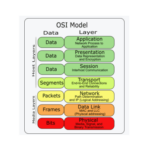
Supply chain interoperability is entering a new phase. For many years, the primary challenge in logistics technology was simply connecting systems. Companies needed transportation management systems, warehouse platforms, ERP systems, and supplier portals to exchange information reliably so orders, shipment updates, and inventory data could move between organizations.
In an earlier Logistics Viewpoints article, Supply Chain Interoperability: A Layered Framework for Integrating Modern Logistics Systems, we examined how the ISO OSI networking model can provide a useful conceptual framework for understanding this challenge. The layered model helps clarify how physical assets, enterprise systems, and user applications interact across modern logistics environments.
But interoperability itself is evolving. The next generation of supply chain integration is not simply about connecting systems. It is about enabling intelligent coordination across digital supply networks that operate in real time.
Several technology shifts are driving this transition.
From EDI to API-Based Integration
For decades, Electronic Data Interchange served as the backbone of supply chain communication. EDI allowed companies to exchange purchase orders, shipment notifications, and invoices using standardized digital formats. It represented a major improvement over manual paperwork and fax based processes.
However, EDI was designed for a different operating environment. Most implementations rely on batch processing, where files are exchanged periodically rather than continuously. While this approach works for predictable workflows, it introduces delays that are increasingly incompatible with modern supply chain operations.
Many organizations are now moving toward API based integration. Application Programming Interfaces allow systems to exchange information instantly rather than through scheduled file transfers. Transportation management systems, warehouse platforms, supplier portals, and visibility networks can share operational events as they occur.
This shift changes the cadence of supply chain decision making. Instead of waiting hours or even days for updates, systems can react immediately to new information about inventory levels, shipment delays, or changes in demand.
AI Driven Supply Chain Orchestration
As real time connectivity improves, another capability becomes possible. Supply chains can begin to use artificial intelligence to coordinate operational decisions across multiple systems.
Traditional supply chain software operates primarily through predefined rules and workflows. These systems automate important tasks, but they typically cannot reason across many variables simultaneously or adapt dynamically to changing conditions.
Artificial intelligence introduces a new operational layer. AI systems can monitor large volumes of logistics data including shipment events, supplier performance metrics, inventory levels, weather signals, and demand patterns. These systems can evaluate possible responses and recommend corrective actions.
For example, when a shipment delay occurs, an AI system may evaluate downstream inventory risks, available transportation alternatives, and customer service impacts. The system may recommend rerouting freight, expediting replenishment from another supplier, or reallocating inventory between distribution centers.
These types of capabilities are increasingly discussed in the context of emerging supply chain architectures that combine autonomous agents, contextual AI models, and knowledge retrieval systems. A deeper architectural discussion appears in AI in the Supply Chain: Architecting the Future of Logistics with A2A, MCP, and Graph-Enhanced Reasoning.
As AI systems become more capable, interoperability becomes even more important because these systems depend on continuous access to reliable data across multiple supply chain platforms.
From Linear Supply Chains to Digital Supply Networks
Another structural change underway is the shift from traditional linear supply chains toward digital supply networks.
Supply chains are often described as a sequence of transactions moving from supplier to manufacturer to distributor to retailer. While this representation is convenient for planning models, it oversimplifies the structure of modern supply chains.
In reality, supply chains operate as complex networks involving multiple suppliers, logistics providers, distribution centers, and transportation modes. Information flows across many interconnected nodes simultaneously.
Digital supply networks recognize this reality. Instead of managing isolated links in a chain, organizations increasingly seek to create a shared operational view of the entire logistics ecosystem.
This network based perspective allows companies to respond faster when disruptions occur. If a port becomes congested or a supplier experiences delays, organizations can evaluate alternatives across the network rather than reacting sequentially.
Achieving this level of coordination requires strong interoperability between platforms and partners.
The Rise of Real Time Logistics Data Exchange
Another important development is the growing availability of real time logistics data.
Technologies such as IoT tracking devices, cloud based visibility platforms, and event driven architectures are allowing companies to monitor shipments and inventory continuously. Sensors can track the location and condition of containers while logistics platforms aggregate operational events from carriers, ports, and warehouses.
Instead of relying on periodic status updates, supply chain participants can monitor operations as events occur.
This capability improves exception management. When disruptions arise due to weather, port congestion, or equipment failures, companies can respond earlier and coordinate corrective actions more effectively.
Real time data exchange also supports more advanced analytics and AI models, allowing organizations to identify emerging risks before they escalate into major disruptions.
Interoperability as Strategic Infrastructure
Taken together, these developments are transforming how interoperability is viewed within the supply chain.
Historically, system integration was treated primarily as a technical requirement handled by IT teams. The objective was to ensure enterprise systems could exchange data reliably.
Today interoperability is becoming strategic infrastructure.
APIs are replacing rigid batch integrations. Artificial intelligence is coordinating decisions across logistics networks. Digital supply networks are allowing organizations to operate with greater visibility and resilience.
Companies that build strong interoperability foundations will be better positioned to adopt these capabilities. Organizations constrained by fragmented systems and inconsistent data will struggle to achieve the responsiveness required in modern supply chains.
The future of supply chain interoperability is therefore not simply about connecting systems. It is about enabling intelligent coordination across increasingly complex logistics ecosystems.
The post The Next Phase of Supply Chain Interoperability: APIs, AI, and the Rise of Digital Supply Networks appeared first on Logistics Viewpoints.


MassRobotics, AWS, and NVIDIA Announce Second Cohort of Physical AI Fellowship

Supply Chain and Logistics News March 9th- 12th 2026

Blue Yonder Expands Agentic AI and Mobile Experiences for Industry-Specific Supply Chain Execution

Walmart and the New Supply Chain Reality: AI, Automation, and Resilience
Ex-Asia ocean rates climb on GRIs, despite slowing demand – October 22, 2025 Update
13 Books Logistics And Supply Chain Experts Need To Read
Trending
-
 Non classé12 mois ago
Walmart and the New Supply Chain Reality: AI, Automation, and Resilience
- Non classé5 mois ago
Ex-Asia ocean rates climb on GRIs, despite slowing demand – October 22, 2025 Update
- Non classé7 mois ago
13 Books Logistics And Supply Chain Experts Need To Read
- Non classé2 mois ago
Container Shipping Overcapacity & Rate Outlook 2026
- Non classé4 mois ago
Ocean rates climb – for now – on GRIs despite demand slump; Red Sea return coming soon? – November 11, 2025 Update
- Non classé1 an ago
Unlocking Digital Efficiency in Logistics – Data Standards and Integration
-

 Non classé7 mois ago
Blue Yonder Acquires Optoro to Revolutionize Returns Management
- Non classé3 semaines ago
Ocean rates ease as LNY begins; US port call fees again? – February 17, 2026 Update