
Non classé
Unifying Real-Time Data for End-to-End Supply Chain Orchestration with InterSystems

Published
2 mois agoon
By

As global supply chains become more complex, with thousands of disparate systems, applications, and data sources, supply chain orchestration becomes increasingly important. Globalization, multi-tier supplier networks, outsourcing, and omnichannel retail have made supply chains sprawling and interconnected. A product may involve raw materials from five continents, assembly in three countries, and final delivery through multiple carriers. To succeed, organizations must lay the groundwork for effective orchestration, ensuring resilience and agility in the face of disruptions.
Supply chain orchestration is the coordinated management of end-to-end supply chain activities, across planning, sourcing, production, logistics, and delivery, using technology, data, and processes to ensure that every moving part works together seamlessly. Unlike traditional supply chain management, which often operates in silos, orchestration emphasizes real-time visibility, synchronization, and collaboration across stakeholders, systems, and geographies. Essentially, supply chain orchestration is about integrating all elements of the supply chain ecosystem to function as a unified whole.
Without orchestration, these networks risk duplication of effort (e.g., multiple systems tracking the same order differently), siloed decision-making (procurement optimizing for cost and logistics for speed, without alignment), and breakdowns in visibility (no clear view of where inventory is at any given time). Supply chain orchestration bridges these gaps by connecting data, processes, and stakeholders into a single, coherent operating model.
Organizations that can respond more quickly and effectively to disruptions reap the benefits of supply chain orchestration in ways such as improved disaster preparedness and a stronger return on investment.
An Introduction to Supply Chain Orchestration
Supply chain orchestration enables organizations to attain an agile and resilient supply chain model through the use of decision intelligence. This is achieved through the See > Understand > Optimize > Act framework, which gives organizations the confidence to plan and respond to disruptions with assurance in their supply chain stability.
See: this is the initial step of gathering raw data and information from your environment or a situation.
Understand: analyze the information you’ve seen to build a comprehensive understanding of the context, your knowledge, and potential complexities.
Optimize: based on your understanding, develop the best possible solution or course of action to address the situation.
Act: implement your chosen solution, putting your knowledge into practice.
From a practical standpoint, this framework powers your supply chain application ecosystem with end-to-end visibility, insights, and better decisions. It helps organizations reach their supply chain goals by enabling them to align processes, stakeholders, and technology toward desired outcomes. The end result is reduced costs, improved operating margins, and optimized sustainability decisions, among others.
Recognizing the growing complexity of global supply chains, and the challenges associated with supply chain orchestration, InterSystems surveyed 450 senior supply chain practitioners and stakeholders to examine key supply chain technology challenges, trends, and decision-making strategies across five common use cases: fulfillment optimization; demand sensing and forecasting; supply chain orchestration; production planning optimization; and environmental, social, and governance (ESG). These specific use cases illustrate how orchestration addresses unique supply chain scenarios and requirements. This blog is Part 3 in our Optimizing Supply Chain Performance with Unified Data series, with a focus on supply chain orchestration.
In the unified data survey, respondents were asked what is holding them back from achieving full orchestration of their supply chain. The biggest barrier to achieving full supply chain optimization is having little or no integration of disparate data sources (including systems and applications) according to 46% of respondents. Integrating these disparate systems can be time consuming, adding to the complexity of orchestration. A lack of data integration creates big challenges for supply chains because supply chains rely on visibility, coordination, and speed across many moving parts, including suppliers, manufacturers, third party logistics providers, distributors, and retailers. When data is fragmented, delayed, or siloed, organizations can’t make timely, accurate, or collaborative decisions. It’s worth noting that this barrier ranked consistently high across multiple industries, including automotive and aeronautics (46%), FMCG (56%), logistics and transport (52%), manufacturing/CPG (44%), and retail (45%).
Supply Chain Orchestration Challenges and Response
Survey respondents were asked to identify the most significant challenges in supply chain orchestration. Leading the way was the absence of end-to-end visibility and operational transparency (48%). End-to-end visibility is important because it provides real-time, comprehensive data across an entire supply chain. This enables businesses to anticipate and mitigate risks, optimize operations, improve decision-making, increase agility, reduce costs, and enhance customer satisfaction. Operational transparency is a critical part of end-to-end visibility and is of utmost importance for senior management. According to the survey, the higher their level of seniority, the more likely respondents were to say lack of end-to-end visibility and operational transparency are difficulties— almost 60% of VPs and Directors of Logistics selected this as a challenge, along with almost 70% of C-level respondents.
The second most significant challenge identified by respondents was the complexity of organization with multiple subsidiaries, divisions, partners, and suppliers (37%). Too many organizations operate in isolated silos, let alone subsidiaries or divisions. This includes enterprise technology systems and processes, which slow down data sharing and decision making. The siloed nature of many businesses makes it incredibly difficult to ensure that every moving part works together seamlessly.
Finally, a lack of agility in the face of supply and demand fluctuation was identified as the third most significant challenge (36%). Supply chain agility is all about a company’s ability to rapidly and efficiently adjust its operations, resources, and strategies to respond to changing market conditions. While the ability to quickly pivot is crucial across all aspects of supply chain management, it is especially important when tracking actual demand versus projected demand, and balancing it with supply fluctuations.
The big question becomes how does a company respond to these challenges? Looking at how supply chain organizations can overcome these challenges, almost all respondents agreed that an ultimate control tower approach would most improve supply chain orchestration by giving them a unified view of their data (85%). Advanced solutions, such as predictive modeling, automation, and integrated digital platforms, play a key role in improving orchestration and addressing these challenges.
The Value of Ultimate Supply Chain Control Tower
A control tower provides predictive and prescriptive actionable insights that address disruptions and constraints along the entire supply chain. Control towers also help manage exception situations by identifying when predefined processes are disrupted and enabling timely manual or automated intervention to maintain smooth operations.
For instance, when a sudden shortage of raw materials threatens to halt production, a control tower can immediately provide updates on inventory levels, goods in transit, and alternative suppliers. This enables supply chain managers to prepare contingency plans, reroute shipments, or adjust production schedules in real time, minimizing risks and ensuring continuity of operations. The ability to monitor and respond to such events not only reduces the impact of disruptions but also enhances customer satisfaction by maintaining service levels and delivery commitments.
Additionally, control towers help companies gain a deeper understanding of their supply chain by connecting disparate data points and providing actionable insights. This holistic view allows organizations to identify bottlenecks, anticipate risks, and make informed decisions that drive efficiency and resilience. By leveraging the power of sensors and real time data, companies can provide better services, improve the flow of goods, and ultimately achieve a higher level of supply chain performance.
An ultimate control tower is also used to:
Improve time to decision in the most optimal, operationally efficient, and collaborative manner.
Enable optimized supply chain orchestration by providing end-to-end visibility (“see”), data-driven insights (“understand”), end-to-end prediction and orchestration (“optimize”) and ultimately, end-to-end aligned decision making (“act”).
Provide powerful analytics capabilities that incorporate actionable insights into supply chains across the global ecosystem by combining four key capabilities (see, understand, optimize, act) into a single capability, applicable to any use case.
Case in Point
CFAO, a €4.2 billion France-based logistics company conducts business in more than 40 countries and overseas territories.
The company faced many difficulties with data management that spanned interoperability, customer experience, e-commerce, and support for shopping malls. It used InterSystems technology to centralize the data of 120 subsidiaries into a composite business process, eliminating blind-spots for the business, partners, and customers.
The result has been vastly improved efficiencies and time to value across the business. New partners now on-board in two days instead of six months. Customers gain answers to questions in five minutes rather than hours. These improvements have given CFAO greater confidence in their supply chain operations.
Final Thought on Supply Chain Orchestration
What if you could attain agility across the most complex and intricate global supply chains? InterSystems Supply Chain Orchestrator is a differentiated data platform that does just that, providing unique orchestration capabilities that lock in greater efficiency and higher revenues, with fast time-to-value. Its differentiating capabilities—such as advanced control towers, IoT sensor integration, and AI/ML-driven insights—set it apart from other solutions by enhancing supply chain visibility, responsiveness, and orchestration.
Our technology creates the ultimate control tower with true end-to-end visibility. Leveraging this approach, it’s possible to extract business-critical, highly actionable prescriptive insights from real-time data without replacing your existing systems. It will empower you to react rapidly to changes across your entire supply chain and accelerate digital transformation.
Read the full report here.
Chris Cunnane is the Global Product Marketing Manager for Supply Chain at InterSystems. In this role, he is responsible for developing and executing marketing strategy and content for the InterSystems supply chain technology suite. Chris has 20+ years of supply chain expertise, leading the supply chain practice at ARC Advisory Group, as well as holding various sales, marketing, and operations roles in the wholesale, retail, and automotive parts markets. He holds a BA in Communications from Stonehill College and an MA in Global Marketing Communications from Emerson College.’s possible to extract business-critical, highly actionable prescriptive insights from real-time data without replacing your existing systems. It will empower you to react rapidly to changes across your entire supply chain and accelerate digital transformation.
The post Unifying Real-Time Data for End-to-End Supply Chain Orchestration with InterSystems appeared first on Logistics Viewpoints.
You may like
Non classé
Crusoe and Redwood Materials Expand Strategic Partnership
Published
16 heures agoon
25 mars 2026By

On March 24, 2026, Crusoe, an AI infrastructure company, and Redwood Materials, a leader in battery recycling and energy storage, announced a major expansion of their existing partnership.
The move scales their joint operations in Sparks, Nevada, to seven times the original AI infrastructure density, providing a blueprint for how second-life batteries can power high-performance computing.
From Pilot to Scale: 7x Growth
The expansion follows a successful pilot program launched in June 2025. Initially, the project utilized four Crusoe Spark™ modular data centers. Following seven months of high performance, the companies are increasing the deployment to 24 modular data centers.
This growth is made possible by the hardware’s “modular” nature. Unlike traditional data centers that require years of stationary construction, modular units can be manufactured off-site and deployed in months.
Powering AI with Second-Life Batteries
A central component of this partnership is the use of “second-life” electric vehicle (EV) batteries. When EV batteries are no longer optimal for automotive use, they often retain significant capacity for stationary energy storage.
Redwood Materials integrates these repurposed batteries into a 12-megawatt (MW) / 63-megawatt-hour (MWh) microgrid. This system, combined with on-site solar power, provides the energy required to run Crusoe’s AI-optimized GPUs. The orchestration of these batteries is handled by Redwood’s “Pack Manager” technology, which ensures steady power delivery for the intense workloads required by AI model training and inference.
Reliability and Performance Metrics
A primary concern with renewable-powered microgrids is “uptime”, the percentage of time the system is operational. The press release highlights several key performance indicators from the initial seven-month period:
99.2% Operational Availability: The microgrid exceeded reliability expectations while running on renewable sources and battery storage.
99.9% Total Uptime: By leveraging the traditional power grid as a backup source, Crusoe Cloud maintained a nearly constant state of operation.
Supply Chain and Sustainability
The partnership addresses two of the most significant bottlenecks in the current AI boom: energy consumption and deployment speed.
Sustainability: By using recycled materials and on-site renewable energy, the “AI factory” model reduces the carbon footprint associated with massive data processing.
Predictability: The ability to scale in months rather than years allows AI providers to meet the rapidly fluctuating demand for compute power.
As the demand for intelligence grows, the convergence of innovative energy storage and modular infrastructure—as demonstrated by Crusoe and Redwood Materials—offers a potential path forward for sustainable and rapid industrial scaling.
The post Crusoe and Redwood Materials Expand Strategic Partnership appeared first on Logistics Viewpoints.
Non classé
Velotic Launches as Independent Industrial Software Company Integrating Proficy, Kepware, and ThingWorx
Published
20 heures agoon
25 mars 2026By

Velotic announced its launch as an independent industrial software company, bringing together multiple established platforms to support evolving industrial and manufacturing requirements. The formation of Velotic coincides with the closing of TPG’s previously announced acquisitions of Proficy, the former manufacturing software business of GE Vernova, and PTC’s former industrial connectivity and Internet of Things (IoT) businesses.
Backed by TPG, Velotic provides a suite of data-driven solutions designed to help improve operational efficiency, enhance productivity, and increase visibility across complex industrial environments. The combined portfolio integrates Proficy’s automation and production management capabilities, Kepware’s industrial connectivity technologies, and ThingWorx’s industrial data and analytics applications.
According to Craig Resnick, Vice President, ARC Advisory Group, “The industrial software market is entering a pivotal moment. Manufacturers are under pressure to modernize operations, extract greater value from data, and rapidly adopt AI—without sacrificing reliability, safety, or control. Against this backdrop, the formation of Velotic as a new standalone industrial software company bringing together Proficy®, Kepware® and ThingWorx® represents more than a corporate restructuring. It signals a shift in how industrial data, analytics, and operations technology (OT) can be delivered at scale, that ARC strongly advocates.”
Velotic is positioned to help address increasing demand for integrated, AI-enabled industrial software by combining established technologies into a unified offering. The company focuses on helping to enable manufacturers to manage data more effectively and support operational decision-making across distributed environments.
Manufacturing software executive Brian Shepherd has been appointed CEO of Velotic. He brings over 25 years of experience in manufacturing technology, including leadership roles at Rockwell Automation, Hexagon Manufacturing Intelligence, and PTC. James Heppelmann, former Chairman and CEO of PTC, has been named Executive Chairman.
Velotic operates as a hardware-agnostic platform provider with a focus on flexibility and interoperability. Proficy, Kepware, and ThingWorx will continue as distinct product lines within the broader portfolio. The company is headquartered in the Boston area and reports more than $300 million in revenue, serving customers across manufacturing, oil and gas, utilities, and infrastructure sectors.
The post Velotic Launches as Independent Industrial Software Company Integrating Proficy, Kepware, and ThingWorx appeared first on Logistics Viewpoints.
Non classé
Lytica and the Emergence of a Pricing Science Layer in Procurement
Published
22 heures agoon
25 mars 2026By
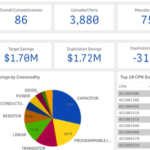
A recent briefing with Lytica highlights a shift in procurement from opaque negotiation toward statistically grounded pricing intelligence.
Procurement has long operated with an imbalance of information.
Suppliers understand pricing across customers, volumes, and market conditions. Buyers rely on internal history, limited benchmarks, and negotiation experience to determine whether a price is competitive. In categories such as electronic components, this gap is amplified by volatility and limited transparency.
The result is consistent. Different companies, and often different divisions within the same company, pay materially different prices for the same component.
Lytica is attempting to address that condition.
From Transaction Data to Market Intelligence
Lytica’s platform is built on anonymized buyer transaction data aggregated across a network of companies. This creates a continuously updated view of pricing across suppliers, regions, and time.
This is not modeled data or survey input. It reflects observed market behavior.
That distinction allows procurement teams to assess pricing against a broader market reference:
Where are we overpaying
How do suppliers price across customers
What does competitive pricing look like
This represents a move from internal spend analysis to external market intelligence.
From Benchmarking to a Pricing Discipline
The more important development is how this data is modeled.
Lytica treats pricing as a measure of competitiveness rather than a fixed value. Prices exist within a distribution shaped by real transactions. Each company occupies a position within that distribution.
This enables a more structured evaluation of procurement performance:
Prices can be ranked relative to the market
Outliers can be identified and examined
Expected price ranges can be estimated using observed data
The question shifts from “Is this price good” to “How competitive is this price relative to the market”
This introduces a more disciplined approach to procurement performance.
Quantifying Leverage in Negotiation
Once pricing is modeled this way, negotiation becomes more structured.
Procurement teams can enter discussions with:
Target pricing ranges based on transaction data
Evidence of variance across comparable buyers
Supplier-specific pricing patterns over time
This replaces qualitative positioning with data-backed arguments.
The result is more consistent outcomes and shorter negotiation cycles.
From Data to Decision Support
The next step is applying this dataset in operational workflows.
As outlined in modern supply chain architectures , AI systems become more useful when grounded in domain-specific data and applied with context.
In this case, systems can:
Identify deviations from competitive pricing levels
Estimate expected pricing ranges based on observed transactions
Generate supplier-specific negotiation guidance
Monitor pricing performance over time
These outputs are typically delivered as structured guidance for sourcing teams.
The Role of Context and Retrieval
The effectiveness of this approach depends on how data is accessed and retained.
Retrieval-based architectures allow systems to reference current transaction data when generating recommendations. Context-aware systems retain supplier history, pricing behavior, and prior outcomes across decision cycles.
This supports continuity in decision making rather than isolated analysis.
Positioning in the Stack
Lytica does not replace ERP or sourcing platforms. It operates as an intelligence layer above them.
This reflects a broader shift:
Systems of record manage transactions
Systems of execution manage workflows
Systems of intelligence guide decisions
Over time, as confidence in recommendations increases, this layer is likely to become more integrated into execution.
The Bottom Line
Lytica reflects a shift in procurement.
Pricing is moving from opaque negotiation toward structured, data-based market positioning.
This changes how procurement operates:
From internal benchmarks to external reference points
From periodic sourcing to continuous evaluation
From intuition to structured decision support
In more volatile supply environments, this type of capability becomes increasingly relevant.
Organizations that adopt it early will have a clearer understanding of their market position and a more consistent approach to improving it.
The post Lytica and the Emergence of a Pricing Science Layer in Procurement appeared first on Logistics Viewpoints.


Crusoe and Redwood Materials Expand Strategic Partnership

Velotic Launches as Independent Industrial Software Company Integrating Proficy, Kepware, and ThingWorx

Lytica and the Emergence of a Pricing Science Layer in Procurement

Walmart and the New Supply Chain Reality: AI, Automation, and Resilience
Ex-Asia ocean rates climb on GRIs, despite slowing demand – October 22, 2025 Update
13 Books Logistics And Supply Chain Experts Need To Read
Trending
-
 Non classé1 an ago
Walmart and the New Supply Chain Reality: AI, Automation, and Resilience
- Non classé5 mois ago
Ex-Asia ocean rates climb on GRIs, despite slowing demand – October 22, 2025 Update
- Non classé7 mois ago
13 Books Logistics And Supply Chain Experts Need To Read
- Non classé2 mois ago
Container Shipping Overcapacity & Rate Outlook 2026
- Non classé4 mois ago
Ocean rates climb – for now – on GRIs despite demand slump; Red Sea return coming soon? – November 11, 2025 Update
- Non classé1 mois ago
Ocean rates ease as LNY begins; US port call fees again? – February 17, 2026 Update
- Non classé1 an ago
Unlocking Digital Efficiency in Logistics – Data Standards and Integration
-

 Non classé6 mois ago
Navigating the Energy Demands of AI: How Data Center Growth Is Transforming Utility Planning and Power Infrastructure