
Non classé
Supply Chain and Logistics News June 16th – June 19th 2025

Published
1 an agoon
By
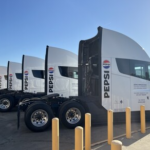
Summer is in full swing, and this was another full week of Supply Chain & Logistics news. Firstly, the US and the UK have signed a partial trade agreement which includes a reduction in tariffs on UK and US exports. DHL Express Canada has been faced with looming union conflicts, causing it to currently halt operations. General Motors announced 3 assembly plants to be located in the United States with a combined $4 billion in investment. PepsiCo reports major savings on fuel costs after onboarding EV semi trucks at its Fresno facility. Lastly, Amazon has launched a fully robotic fulfillment center in Massachusetts. Read more below for the full breakdown!
Here is your news for the week:
US and UK Sign Parts of Trade Deal
President Donald Trump has signed an order confirming parts of a UK-US tariff deal, which aims to reduce trade barriers between the two countries. The agreement includes a reduction of tariffs on UK cars shipped to the US from 25% to 10%, and a similar system is being considered for steel and aluminum. However, the deal still imposes a 10% levy on most UK goods and does not address the removal of steel import charges. The UK government hopes this deal will protect British businesses from the impact of US tariffs, but there are still concerns about the long-term effects on industries like steel and bioethanol. The deal also includes a tariff-free quota for US ethanol and an increase in the quota for US beef imports, with assurances that food safety standards will be maintained.
DHL Express Canada to Suspend Operations Nationwide
DHL Express Canada plans to suspend operations nationwide starting June 20 due to stalled contract negotiations and labor disruptions. Ahead of this shutdown, the carrier will cease importing international packages as of June 17. The strike, initiated by Unifor union workers on June 8, follows a lockout by DHL. The union is demanding significant wage increases and better working conditions, while DHL argues that these demands are economically unfeasible. The situation is further complicated by new legislation prohibiting the use of replacement workers during strikes, which takes effect on June 20. This labor unrest is part of a broader trend affecting Canada’s parcel delivery sector, with Canada Post employees also facing contract disputes.
GM is investing $4B in Three Plants to boost Domestic Production
General Motors (GM) announced a $4 billion investment in its U.S. assembly plants across Michigan, Kansas, and Tennessee to boost production of both gas and electric vehicles. This move aims to mitigate the impact of tariffs on imported automobiles and parts and to support American jobs. The investment will increase GM’s capacity to build 2 million vehicles annually in the U.S. by 2027. Key projects include expanding production of popular models, such as the Chevrolet Equinox and Blazer, and enhancing facilities for next-generation electric vehicles. GM’s commitment underscores its belief in American innovation and manufacturing expertise.
PepsiCo Expects Nearly $1M in Fuel Savings for its EV Semitrucks
PepsiCo anticipates saving nearly $1 million in fuel costs for charging its fleet of 50 electric semitrucks at its Fresno, California, bottling facility, thanks to Pacific Gas and Electric Company’s Flex Connect program. This program allows daytime charging and increases the site’s charging capacity from 3 megawatts to 4.5 megawatts, enabling PepsiCo to charge its entire fleet more efficiently. The quick charging turnaround, from zero to 80% in about 40-60 minutes, helps maintain smooth operations. This initiative is part of PepsiCo’s broader sustainability goals, with additional EV fleet sites planned for the future.
Amazon Opens Robotic Fulfillment Center in Massachusetts
Amazon’s new robotics fulfillment center in Charlton, Massachusetts, spans 2.8 million square feet and features hundreds of robots capable of lifting up to 1,500 pounds. This facility supports over 1,000 employees in fulfilling tens of thousands of orders and represents Amazon’s largest investment in Massachusetts, totaling over $300 million. The center is part of Amazon’s strategy to enhance productivity and reduce manual tasks through advanced robotics.
Song of the week:
The post Supply Chain and Logistics News June 16th – June 19th 2025 appeared first on Logistics Viewpoints.
You may like
Non classé
The Boundary Between Software and the Physical Supply Chain Is Disappearing
Published
4 heures agoon
22 septembre 2026By
The New Logistics Advantage — Part 3 of 9
The old distinction between information technology and physical logistics is becoming harder to maintain. Software once sat above the operation: it planned, recorded, scheduled, and reported what happened in warehouses and transportation networks. Increasingly, computation is moving into the assets and processes themselves.
Warehouses now combine execution software with robotics, automated storage, machine vision, sensors, controls, and increasingly intelligent orchestration. Transportation networks are becoming more connected through vehicles, devices, infrastructure, telematics, and V2X concepts. Digital twins create dynamic representations of physical systems. AI interprets the resulting state and helps coordinate response.
This is not simply digitization. It is the formation of a cyber-physical logistics system in which the quality of the digital model increasingly determines how effectively the physical network can be controlled.
The Physical Network Is Becoming Machine-Readable
A physical system can be optimized more effectively when its state can be observed. Historically, logistics applications often inferred physical reality from transactional milestones. An order was assumed picked because a scan was recorded. A truck was considered in transit because a carrier sent a status message. A storage location was available because the WMS believed it was available.
As sensing becomes more granular, those proxies improve. The Autonomous Mobile Robots executive summary and Automated Storage and Retrieval Systems executive summary illustrate how equipment and software are becoming inseparable in modern fulfillment. AMRs report location and task state. AS/RS systems expose inventory and equipment state. Machine controls generate events continuously.
The consequence is larger than better dashboards. Once the physical operation becomes observable at a finer level, the organization can reason about flow, congestion, capacity, exceptions, and constraints closer to real time.
Software Becomes the Coordination Layer
This does not diminish the importance of the WMS. It increases it. The WMS executive summary shows why the category remains foundational: inventory, labor, workflows, receiving, replenishment, picking, and execution state still need an authoritative control layer.
What changes is the surrounding architecture. A modern warehouse may include conventional labor, AMRs, AS/RS, conveyor, robotics, parcel systems, yard operations, order management, and transportation interfaces. Each technology can perform well in isolation while the facility still underperforms because release logic, labor, dock capacity, automation, and carrier timing are not coordinated. The 2026 WMS Market Map is useful in this context because buyers increasingly need to evaluate providers not only on functional depth but also on extensibility, automation connectivity, data, intelligence, and fit with a broader execution architecture.
A useful test is whether new automation reduces operating latency or simply moves it. If a robot can move a tote in seconds but waits because upstream priorities are stale, the bottleneck has shifted from motion to decision. If automated storage increases density but replenishment logic cannot anticipate demand, physical capital is being constrained by digital coordination.
Transportation Is Following the Same Path
Transportation is becoming more computational as well. Connected vehicles, telematics, real-time location, digital freight networks, appointment systems, roadside infrastructure, and other signals create a denser picture of network state. The Connected Vehicles and V2X research extends the concept toward communication among vehicles, infrastructure, devices, and logistics platforms.
The important point is not that every truck becomes autonomous. It is that transportation becomes increasingly observable and coordinateable. A late arrival can inform dock planning before the truck reaches the facility. A weather or traffic event can affect route choice, customer promise, labor timing, or inventory allocation. A connected transportation system can become part of the same decision environment as the warehouse rather than a separate external process.
This is where the conventional transportation-versus-warehouse boundary starts to look artificial. A trailer waiting at a gate, a dock door waiting for labor, and inventory waiting for outbound capacity are all expressions of the same underlying problem: physical flow is being governed by decisions made across disconnected systems.
Digital Twins Turn Observation Into Experimentation
More observable operations create the foundation for richer digital representations. A digital twin moves the organization beyond monitoring toward simulation: what happens if inbound flow is delayed, a storage zone becomes constrained, a carrier rejects a load, labor availability changes, or order mix shifts?
That capability matters because the next stage of logistics optimization is not simply finding a mathematically better answer. It is understanding whether an answer remains feasible inside a physical system with bottlenecks, queues, capacity limits, equipment constraints, and human variability. A useful executive model has four layers: the physical layer of vehicles, facilities, inventory, automation, labor, and infrastructure; an observation layer of sensors, scans, telematics, and events; a decision layer of planning, optimization, AI, and simulation; and an execution layer of WMS, TMS, automation controls, workflows, and human action. Systems Engineering in Logistics is ultimately about designing those layers together rather than modernizing them independently.
The Executive Implication
Automation strategy should therefore be evaluated as architecture, not equipment procurement. Leaders should ask what operating state the enterprise will be able to observe, what decisions that new information enables, how decisions will reach execution, and whether the resulting system becomes easier or harder to manage as automation expands.
The strongest business case may come not from the isolated productivity of a new machine, sensor, or application but from the closed loop it completes. Better state information improves decisions. Better decisions improve coordination. Better coordination raises the productivity of physical assets already in place.
The boundary between software and the physical supply chain is disappearing because logistics is becoming a continuously sensed, modeled, decided, and executed system. The value will come from how tightly that loop is engineered, not from any single layer.
Explore the Related Logistics Viewpoints Research
AMR Executive Summary
AS/RS Executive Summary
WMS Executive Summary
2026 WMS Market Map
V2X and Digital Twins White Papers
Systems Engineering in Logistics
The New Architecture of Logistics
The post The Boundary Between Software and the Physical Supply Chain Is Disappearing appeared first on Logistics Viewpoints.
Non classé
Blue Yonder Shows the Value of Connecting Planning and Execution
Published
6 heures agoon
22 septembre 2026By
Blue Yonder’s position in supply chain software is increasingly defined by breadth. The company combines planning, transportation, warehousing, visibility, optimization, and decision intelligence within a common platform strategy, giving it a footprint that reaches from longer-horizon planning into day-to-day logistics execution.
That breadth matters because the dividing line between planning and execution continues to weaken. A useful decision intelligence layer cannot stop at identifying a demand shift, inventory imbalance, transportation delay, or warehouse constraint. The greater value comes when the system can understand the operational context, evaluate alternatives, and move an approved response into the systems where work is actually performed. Blue Yonder’s platform direction is built around reducing that distance between signal, decision, and action.
The company’s strengths are most visible in complex, multi-echelon environments where planning decisions interact continuously with transportation, fulfillment, and warehouse execution. Its combination of optimization, real-time visibility, multi-enterprise connectivity, and increasingly AI-driven workflows also illustrates why large supply chain suites are being evaluated less as collections of modules and more as operating architectures.
The tradeoff is familiar. Breadth can introduce implementation complexity, governance requirements, and a larger transformation footprint. The strategic question for buyers is therefore not simply how many capabilities reside on the platform, but whether those capabilities can be deployed in a way that materially improves decision velocity without creating unnecessary operational complexity.
That makes Blue Yonder especially useful to watch across several parts of the market. Logistics Viewpoints includes the company in its Supply Chain Decision Intelligence MarketMap, Transportation Management Systems MarketMap, Autonomous Exception Management MarketMap, and Warehouse Management Systems MarketMap, providing four different lenses on how the platform competes across intelligence and execution.
The post Blue Yonder Shows the Value of Connecting Planning and Execution appeared first on Logistics Viewpoints.
Non classé
Germany’s Machinery Slump Is a Warning for Industrial Supply Chains
Published
8 heures agoon
22 septembre 2026By
Germany’s manufacturing numbers look better until you examine what is actually generating them.
Real manufacturing orders increased 2.5 percent in July compared with June, according to Germany’s Federal Statistical Office. But remove large-scale orders and the direction reverses: orders fell 1.4 percent. The difference is extraordinary. Orders in “other transport equipment” — aircraft, ships, trains, and military vehicles — jumped 126.4 percent in a single month, while automotive orders fell 12.5 percent.
That is not a broad industrial recovery. It is a widening divergence inside one of the world’s most important manufacturing ecosystems.
For supply-chain executives, the more important question is not whether German manufacturing is rising or falling in aggregate. It is what happens to the supplier network while different parts of that industrial base move in opposite directions.
Germany may increasingly be experiencing two industrial cycles at once: a downturn across portions of its legacy manufacturing base and a reallocation of investment and capacity toward aerospace, defense, rail, and other capital-intensive sectors.
The supply chain that emerges from that adjustment may not be the same one that entered it.
Machinery Is More Than Another Industrial Indicator
The machinery sector deserves particular attention because capital-equipment demand tells us something about what manufacturers believe will happen next.
Companies buy machine tools, automation equipment, robotics, material-handling systems, production lines, and other capital equipment when they expect future production to justify those investments. When confidence weakens, many of those expenditures can be postponed. Existing machines run longer. Maintenance spending rises. Automation programs get stretched over additional budget cycles. Suppliers reduce inventories and labor while trying to preserve cash.
Germany’s mechanical and plant engineering sector is now experiencing that pressure directly. VDMA expects real machinery and equipment production to decline 2 percent in 2026, which would mark a fourth consecutive annual decline. Production during the first seven months of the year was already 4.1 percent below the comparable period in 2025.
Yet the same data contain the beginnings of a different story.
Price-adjusted machinery orders increased 5 percent during those first seven months, according to VDMA, with orders from countries outside the eurozone rising 14 percent. VDMA consequently expects real production to grow 3 percent in 2027.
That gap between current production and improving orders may be one of the most consequential signals in the data.
An industrial downturn forces companies to remove cost and capacity. A recovery forces them to restore it. Those processes are not symmetrical. A production line can be idled relatively quickly, but rehiring skilled workers, qualifying suppliers, restoring inventories, increasing component output, and recommissioning capacity can take considerably longer.
This is where an ordinary cyclical decline can become a supply-chain problem.
The Capacity Destruction Paradox
Every company in a downturn has an incentive to make rational decisions for itself. Reduce inventory. Delay capital spending. Consolidate suppliers. Close an underutilized facility. Eliminate marginal capacity. Extend payment terms. Lower headcount.
Collectively, however, those decisions can remove precisely the industrial capacity the network will need when demand returns.
That creates what I would call the capacity destruction paradox: the actions that help individual companies survive the bottom of a cycle can make the overall supply chain less capable of responding to the next upcycle.
Machinery suppliers are particularly exposed to this dynamic because their products sit upstream of future manufacturing capacity. Weak machinery demand does not just reflect weak current production; prolonged weakness can influence how much production capacity exists several years from now.
If machinery orders continue strengthening while production remains depressed, manufacturers will eventually have to convert those orders into actual equipment. At that point, the constraint may no longer be demand. It may be whether the industrial ecosystem retained enough skilled labor, component capacity, working capital, and supplier depth to respond.
Headline German Data Mask the Divergence
Germany’s broader manufacturing statistics reinforce the point.
The real stock of manufacturing orders increased 1.5 percent in July from June and stood 10.9 percent above July 2025. The backlog reached a new record, with a theoretical production range of nine months.
But Destatis explicitly attributes much of that record to other transport equipment, where aircraft, ships, trains, and military vehicles involve unusually large orders and long production cycles.
Without that sector, Germany’s manufacturing backlog remains well below its historic peak.
The internal differences are striking:
Other transport equipment backlogs increased 3.9 percent in July.
Machinery backlogs increased 0.8 percent.
Automotive backlogs fell 1.7 percent.
Industrial production declined 1.1 percent.
So there is no single German manufacturing cycle.
There are industries accumulating multiyear order books, industries beginning to see export orders improve, and industries still contracting. A shipyard working through years of orders has a completely different supply-chain problem from an automotive supplier operating with weak utilization and deteriorating access to capital.
The averages hide those differences. Supply chains do not operate on averages.
Automotive Is Where the Network Effect Gets Dangerous
Germany’s automotive sector illustrates why this matters beyond Germany.
An automotive OEM does not operate as an isolated manufacturer. Every assembly plant sits above multiple tiers of metals companies, electronics suppliers, semiconductor manufacturers, plastics companies, machine builders, automation providers, logistics companies, warehouses, tooling specialists, and highly specialized component manufacturers.
Volkswagen alone reports more than 63,000 direct supplier locations across 93 countries. That is only the visible first layer of an enormous network. Beneath those direct relationships are Tier 2, Tier 3, and still deeper suppliers that may serve multiple Tier 1 companies simultaneously.
That is where conventional supplier-risk analysis can become misleading.
The financially largest supplier is not necessarily the operationally most important supplier. A small Tier 3 company producing a specialized casting, sensor component, chemical formulation, tooling process, connector, or machine part can occupy a disproportionately important position in several bills of material.
Multiple Tier 1 suppliers may even depend upon the same sub-tier producer without the OEM having complete visibility into that concentration.
If that supplier exits the market during a prolonged downturn, the problem cannot necessarily be solved by issuing another purchase order.
The capability may have disappeared with it.
Financial Stress Can Become Operational Stress
The pressure on the European automotive supplier base is already visible.
Roland Berger’s 2026 automotive SME study notes that the German automotive industry has shed approximately 100,000 jobs since 2019. The study also describes tighter bank lending to automotive SMEs as lenders reassess industry risk, while almost 95 percent of surveyed suppliers expect significant consolidation during the next five years.
Consolidation by itself is not necessarily bad. Stronger suppliers can acquire weaker companies, eliminate redundant capacity, introduce capital, and create more competitive operations.
But consolidation also changes supply-network topology.
Two previously independent sources can suddenly become one corporate entity. Production can be rationalized into a single plant. Tooling can be relocated. Regional redundancy can disappear. A supplier acquired primarily for technology may discontinue lower-volume products that remain operationally important to existing customers.
For procurement organizations, that means supplier financial health cannot be separated from supply-network design.
Companies need to understand not just who supplies them, but which upstream facilities, processes, tools, materials, and sub-tier companies several of their suppliers have in common.
The risk is concentration that remains invisible until something fails.
Germany May Be Running Two Industrial Cycles at Once
This is why the debate over whether Germany is “deindustrializing” can obscure a more useful supply-chain question.
Industrial capability is not simply disappearing or expanding. It is being reallocated.
Aerospace, shipbuilding, rail, defense, automotive, machinery, chemicals, and other industrial sectors are experiencing very different demand environments. Capital, labor, engineering talent, supplier capacity, and logistics resources will follow those differences over time.
The result could be a German industrial network with a materially different shape.
Some capabilities will shrink. Others will expand. Some suppliers will consolidate. Some production will migrate geographically. Some companies will redirect capacity toward markets with stronger growth or more attractive economics. And some specialized capabilities may disappear because there was insufficient demand to support them through the trough.
For supply-chain leaders, that restructuring matters more than the semantic argument over what to call it.
What I Would Watch Next
The next several quarters should be evaluated through four connected indicators: machinery orders, actual industrial production, capacity utilization, and supplier financial health.
If machinery orders continue improving while production remains weak, a future production recovery may be forming beneath the current data. If utilization subsequently begins rising, pressure will migrate toward labor, components, working capital, logistics capacity, and lead times.
But there is another possibility.
Supplier consolidation and capacity reductions could move faster than demand recovery. In that case, manufacturers may enter the next growth cycle with a smaller and more concentrated supply network than the one they had before the downturn.
That is when yesterday’s excess capacity becomes tomorrow’s bottleneck.
For procurement and supply-chain organizations, the implication is straightforward. This is the time to:
map critical n-tier dependencies;
identify specialized capabilities that would be difficult to replace;
monitor financially vulnerable suppliers;
understand where apparent dual sourcing ultimately converges on a common upstream node; and
determine which pieces of the network deserve protection even when current volumes do not appear to justify it.
Germany’s industrial numbers are therefore telling us something more important than whether manufacturing grew or contracted in a particular month.
They are showing an industrial network being reconfigured in real time.
The companies that understand where capacity is disappearing — before demand returns — will be in a much better position when the cycle turns.
The post Germany’s Machinery Slump Is a Warning for Industrial Supply Chains appeared first on Logistics Viewpoints.

The Boundary Between Software and the Physical Supply Chain Is Disappearing
Blue Yonder Shows the Value of Connecting Planning and Execution
Germany’s Machinery Slump Is a Warning for Industrial Supply Chains
Freightos Global Freight Outlook – September 2026
Container rates jump another $1k/FEU – but is demand peaking? – July 8, 2026 Update

Walmart and the New Supply Chain Reality: AI, Automation, and Resilience
Trending
- Non classé3 semaines ago
Freightos Global Freight Outlook – September 2026
- Non classé3 mois ago
Container rates jump another $1k/FEU – but is demand peaking? – July 8, 2026 Update
-
 Non classé2 ans ago
Walmart and the New Supply Chain Reality: AI, Automation, and Resilience
-

 Non classé5 mois ago
Why Sulfuric Acid Is Emerging as a Supply Chain Constraint in Copper
- Non classé4 mois ago
Container rates starting to spike on peak season rush – June 2, 2026 Update
- Non classé1 an ago
13 Books Logistics And Supply Chain Experts Need To Read
- Non classé11 mois ago
Ex-Asia ocean rates climb on GRIs, despite slowing demand – October 22, 2025 Update
- Non classé3 mois ago
LCL Shipping Cost Calculator: Calculate Air and Sea Shipping Freight Rates