
Non classé
Lenovo Excels in Supply Chain Planning with a Hybrid Approach

Published
1 an agoon
By

Jack Fiedler, the vice president for digital transformation of the global supply chain at Lenovo
Lenovo is ranked tenth by one leading analyst firm among a list of global companies with exceptional supply chains. Based on an interview with Jack Fiedler, the vice president for digital transformation of the global supply chain at Lenovo, the word “exceptional” certainly applies. I’ve not seen a company that does a better job of agile planning across an end-to-end, multi-tier supply chain.
Lenovo is a multinational company listed on the Hong Kong Stock Exchange. The company, which achieved $ 57 billion in revenues in its last fiscal year, is the leading global supplier of PCs. The high-tech firm is more than a manufacturer of PCs, tablets, smartphones, and servers. In their last quarter, the division selling personal devices accounted for only a bit more than half of global revenues.
The company has more than 2000 suppliers and operates over 30 manufacturing sites. Factories serve local markets. During COVID, this more agile and resilient model allowed the firm to grow their market share.
The following interview was edited for conciseness.
Steve Banker: Maybe you could start by talking a little bit about the Lenovo supply chain and what makes it distinctive.
Jack Fiedler: We’re unique in the technology industry. We run one of the few truly hybrid supply chain networks. We own a significant portion of our network, but we also work extensively with partners. A lot of our competition has largely outsourced their supply chain.
We decided 8 or 9 years ago that to create a competitive advantage, we really needed to control much of our supply chain. That has worked out well for us.
We’ve taken the same hybrid approach from a supply chain technology perspective. We have a lot of in-house solutions that we’ve built for our digital transformation, which is my area of expertise. I’m responsible for the overall digital transformation, including technology. But then we also partner with Blue Yonder and others.
We put a huge amount of focus on digitalization, as many companies have. But I think we’ve taken it to a more extreme level.
We invest a huge amount of time and resources into our people and making sure that we have the best digital talent in the industry and that we’re doing the most innovative things in the supply chain.
Banker: You mentioned an approach to digitalization that’s both in-house as well as being reliant on external software partners. Could you talk more about that?
Fiedler: I’ll start with Blue Yonder, because Blue Yonder truly is the foundational building block for our supply chain intelligence.
We’ve been using Blue Yonder for many years. We have evolved Blue Yonder from being a traditional demand and supply planning solution. We’ve done a lot of customization, with Blue Yonder’s help, to create a digital twin of our entire supply network. We’ve moved from weekly supply collaboration with suppliers to daily.
We have all our factories, both in-house and outsourced, all of our distribution centers, and our transportation network on the Blue Yonder foundational system. We now have complete visibility of our supply chain. And then we’ve layered our own AI on top of that, which allows us to simulate the entire supply chain.
We can run a plan simulation to maximize revenue, maximize shipments, maximize the customer experience, or minimize transportation costs. We’ve now built this AI capability to simulate the entire supply chain. This was a huge effort, but it has been very valuable.
We have continued to build on that foundation. Just last year we finished integrating the sales process into the end-to-end supply chain process. A seller, from the moment they engage with a customer, and all the way through the sales process, can get whatever information they need to communicate with a buyer on what we have available, and what the lead times are, and other similar information. This starts with the initial discussion about what kind of products are available and how the product will be configured. Then a simulation is run and we get an estimated date for delivery. Once a contract is in place, we have real-time visibility on the delivery status. This includes visibility to emerging supply chain constraints. During COVID constraints were popping up all over the place. An iGPU (integrated graphic processing unit) is a current example. Everybody wants to know what the lead time on iGPUs are, and what the alternatives are if they are not available.
We’ve used the Blue Yonder technology, and that digital twin of the network, and the simulations we run, to give the sales team full visibility as to what is available and when it can be delivered. The sales team can go have those conversations, with real-time lead times and even the factory the product will ship from, with customers.
This has been a real game changer for sales. It’s really reduced a lot of sales friction. It used to be that a customer would ask questions, then sales would have to go to the supply chain organization, and we’d have to get that information, and back and forth it would go.
We’ve connected the supply chain end-to-end and made it intelligent. That is what everybody’s trying to do, but we’ve done it from the beginning of a sales opportunity all the way to the delivery of a shipment.
That was made possible because of this investment we made with Blue Yonder and our investment in building our simulation capabilities in the digital twin.
The second thing we’ve done, and this is our most valuable asset, is that 7 years ago we made a big investment in our own intelligence platform we call supply chain intelligence. It started out as a traditional control tower. But then it very quickly evolved into a full intelligence platform.
We have benchmarked our SCI (Supply Chain Intelligence) solution; we looked at all the solutions in the industry. We don’t believe anybody has anything as comprehensive as what we built in-house. We run the entire supply chain from this intelligence platform.
We have full visibility. We have all the connected planning data we get from blue Yonder, all of the product data we get from the product systems, all of the shipment information that’s coming in from the carriers, as well as risk information from Everstream and other sources.
We have complete visibility of the performance of the entire supply chain in one tool. But it’s not just a visibility platform. It provides risk alerts, decision-making, and automation. As an example, if we have congested lanes, the system will automatically flag that we have a potential risk of delay based.
The platform will look at all the potential alternatives and the cost of those alternatives, and it will make a recommendation for a supply chain person to go in and look at the event. That planner can choose to reroute a shipment so that it doesn’t get delayed.
To build this took seven years and a significant investment . This was meant to be an internal tool for Lenovo. But we’ve now got customers that are starting to lease this technology from us.
We are continuing to invest in the solution. We are working to make the platform more autonomous. For example, we’re working on telling the solution that it has a budget. “You have a budget of $5,000,000 and here are some other parameters. Show us the best way to fix the freight delays!”
The AI looks at the potential alternatives and the trade-offs and then spits out an answer. That frees up the logistics team to go work on even more difficult problems.
When the chief supply chain officer wants to review the performance of the supply chain, we start with the KPI dashboards. Then, the tool drills down and looks at real-time performance on late orders or parts. It might highlight logistics jams, manufacturing capacity, quality issues, or procurement cost trends. Really, everything you need to manage the supply chain. This is so much more than a control tower.
Banker: Can you speak in a bit more detail about what you are doing around artificial intelligence?
Fiedler: We have built a number of AI use cases over the last four years that we’ve embedded into the tool. The first wave of those was made possible because of the foundational digital twin capability work that we did with Blue Yonder.
Advanced demand forecasting based on machine learning, for example, is a classic example of the use of AI in supply chain management. But we have taken machine learning further than this.
During COVID there were so many part shortages. We struggled to figure out what we could build and, then, beyond this, what should be built based on optimizing for either cash or revenue or customer satisfaction or other things as well.
Banker: Was this based on a series of Bill of Materials explosions?
Fiedler: Yes, that is exactly what it does. It takes the demand that we have, it takes the orders that we have, it takes the BOMs on those orders and then compares it against the digital twin of the supply chain and says, “What do we have right now? What can we make? And based on our objectives, what should we make?”
And this is not just a solve done at the plant level. A lot of companies can do that. This is a network solution based on the centralized supply visibility and management. It can involve moving parts from plant A to plant B, for example.
We are also using AI to help with customer allocation issues. When critical components are in short supply, it can end up being whichever customer screams the loudest that gets prioritized. That’s not a sustainable way to manage supply issues.
We used AI to create smart allocation. Basically, this allows us to say, “OK, if we want to reprioritize our order stack, what are the impacts if we move customer C from slot 8 up to slot 2? How will that impact other customers? How will it impact our supply chain?
It took a very chaotic area and helped create order. We can now have really good data-driven conversations. The sales team can now make better trade-off decisions involving their customers.
We also recently created a machine learning capability that helps us better predict when suppliers will make deliveries to us. During COVID, all of our suppliers got very conservative because all their suppliers got very conservative. The accuracy of the delivery dates we were getting went way down. Basically, we use AI to go say, “Who’s hedging?”
There was unpredictability during COVID from key suppliers on shipment dates due to the dynamics everyone was trying to navigate. Using AI, we were able to predict when the delivery would occur. This allowed us to plan our manufacturing capacity more effectively.
Banker: You know, if you were to talk to Blue Yonder, they would say they’re investing in the same sort of things that you’ve invested in. So why do it yourself?
Fiedler: A couple of reasons.
Lenovo is a large global business and with that comes some complexity for supply chain software solutions companies. We have many products, many different bill of material structures, and many different business models. We operate in many countries. Supporting the complexity of the business in somebody else’s tool is difficult.
And while supply chain solution vendors are building some of these capabilities, they can’t match all the things that we could do ourselves, or the speed at which we can do them.
We do use their technology and where it makes sense, where they’ve invested in it, we will leverage their capabilities. We practice a hybrid model – we use what the supply chain vendors are really good at, and then we add to it.
Lenovo has a huge research team. Thousands of AI data scientists work for us. Some of these data scientists are among the best in the world. We’ve got the ability to build this stuff very quickly with our own skills.
I’ll give you an example. If we want to change the machine learning algorithm three times a day, based on new information we’re getting from the sales team or suppliers, we can go do that. When you’re working with a partner, and using their technology, that’s much, much more difficult to do.
And so, I think just the bottom line is that the size and scale of our company allows us to make choices surrounding AI other companies can’t make. To be as responsive, as agile, and as innovative as we want to be requires us to use a hybrid model.
Banker: Jack, thank you so much. This is fascinating! I could talk to you for hours.
Fiedler: Thank you.
The post Lenovo Excels in Supply Chain Planning with a Hybrid Approach appeared first on Logistics Viewpoints.
You may like
Non classé
Walmart AI Pricing Patents Signal Shift Toward Real-Time Retail Execution
Published
4 jours agoon
20 mars 2026By

Walmart’s new patents and digital shelf rollout point to a more tightly integrated model linking demand forecasting, pricing, and store-level execution.
Walmart has secured two patents related to automated pricing and demand forecasting, drawing attention to how large retailers are evolving their pricing and execution capabilities.
One patent, System and Method for Dynamically Updating Prices on an E-Commerce Platform, covers a system that can dynamically update online prices based on changing market conditions. A second, Walmart Pricing and Demand Forecasting Patent Classification, relates to demand forecasting technology designed to estimate what customers will buy and recommend pricing accordingly. At the same time, Walmart is expanding digital shelf labels across its U.S. stores, replacing paper labels with centrally managed electronic displays.
Individually, none of these elements are new. Retailers have long used forecasting models, pricing tools, and store execution processes. What is notable is the combination.
Walmart now has three capabilities aligned:
Demand forecasting tied to predictive models
Price recommendation based on that demand
Store-level infrastructure capable of rapid execution
That combination reduces the operational friction historically associated with pricing in physical retail.
Pricing Moves Closer to Execution
Traditional store pricing changes required coordination across multiple steps: analysis, approval, printing, distribution, and manual shelf updates. That process introduced delay and inconsistency.
Digital shelf labels materially change that constraint. Prices can be updated centrally and executed across stores with significantly less manual intervention.
This does not change the underlying logic of pricing decisions. Retailers have always adjusted prices based on demand, competition, and margin targets. What changes is the speed and consistency of execution.
As a result, pricing moves closer to real-time operational control.
Implications for Supply Chain Operations
Pricing is not an isolated commercial function. It directly influences demand patterns, inventory flow, replenishment timing, and markdown activity.
When pricing becomes faster and more responsive, those linkages tighten.
Three implications are clear:
1. Increased Execution Speed
Retailers can align pricing decisions more quickly with current demand conditions, reducing lag between signal and action.
2. Stronger Dependence on Forecast Accuracy
When pricing recommendations are driven by predictive models, the quality of demand sensing becomes more consequential. Forecast errors can propagate more quickly into sales and inventory outcomes.
3. Closer Coupling of Merchandising and Supply Chain
Pricing decisions influence demand. Demand impacts inventory, replenishment, and store execution. Faster pricing cycles compress the distance between these functions.
Centralization and Control
Walmart has positioned its digital shelf label rollout as an efficiency and accuracy initiative. Centralized price management improves consistency between systems and store execution while reducing labor tied to manual updates.
That positioning aligns with the operational realities of large-scale retail. At Walmart’s footprint, even small improvements in execution efficiency translate into material cost and accuracy gains.
At the same time, the shift toward algorithm-supported pricing introduces standard enterprise control requirements. Organizations need clear governance around how pricing recommendations are generated, reviewed, and executed, particularly as systems become more automated.
A Broader Technology Pattern
Walmart’s patents are best understood as part of a broader shift in supply chain and retail technology.
AI and advanced analytics are moving closer to operational decision points. Forecasting models are no longer confined to planning environments; they are increasingly connected to systems that can act.
In this case, that connection spans:
Demand sensing
Price recommendation
Store-level execution
The result is a more tightly integrated operating model in which commercial decisions and supply chain execution are linked through software.
What This Signals
The significance of Walmart’s move is not tied to public debate over surge pricing scenarios. The underlying development is structural.
Retailers now have the ability to connect demand forecasting, pricing logic, and execution infrastructure into a faster decision loop.
For supply chain leaders, that represents a clear direction:
Execution is becoming more digital, more centralized, and more tightly coupled to predictive models.
The companies that benefit will be those that can align forecasting, pricing, and operational execution within a controlled, coordinated system.
The post Walmart AI Pricing Patents Signal Shift Toward Real-Time Retail Execution appeared first on Logistics Viewpoints.
Non classé
Supply Chain and Logistics News March 16th-19th 2026
Published
4 jours agoon
20 mars 2026By
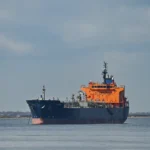
This week’s installment of Supply Chain and Logistics news includes stories about record increases in oil prices, Rivian’s autonomous taxis, and much more. Firstly, the Trump administration has issued a 60-day waiver of the Jones Act, a century-old regulation that requires goods moved between US ports to be transported by US-built vessels, etc. Additionally, this week Uber & Rivian announced a partnership for Rivian to build 50,000 autonomous robotaxis by 2031 with over a billion dollars in investment from Uber. Schneider Electric and EcoVadis announced a partnership to target emissions in the health care sector. Lastly, DHL announces 10 warehousing sites to be used for data center manufacturing capacity, and Mind Robotics raises 100 million in series A funding.
Your Biggest Stories in Supply Chain and Logistics here:
Trump Administration Issues Pause on Century-old Maritime Law to Ease Oil Prices
The Trump administration has issued a 60-day waiver of the Jones Act. This century-old regulation typically requires goods moved between US ports to be carried on vessels that are US-built, US-owned, and US-crewed. However, with oil prices surging toward $100 a barrel due to escalating conflict in the Middle East, the suspension aims to ease logistics for vital commodities like oil, natural gas, and fertilizer. While the move is intended to lower costs at the pump and support farmers during the spring planting season, it has sparked a debate between those seeking immediate economic relief and domestic maritime unions concerned about the long-term impact on American shipping and labor.
Uber and Rivian Partner to Deploy up to 50,000 Fully Autonomous Robotaxis
Uber and Rivian have announced a massive strategic partnership that signals a major shift in the future of autonomous logistics and urban mobility. Under the terms of the deal, Uber is set to invest up to $1.25 billion in Rivian through 2031, a move specifically tied to the achievement of key autonomous performance milestones. The primary focus of this collaboration is the deployment of a specialized fleet of fully autonomous R2 robotaxis, with an initial order of 10,000 vehicles and an option to scale up to 50,000 units. From a supply chain perspective, this represents a significant commitment to vertical integration; Rivian is managing the end-to-end production of the vehicle, the compute stack, and the sensor suite, including its in-house RAP1 AI chips, while Uber provides the scaled platform for deployment. Commercial operations are slated to begin in San Francisco and Miami in 2028, eventually expanding to 25 cities globally by 2031.
Schneider Electric and EcoVadis Announce Partnership to Decarbonize Global Healthcare Supply Chains
Schneider Electric, a major player in the digital transformation of energy management and automation, and EcoVadis, a provider of business sustainability ratings, have announced a strategic partnership aimed at accelerating decarbonization within the healthcare industry. “Energize” is a collective initiative to engage pharmaceutical industry suppliers in climate action. The collaboration focuses on addressing Scope 3 emissions, those generated within a company’s value chain, which often represent the largest portion of a healthcare organization’s carbon footprint. By combining Schneider Electric’s expertise in energy procurement and sustainability consulting with EcoVadis’s supplier monitoring and rating platform, the partnership provides a structured pathway for pharmaceutical and medical device companies to transition their global suppliers toward renewable energy.
Mind Robotics, a Rivian spin-off, raises $500 million in Series A Funding
RJ Scaringe, CEO of Rivian, is positioning his new $2 billion spin-off, Mind Robotics, as a technological solution to the chronic shortage of manufacturing labor in the Western world. By developing a “foundation model” that acts as an industrial brain alongside specialized mechatronic bodies, the company aims to move beyond the rigid, fixed-motion plans of traditional robotics toward systems capable of human-like reasoning and adaptation. Scaringe emphasizes that while these machines must perform with human-level dexterity, they don’t necessarily need to be humanoid in form; instead, the focus is on creating a data-driven “flywheel” within Rivian’s own facilities to lower production costs and help domestic manufacturing remain globally competitive.
DHL is significantly scaling its data center logistics (DCL) footprint in North America, announcing the addition of 10 dedicated sites totaling over seven million square feet of warehousing capacity. This expansion is a direct response to the explosive demand for AI-driven infrastructure and the specific needs of hyperscale and colocation data center operators. By offering specialized services like rack pre-configuration, white-glove handling of sensitive IT hardware, and warehouse-to-site transportation, DHL is positioning itself as an end-to-end partner in a sector where 85% of operators express a preference for a single logistics provider. This move not only addresses the logistical complexities of moving high-value components like GPUs and cooling systems across global borders but also underscores the critical role of integrated supply chains in maintaining the build speed of the digital backbone.
Song of the Week:
The post Supply Chain and Logistics News March 16th-19th 2026 appeared first on Logistics Viewpoints.
Non classé
How to Capitalize Quickly to Address Hyperconnected Industrial Demand
Published
5 jours agoon
19 mars 2026By
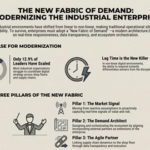
This first in a blog series offers a review of discussion that occurred during ARC Advisory Group’s 2026 Industry Leadership Forum. Specifically, it details a keynote conversation held with senior executives from Rolls-Royce, BTX Precision, and MxD.
The New Fabric of Demand: Modernizing Collaboration and Transparency for Real-Time Production
Industrial leaders have been talking about tearing down workflow and data silos for decades. Yet here we are again. For most, the reality is that most operations and supply chains today typically don’t indicate much progress. A few leaders have figured out how to use digital tools to scale and build pathways forward, a whopping 12.9% according to our latest data (yes, that’s sarcasm). However, even as they struggle to coordinate, orchestrate, and innovate across their operations and enterprise, much less tightly collaborate outside their four walls. In a digital world, this continued capability gap, the inability to closely link market signals to responsive production and external supply chains, is very quickly becoming a liability.
Recently, at the 30th Annual ARC Industry Leadership Forum in Orlando, I had the privilege of leading a keynote discussion entitled The New Fabric of Demand: Modernizing Collaboration and Transparency for Real-Time Production. As part of that, I moderated an excellent conversation that included Global Commodity Executive Greg Davidson of Rolls-Royce, CEO Berardino Baratta of MxD, and CRO Jamie Goettler of BTX Precision.
In this four-part series, we will explore that conversation fully, digging into how the “fabric of market demand” has fundamentally changed, and why structural modernization, both human and technological, is no longer just an option. It is an industrial imperative that will increasingly determine who wins in disrupted markets.
Why Legacy Workflow Will Actually Get Modernized
If we examine the present through the lens of the past, the fundamental laws of supply and demand haven’t really changed. What has changed is the hyperconnectivity of the world and our compressed time to both reward and volatility.
The hard truth is that legacy linear workflows simply do not work in hyperconnected, digitally-driven environments, which are non-linear by nature. As our industrial environments become more digital, they naturally open up countless new ways for how things can get done and how risk can enter the organization. As a result, disruption has shifted from a rare event to a fairly continuous and pervasive reality. In this new reality, responsiveness differentiates you from the competition, and lag time kills.
To survive and thrive in non-linear environments, tighter, integrated ecosystems are required, where silos are actively torn down or redesigned so that barriers to value can be continuously identified and quickly eliminated. At the core, this concept is unfolding around data access, contextualization, and sharing. It provides the urgency behind the need for building industrial data fabrics.
This rewiring certainly extends beyond operations and enterprise processes, enabling the entirety of the supply chain to be judged on its collective responsiveness to the market, all the way down to the individual company level. In this scenario, data can quickly point out laggards who limit value. As the orchestrators of these supply chains identify these limitations on value, they quickly break off and discard the connection and move on without these weak links.
Pillars of the New Fabric of Demand
To achieve necessary level of operational and supply chain responsiveness, the roles of every entity within an ecosystem must be rethought. In the subsequent three blogs of this series, we will take a deep dive into the three distinct pillars that make up this modern architecture, but I’ll begin by laying them out here:
The Market Signal is the catalyst of the entire ecosystem. It dictates the “what” and the “when,” defining what value, success and risk look like in real-time. In blog 2, I’ll explore how to move from reactive assumptions to proactively capturing the market signals that actually matter.
The Demand Architect is moving beyond traditional order-taking. The Demand Architect designs and orchestrates the ecosystem, aligning external partners as true extensions of the enterprise. In blog 3, I’ll discuss the structural agility required to lead this response, rather than just manage a process.
The Agile Partner is the engine of execution. The Agile Partner links supply chain dynamics directly to the shop floor, differentiating themselves through their responsiveness to the market signal. In the final blog in the series, I’ll tackle how data transparency and trust become technical requirements, not just buzzwords, without exposing mission-critical IP.
Building the Modern Industrial Enterprise
Legacy workflows cannot survive in a non-linear world. Industrial organizations must re-architect operations and ecosystems for real-time responsiveness and secure, transparent collaboration. To do so, they will need to:
Improve the measurement of responsiveness: Efficiency and margin-squeezing are important, but they aren’t game-changers. Your competitive edge now relies on how quickly you can adapt to market signals.
Embrace transparency over secrecy: Modern collaboration requires providing a contextualized “lens” into production status without compromising proprietary IP or cybersecurity. Industrial data fabrics are key.
As always, view technology as a tool, not an outcome: Industrial data fabrics are needed to break silos and AI to manage complexity and improve accuracy and speed of decisions. However, the age-old adage remains true. Just because you can apply AI to something doesn’t mean you should. It must be grounded in measurable Value on Investment (VOI), not just return.
The New Fabric of Demand Blog Series
This is the first in a series of four on The New Fabric of Demand: Modernizing Collaboration and Transparency for Real-Time Production. Over the coming days, I’ll publish a perspective from each of the three pillars of the new fabric of demand:
Pillar 1: The Market Signal
Pillar 2: The Demand Architect
Pillar 3: The Agile Partner
By Mike Guilfoyle, Vice President.
For more than two decades, Michael has assisted organizations, including numerous Fortune 500 companies, in identifying and capitalizing on growth opportunities and market disruption presented by the effects of digital economies, energy transition, and industrial sustainability on the energy, manufacturing, and technology industries.
The post How to Capitalize Quickly to Address Hyperconnected Industrial Demand appeared first on Logistics Viewpoints.


Walmart AI Pricing Patents Signal Shift Toward Real-Time Retail Execution

Supply Chain and Logistics News March 16th-19th 2026

How to Capitalize Quickly to Address Hyperconnected Industrial Demand

Walmart and the New Supply Chain Reality: AI, Automation, and Resilience
Ex-Asia ocean rates climb on GRIs, despite slowing demand – October 22, 2025 Update
13 Books Logistics And Supply Chain Experts Need To Read
Trending
-
 Non classé1 an ago
Walmart and the New Supply Chain Reality: AI, Automation, and Resilience
- Non classé5 mois ago
Ex-Asia ocean rates climb on GRIs, despite slowing demand – October 22, 2025 Update
- Non classé7 mois ago
13 Books Logistics And Supply Chain Experts Need To Read
- Non classé2 mois ago
Container Shipping Overcapacity & Rate Outlook 2026
- Non classé4 mois ago
Ocean rates climb – for now – on GRIs despite demand slump; Red Sea return coming soon? – November 11, 2025 Update
- Non classé1 mois ago
Ocean rates ease as LNY begins; US port call fees again? – February 17, 2026 Update
- Non classé1 an ago
Unlocking Digital Efficiency in Logistics – Data Standards and Integration
-
 Non classé5 mois ago
Navigating the Energy Demands of AI: How Data Center Growth Is Transforming Utility Planning and Power Infrastructure