
Non classé
How Supply Chain Technology Providers Can Build Market Visibility with Research, Webinars, Podcasts, and Thought Leadership

Published
3 mois agoon
By
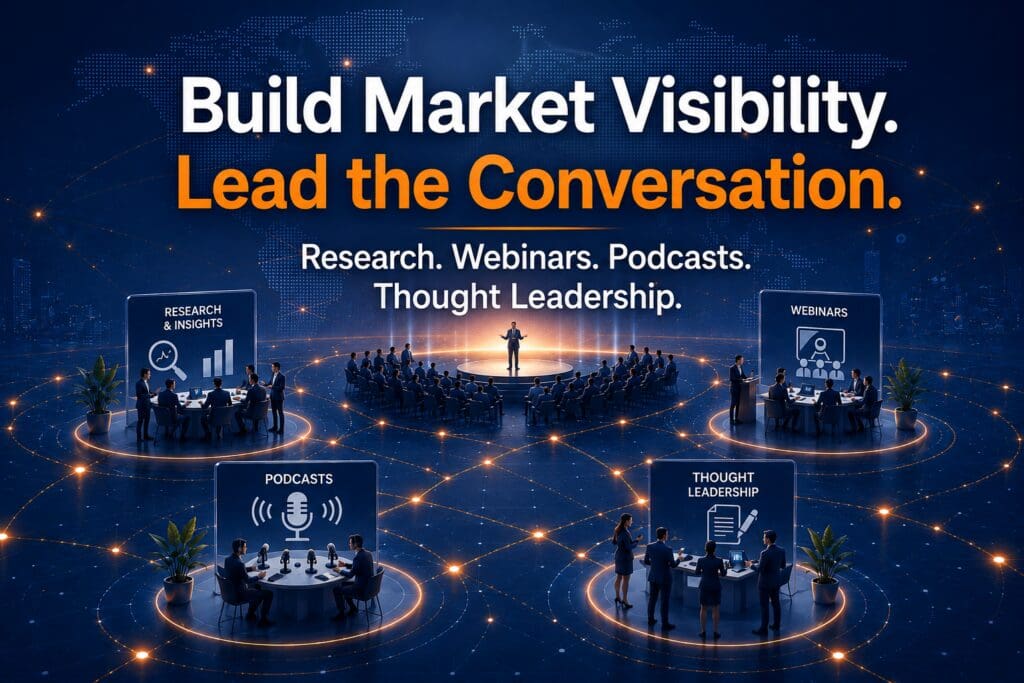
Supply chain technology markets are crowded, complex, and changing quickly. Buyers are trying to separate durable capabilities from short-term claims, while solution providers are trying to explain where they fit in a market shaped by automation, AI, labor constraints, global disruption, network complexity, and rising expectations for operational performance.
In that environment, visibility alone is not enough. Providers need credibility, context, and market education. They need ways to reach the right audience with substance, not just promotion.
For many supply chain, logistics, transportation, warehouse automation, planning, visibility, global trade, and decision-intelligence providers, the challenge is not simply getting in front of the market. The challenge is helping the market understand why a capability matters, how it fits into broader operating realities, and what buyers should consider as they evaluate options.
That is where Logistics Viewpoints and ARC Advisory Group can help. Through market research, advisory services, sponsored thought leadership, webinars, podcasts, supplier spotlights, and industry event sponsorships, companies can engage the supply chain market in a more substantive way.
This article introduces a series on how supply chain technology providers can build credibility, visibility, and executive engagement through research, advisory services, sponsored thought leadership, webinars, podcasts, supplier spotlights, and industry sponsorships.
Over the next several posts, this series will look at each path in more detail, including when it is most appropriate, how it supports market education, and how companies can use it to strengthen positioning, credibility, and demand generation.
Market Visibility Has Changed
There was a time when visibility could be built largely through advertising, trade shows, press releases, and sales outreach. Those tools still have a role, but they are no longer sufficient by themselves.
Supply chain executives are operating in a more complex environment. They are evaluating technology in the context of labor availability, network volatility, service expectations, inventory policy, automation strategy, AI adoption, sustainability goals, regulatory change, and global risk. A narrow product message can easily get lost if it is not connected to the larger market conversation.
That is why market education matters. Buyers need help understanding what is changing, why it matters, and how different approaches should be evaluated. Providers that can contribute to that education are better positioned to build trust.
Research Helps Clarify the Market
Research is often the starting point for stronger positioning. A custom market research study can help a company answer specific strategic questions, test assumptions, evaluate market demand, understand buyer priorities, or explore a new category.
Standard market research can provide a broader foundation. It can help companies understand market size, technology adoption, competitive structure, and investment trends. For companies operating in complex supply chain technology categories, research can support product planning, executive alignment, sales enablement, and market messaging.
Annual advisory support adds another layer. It gives companies recurring access to analyst perspective throughout the year, helping them interpret market signals, refine positioning, and stay aligned with industry direction.
Thought Leadership Builds Credibility
Market credibility is not built through claims alone. It is built through perspective. Companies need to show that they understand the problems their buyers face, the tradeoffs involved, and the direction of the market.
Logistics Viewpoints sponsorship, webinars, podcasts, and supplier spotlights can all support this goal in different ways. Sponsorship provides sustained visibility in front of an engaged supply chain audience. Webinars allow companies to explain complex issues in depth. Podcasts create room for executive perspective and market narrative. Supplier Spotlights help clarify company positioning through an analyst-framed discussion of strategy, capabilities, and differentiation.
The strongest thought leadership does not begin with a product pitch. It begins with a market problem. It helps the audience understand the issue, evaluate possible responses, and connect the discussion to broader operational priorities.
Events Create Strategic Market Presence
Some conversations are best developed through direct industry engagement. Events bring together executives, practitioners, analysts, technology providers, and decision-makers around the issues shaping the future of operations.
ARC Industry Forum sponsorship gives companies an opportunity to connect their brand and message with a broader executive audience. For organizations focused on supply chain, logistics, manufacturing, automation, industrial technology, infrastructure, and enterprise transformation, this can be a way to participate in the strategic conversations that influence market direction.
Choosing the Right Path
The right program depends on the business objective. A company looking to answer a specific strategic question may begin with custom research. A team that needs recurring market perspective may benefit from annual advisory support. A provider seeking broader awareness may look at Logistics Viewpoints sponsorship. A company with an educational story may choose a webinar. An executive team with a strong market point of view may choose a podcast. A supplier that needs clearer positioning may pursue a Supplier Spotlight. A company looking for strategic industry presence may consider ARC Industry Forum sponsorship.
These programs are not mutually exclusive. In many cases, the strongest market engagement strategy combines research, advisory insight, thought leadership, and audience activation. Research can clarify the market. Advisory can sharpen the strategy. Webinars and podcasts can educate the audience. Sponsorship can sustain visibility. Supplier Spotlights can reinforce positioning. Industry events can deepen executive engagement.
The common thread is credibility. In a noisy market, buyers respond to clarity, relevance, and substance. Companies that can explain where the market is going, why it matters, and how they help customers respond will be better positioned to earn attention and trust.
For supply chain technology and logistics providers, the opportunity is not just to be seen. It is to be understood.
Explore the Series Resources
For companies evaluating the best way to build market visibility, the following program overviews provide more detail:
Custom Market Research Study
Annual Contract Advisory Service
Standard Market Research Report
Logistics Viewpoints Sponsorship Program
Sponsored Webinar Program
Sponsored Podcast Program
Supplier Spotlight Program
ARC Industry Forum Sponsorship
If you have questions about which type of program fits your company’s market objectives, reach out to me directly at jfrazer@arcweb.com. I’d be glad to discuss where your priorities align with the Logistics Viewpoints and ARC Advisory Group editorial, research, and market engagement calendar.
The post How Supply Chain Technology Providers Can Build Market Visibility with Research, Webinars, Podcasts, and Thought Leadership appeared first on Logistics Viewpoints.
You may like
Non classé
Trade Compliance Can No Longer Operate as a Back-Office Function
Published
22 heures agoon
3 octobre 2026By
Executive thesis. Trade compliance is no longer a back-office checkpoint. It is an operating constraint that can approve, block, reroute, delay, or reprice physical supply-chain activity.
Compliance decisions are supply chain decisions
Restricted-party screening, classification, export controls, licensing, origin, and sanctions may be governed by compliance teams, but their effects reach far beyond that function. They can determine whether a supplier can be used, whether a product can move, how it must be documented, what it will cost, and whether a customer commitment can be fulfilled. Treating those controls as a late-stage check creates avoidable operational risk.
The control has to occur at the right moment
A screening result that arrives after an order is released or a shipment is tendered is operationally expensive. So is a classification correction discovered after customs entry. Modern compliance architecture needs to place the control where the decision is made—during onboarding, sourcing, order creation, shipment planning, or document preparation—rather than rely on downstream inspection.
Evidence matters as much as the answer
Compliance systems need more than a pass/fail result. They need to preserve the data, rule, source, version, reviewer action, and exception history that explain the decision. This is especially material as regulatory content changes and as automated workflows reduce the amount of human review applied to routine transactions.
Workflow is where policy becomes execution
The strongest platforms translate policy into operational workflow. They route uncertain cases, enforce approval thresholds, prevent unauthorized progression, and document overrides. This allows the organization to increase automation without losing governance. It also creates a clearer operating model for who owns each class of exception.
Integration should be evaluated as a control surface
Trade compliance is only as strong as the business processes it can influence. Buyers should test connections to ERP, PLM, procurement, customer and supplier master data, order management, transportation, and broker workflows. The critical question is whether compliance status can actually prevent, redirect, or approve the next operational step.
Logistics Viewpoints’ Global Trade Compliance Software: What It Does and How to Evaluate It provides a control-focused framework for restricted-party screening, classification, sanctions, licensing, origin, evidence, workflow, audit trails, and enterprise integration.
Executive implication
Leaders should evaluate compliance technology by the quality of its controls, evidence, timing, workflow, and integration into the systems where consequential decisions are made.
Go deeper: provides the durable buyer, architecture, and implementation reference for this topic. Global Trade & Compliance connects this analysis to the broader Logistics Viewpoints research architecture.
Related Logistics Viewpoints research
Download the Global Trade Compliance (GTC) Systems Executive Summary
Go Deeper
Read the full Global Trade Compliance Software: What It Does and How to Evaluate It.
Explore the broader Global Trade & Compliance domain for related Logistics Viewpoints research and analysis.
The post Trade Compliance Can No Longer Operate as a Back-Office Function appeared first on Logistics Viewpoints.
Non classé
Infor Builds More Intelligence Into Logistics Execution
Published
2 jours agoon
2 octobre 2026By
Warehouse and transportation systems have traditionally been judged on execution reliability: receive the inventory, build the wave, pick the order, plan the shipment, tender the load, and record the transaction correctly. Those requirements have not disappeared, but the competitive frontier is moving toward systems that can interpret operating conditions and help improve the work while it is happening.
Infor’s logistics portfolio reflects that shift. Infor WMS combines core warehouse execution with labor management, yard capabilities, 3PL billing, visualization, and connectivity to automation. The broader Infor cloud environment adds analytics, workflow, integration services, machine learning, robotic process automation, and digital-assistant capabilities that can increasingly influence operational decisions rather than simply report them.
The result is a useful example of how mature execution software is being modernized. Warehouse operations are becoming more automated, transportation networks more dynamic, and labor more constrained. Systems therefore need to coordinate people, inventory, equipment, automation, and external logistics partners while also providing enough intelligence to prioritize exceptions and adapt plans during the day.
The critical issue is execution discipline. AI features are valuable only when they improve an already dependable operating process. Buyers should validate core functional depth, automation interfaces, cloud architecture, and the quality of the recommendations generated from operational data before treating AI as a differentiator by itself.
Infor can be viewed in both the Logistics Viewpoints Transportation Management Systems MarketMap and Warehouse Management Systems MarketMap. Those two MarketMaps provide a useful way to assess how the company is evolving across the connected transportation and warehouse execution environment.
The post Infor Builds More Intelligence Into Logistics Execution appeared first on Logistics Viewpoints.
Non classé
Global Trade Management Is Becoming a Real-Time Supply Chain Control System
Published
2 jours agoon
2 octobre 2026By
Executive thesis. Global trade management is moving from compliance transaction processing toward real-time supply chain control. Trade rules now alter sourcing, routing, inventory, landed cost, and customer commitments before goods move.
Trade decisions now change network economics
Global trade management was once treated primarily as a compliance and documentation layer around cross-border transactions. That view is incomplete. Classification, origin, duties, sanctions, export controls, customs rules, and regulatory content can change the economics or feasibility of a sourcing, routing, inventory, or customer decision before the shipment ever moves.
Compliance data is operational data
A product classification affects duty. Origin affects eligibility and tariff treatment. Screening can stop a transaction. Customs documentation can determine whether freight clears or waits. These are not administrative attributes detached from the physical network. They are operating constraints that need to be available to procurement, order management, planning, transportation, and finance when decisions are made.
Auditability is part of automation
The more trade processes are automated, the more consequential it becomes to preserve the evidence behind the result. A classification, screening decision, origin determination, or duty calculation should be traceable to the data, rule set, version, and workflow that produced it. Automation without defensibility creates risk because the enterprise may be unable to explain why a transaction was approved, blocked, or costed a certain way.
Integration determines whether GTM can influence execution
GTM value is constrained if it operates as an isolated compliance application. The platform needs reliable connections to ERP, PLM, procurement, orders, transportation, brokers, and content providers. Those integrations allow trade rules to influence decisions before commitments are made and allow executed transactions to be reconciled against what was planned.
The category is moving toward control
This is why GTM is becoming more than a recordkeeping system. The strategic opportunity is to turn changing trade conditions into controlled operational responses: identify exposure, understand the economic consequence, evaluate alternatives, update the transaction, and preserve the evidence. That is the same signal-to-decision-to-execution pattern appearing elsewhere in modern supply chain architecture.
The Logistics Viewpoints Global Trade Management (GTM) Software: Buyer’s Guide covers classification, origin, screening, export controls, customs, duty, landed cost, brokers, regulatory content, auditability, and enterprise integration as parts of one operating system.
Executive implication
GTM should be designed as an operational control system with auditable rules, enterprise context, and direct integration into planning and execution decisions.
Go deeper: provides the durable buyer, architecture, and implementation reference for this topic. Global Trade & Compliance connects this analysis to the broader Logistics Viewpoints research architecture.
Related Logistics Viewpoints research
Download the Global Trade Management (GTM) Solutions Executive Summary
Risk & Resilience in the Supply Chain
Go Deeper
Read the full Global Trade Management (GTM) Software: Buyer’s Guide.
Explore the broader Global Trade & Compliance domain for related Logistics Viewpoints research and analysis.
The post Global Trade Management Is Becoming a Real-Time Supply Chain Control System appeared first on Logistics Viewpoints.

Trade Compliance Can No Longer Operate as a Back-Office Function
Infor Builds More Intelligence Into Logistics Execution
Global Trade Management Is Becoming a Real-Time Supply Chain Control System
Freightos Global Freight Outlook – September 2026
Container rates jump another $1k/FEU – but is demand peaking? – July 8, 2026 Update

Walmart and the New Supply Chain Reality: AI, Automation, and Resilience
Trending
- Non classé1 mois ago
Freightos Global Freight Outlook – September 2026
- Non classé3 mois ago
Container rates jump another $1k/FEU – but is demand peaking? – July 8, 2026 Update
-
 Non classé2 ans ago
Walmart and the New Supply Chain Reality: AI, Automation, and Resilience
-

 Non classé6 mois ago
Why Sulfuric Acid Is Emerging as a Supply Chain Constraint in Copper
- Non classé4 mois ago
Container rates starting to spike on peak season rush – June 2, 2026 Update
- Non classé1 an ago
13 Books Logistics And Supply Chain Experts Need To Read
- Non classé12 mois ago
Ex-Asia ocean rates climb on GRIs, despite slowing demand – October 22, 2025 Update
- Non classé3 mois ago
LCL Shipping Cost Calculator: Calculate Air and Sea Shipping Freight Rates